Eight Days, Borrowed Code, and No Plan
Christopher Poole was fifteen years old and bored. It was October 2003. He had been spending time on a Japanese bulletin board called 2channel and its image-based offshoot Futaba Channel, which had a completely different approach to online community: no accounts, no usernames, no persistent identity. Anyone could post anything. Most things were stupid. Some things were hilarious. The noise was the point.
Poole, who went by the handle “moot,” spent about eight days setting up an English-language version using a free PHP script called Futallaby. He called it 4chan. He expected a small audience of anime fans. He had no idea what he was building.
That is not an exaggeration for dramatic effect. By his own account in later interviews and a 2010 TED talk, Poole genuinely did not anticipate the scale, the cultural impact, or the chaos. He was a teenager who liked anime and wanted a place to talk about it without navigating a language barrier.
What Anonymity Actually Does
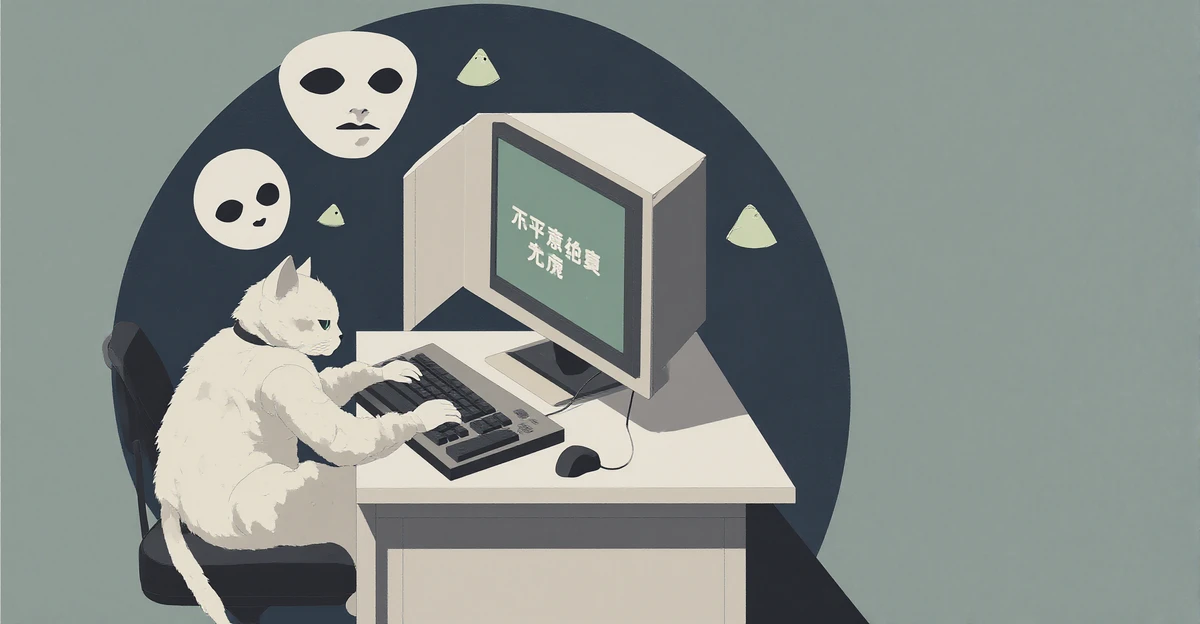
The distinguishing feature of 4chan was not just anonymity but default anonymity. On most early internet forums, you could post anonymously if you wanted to, but the norm was usernames. On 4chan, the norm was the opposite. If you did not fill in a name, your post appeared as “Anonymous.” Most people did not fill in a name.
This created something unusual: a community without reputations. On a normal forum, established users have social capital. Their opinions carry weight because they have built a history. On 4chan, every post started equal. A genius observation and a nonsense response appeared under the same blank name. The content was all that mattered, which sounds principled until you realize it also meant that the worst possible things anyone could say were as prominent as the best.
It also produced something genuinely creative. The board culture developed its own language, its own references, its own humor. Memes that now exist everywhere, from Rickrolling to Lolcats to Pepe the Frog, either originated on 4chan or were popularized there. The nostalgia people now feel for early 2010s internet culture is largely nostalgia for the moment when these ideas were fresh and had not yet become marketing.
The Boards and the Chaos
4chan is organized into boards, each focused on a different topic. The most notorious is /b/, the “Random” board. This is the part of 4chan that generated both the most creative content and the most genuinely harmful activity in the site’s history.
/b/ operated on a simple rule: almost anything goes. The posts were ephemeral, deleted automatically when new posts pushed them off the page. Nothing was preserved. This created a culture of escalation, because the only way to get attention in a space designed to forget you was to be more extreme, more funny, or more weird than whatever came before.
From /b/ came early activism under the banner of “Anonymous,” including the 2008 Project Chanology campaign against Scientology, which brought internet culture into physical protest for the first time and established a template that would later inform hacktivist groups. From /b/ also came coordinated harassment campaigns, early examples of what is now called swatting, and distribution of content that was illegal by any standard.
Poole ran the site largely alone for years, funding it out of pocket, dealing with legal pressure, and moderating a community that was actively hostile to moderation. He eventually brought on volunteer janitors but kept the site’s hands-off culture largely intact. He sold 4chan to Hiroyuki Nishimura, the founder of 2channel, in 2015.
The Meme Pipeline
To understand why 4chan mattered, you have to understand how meme culture worked before social media made it frictionless. In the early 2000s, there was no Instagram, no TikTok, no algorithmic feed deciding what became popular. Things spread when people actively decided to share them, and 4chan was where many of those things originated.
The process worked like a pressure cooker. Something would emerge on 4chan, get refined and remixed in the anonymous chaos of /b/ or other boards, and eventually leak out to other platforms where it would be discovered by people who had no idea where it came from. By the time a meme appeared on mainstream news coverage, it might have been circulating on 4chan for months.
Lolcats, the format of captioning cat photos with misspelled text in a supposed “cat voice,” was heavily developed on 4chan before I Can Has Cheezburger turned it into a web empire. The dancing baby, one of the internet’s first viral images, predated 4chan but established the template of absurd loops that 4chan would perfect. The appeal of mass shared absurdity goes back further than the internet, of course, but 4chan industrialized it.
The Darker Turn
The story of 4chan cannot be told without acknowledging what it enabled. The site’s culture of anonymous speech with no accountability became a pipeline for radicalization as political messaging moved online. The 2016 United States election saw coordinated meme campaigns originating in 4chan’s /pol/ board. The aesthetics and language developed in anonymous imageboards moved into mainstream political discourse in ways that most people did not understand because they had not seen where it came from.
Gamergate, the 2014 harassment campaign against women in gaming, was largely organized and executed through 4chan. The coordination was meticulous, the harm was real, and the playbook established there has been used repeatedly since. The internet tends to reward engagement over accuracy, and 4chan had worked out how to generate enormous engagement long before anyone was measuring it.
Poole gave that 2010 TED talk titled “The Case for Anonymity Online.” The speech was thoughtful, acknowledged the complexity, and made a genuine argument for the value of anonymous expression. He was twenty-two years old. He had been running one of the most controversial websites on the internet for seven years without making any money. He seemed genuinely uncertain what he had built.
What Remains
4chan still exists. It is smaller than it was at its peak and its cultural influence has diffused across a dozen successor platforms, from Reddit’s early chaotic boards to Discord servers to Twitter and its various imitators. The specific flavor of 4chan humor, the in-jokes, the absurdism, the hostility to earnestness, became the water that much of internet culture swims in.
Moot went on to work at Google on social products. That is either ironic or fitting, depending on how you feel about the journey from anonymous imageboards to the most identity-forward platform in history.
The eight days Christopher Poole spent setting up a free PHP script in 2003 produced something that nobody could have predicted: a machine for generating culture that had no interest in being responsible for what it made. The internet has been arguing about what to do with that legacy ever since.
🐾 Visit the Pudgy Cat Shop for prints and cat-approved goodies, or find our illustrated books on Amazon.