Men are disturbed not by things, but by the views which they take of things.
Epictetus
Source, Enchiridion, V; English translation by Thomas Wentworth Higginson; teachings recorded by Arrian
Why This Quote Matters
This sentence comes from section V of the Enchiridion, the handbook of Epictetus's teaching transmitted by Arrian. It distinguishes an event from the judgment we form about it. That distinction is central to the passage: what happens and what we say it means are closely connected in experience, but they are not necessarily identical or beyond reconsideration.
The useful question is often very concrete. Did someone reject you, or did they fail to answer a message? Is a mistake a catastrophe, or is it a mistake that now needs correcting? Interpretation can add a whole second incident to the first. This does not mean material hardship is imaginary, or that people are to blame for being upset. It offers a place to examine the extra story before treating it as established fact.
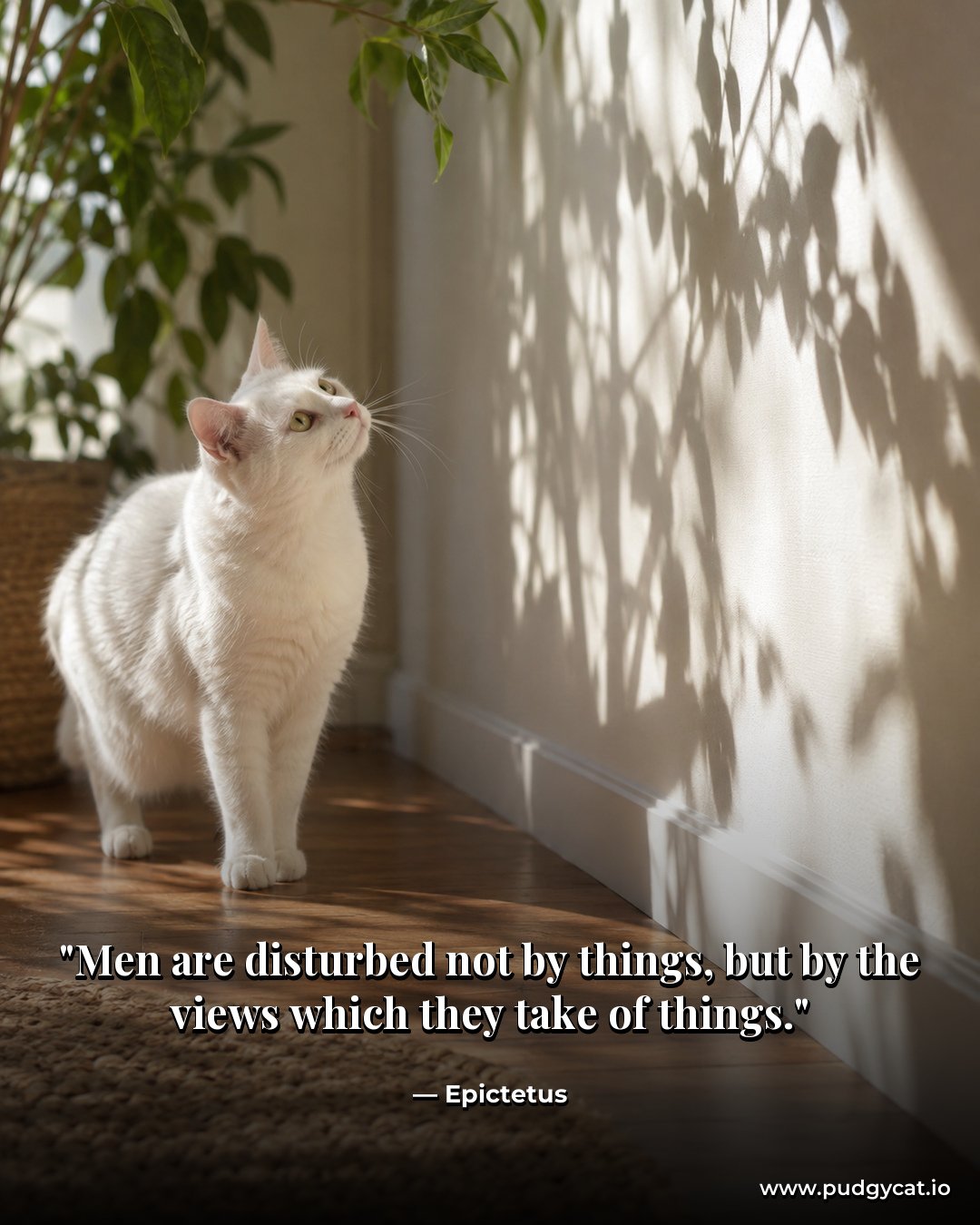
The white cat studying leaf shadows supplies a lighthearted version of the puzzle. The shapes on the wall shift, and the tilted head makes the familiar scene look newly uncertain. Our own shadows often come with much longer explanations. Before responding to one, it can help to look again. A changed angle will not change every situation, but it may reveal which part of the disturbance came from our first reading.
🐾 Visit the Pudgy Cat Shop for prints and cat-approved goodies, or find our illustrated books on Amazon.
More Cat Wisdom