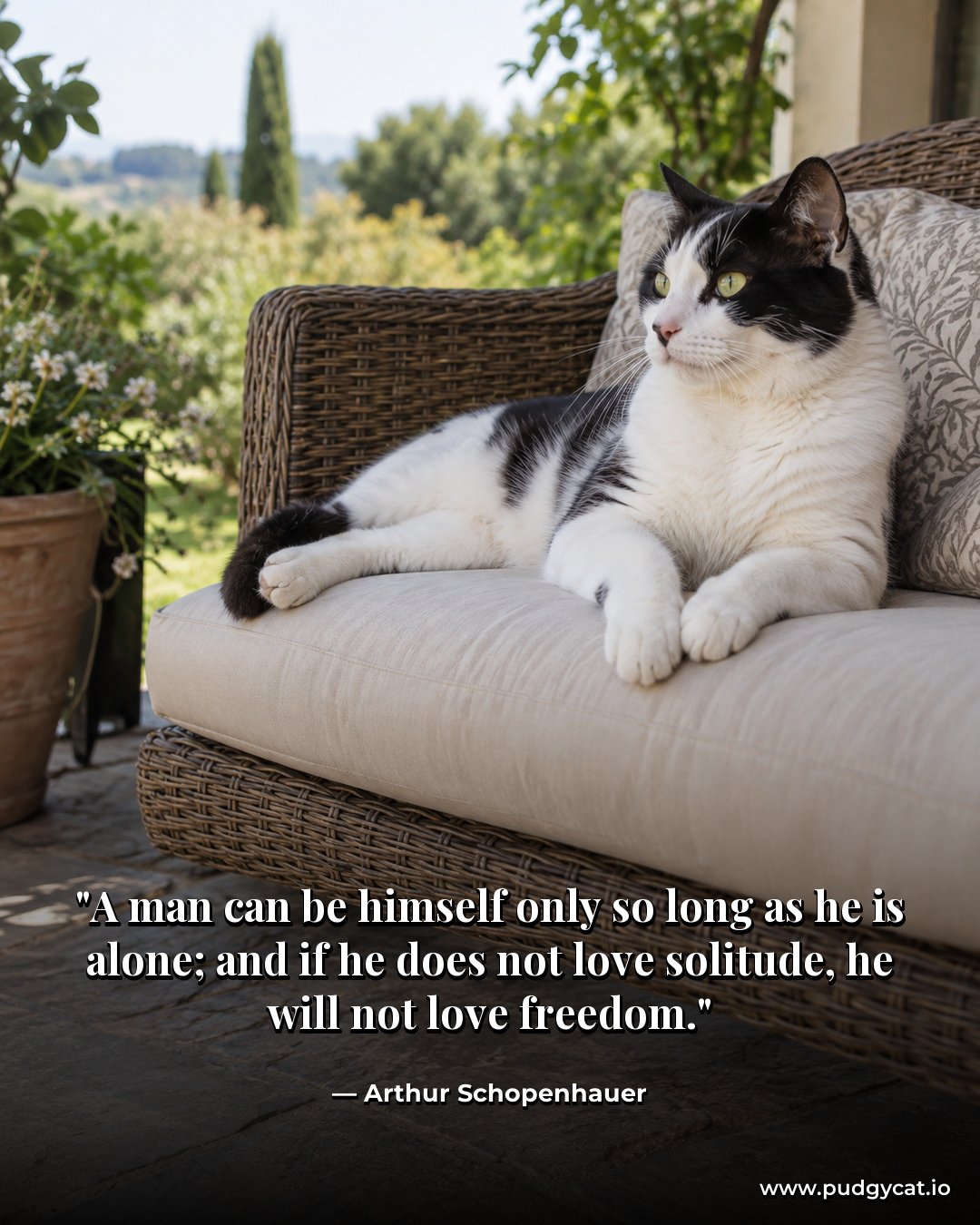
A man can be himself only so long as he is alone; and if he does not love solitude, he will not love freedom.
Arthur Schopenhauer
Source, Counsels and Maxims, Our Relation to Ourselves; English translation by T. Bailey Saunders
Why This Quote Matters
In Counsels and Maxims, Arthur Schopenhauer links solitude with the freedom to be oneself. The wording is severe, as his account of social life often is. It suggests that company requires accommodation: people adjust their speech, attention, and behavior to the presence of others. Being alone removes some of those negotiations and reveals what a person chooses without their immediate pressure.
The quotation can be useful without being accepted as an absolute rule. Relationships also make room for honesty, growth, and forms of self-understanding that solitude cannot supply alone. Its sharper question is whether we can tolerate any time outside other people's expectations. If every quiet interval must be filled with approval, comparison, or performance, independence remains fragile. A little unobserved time can help distinguish an actual preference from a preference maintained mainly because it plays well in company.
The white-and-black cat occupying a terrace chair gives that unobserved freedom a pleasantly ordinary form. The garden is available, and no one in the frame is requesting entertainment. We supply the philosophical reading; the cat supplies a convincing posture. The scene need not advertise withdrawal from the world. It can stand for the smaller pleasure of spending an hour without being required to explain what the hour is for.
🐾 Visit the Pudgy Cat Shop for prints and cat-approved goodies, or find our illustrated books on Amazon.
More Cat Wisdom