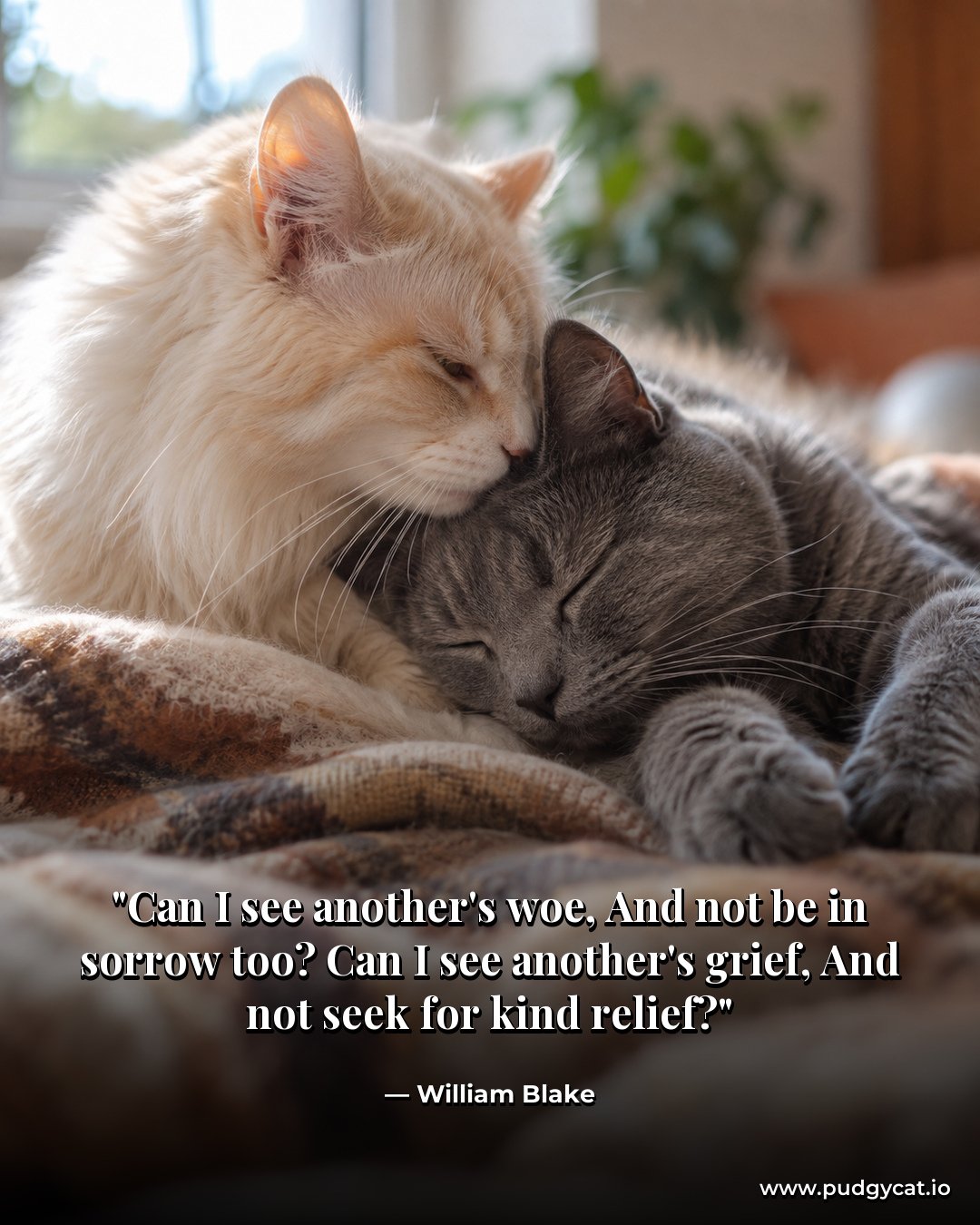
Can I see another's woe, And not be in sorrow too? Can I see another's grief, And not seek for kind relief?
William Blake
Source, Songs of Innocence, On Another's Sorrow
Why This Quote Matters
These are the opening lines of On Another's Sorrow in William Blake's Songs of Innocence. The speaker asks whether witnessing grief can leave them untouched, then moves from feeling toward the search for relief. The poem's wider setting is devotional, but its opening gives compassion a clear sequence: notice another person's suffering, respond to it, and consider what kindness might actually do.
The second movement matters because sympathy can remain entirely inside the observer. Feeling troubled by someone else's pain is not always the same as helping them bear it. A useful response may be modest: listening, offering company, or taking care of one task that has become difficult. The quotation does not require assuming that we know exactly what another person feels. It invites enough attention to ask what relief might mean for them, rather than choosing the gesture that most efficiently reassures us about our own compassion.
The cream cat nuzzling a resting grey companion gives that attention a warm visual form. A small point of contact changes the atmosphere of the picture without demanding a dramatic rescue story. The human connection is similarly simple. Kindness does not have to explain sorrow completely before it can offer something useful. Sometimes the first worthwhile response is to make it clear that another creature has not been left entirely alone with it.
🐾 Visit the Pudgy Cat Shop for prints and cat-approved goodies, or find our illustrated books on Amazon.
More Cat Wisdom