 English
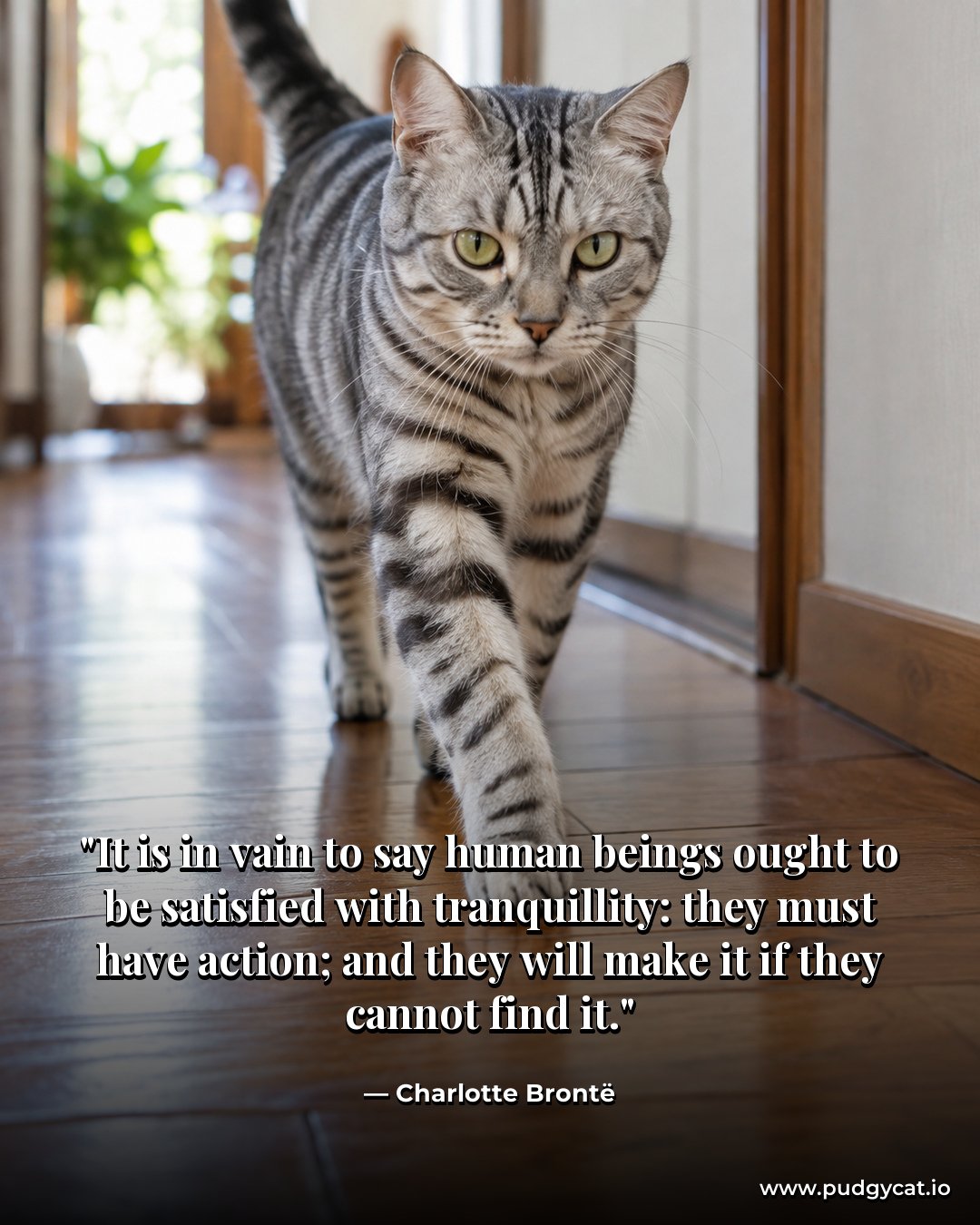
It is in vain to say human beings ought to be satisfied with tranquillity: they must have action; and they will make it if they cannot find it.
Charlotte Brontë
Source, Jane Eyre, 12
Why This Quote Matters
In chapter 12 of Jane Eyre, Charlotte Brontë's narrator reflects on the need for activity and scope. The surrounding passage explicitly challenges the expectation that women should remain content with narrow, quiet lives. Jane asks for the exercise of faculties and a field for effort. The quotation therefore concerns opportunity and restriction, rather than merely a preference for an entertaining afternoon over a dull one.
That context gives restlessness dignity. A person may appear comfortable while lacking any meaningful outlet for ability, curiosity, or ambition. Telling them to appreciate the peace can miss what has been withheld. Brontë's sentence recognizes that action is something people may create when it is not offered. The useful question is whether apparent dissatisfaction reflects ingratitude or a capacity with nowhere to go. Those possibilities deserve to be distinguished before tranquility is prescribed as a complete answer to another person's life.
The silver tabby striding through a wooden hallway supplies the quotation with visible momentum. The photograph catches movement rather than an impossible human performance. Its energy suits Jane's refusal to treat stillness as everyone's natural destination. A quiet room can be lovely, but it becomes a different place when there is no freedom to leave it or to put one's abilities to work beyond its walls.
More Cat Wisdom