
Lay hold of to-day’s task, and you will not need to depend so much upon to-morrow’s.
Seneca
Source, Moral Letters to Lucilius, 1.2; English translation by Richard M. Gummere
Why This Quote Matters
Seneca's first Moral Letter to Lucilius is concerned with time and the ease with which it slips from our possession. This sentence brings the discussion to today's task. Its promise is carefully relative: attending to the present reduces dependence on tomorrow. It does not claim that one exceptionally productive morning will settle everything a life might ever require. Read the source.
Procrastination often borrows confidence from an imaginary future self. Tomorrow's person will have more energy, fewer interruptions, and a mysteriously clearer desk. Seneca asks what the present person can take hold of instead. The useful scale may be small: start the letter, make the appointment, clear the first obstacle. Completing something today gives tomorrow a different starting point. Even an unfinished effort can be more substantial than a perfect intention that keeps changing its date.
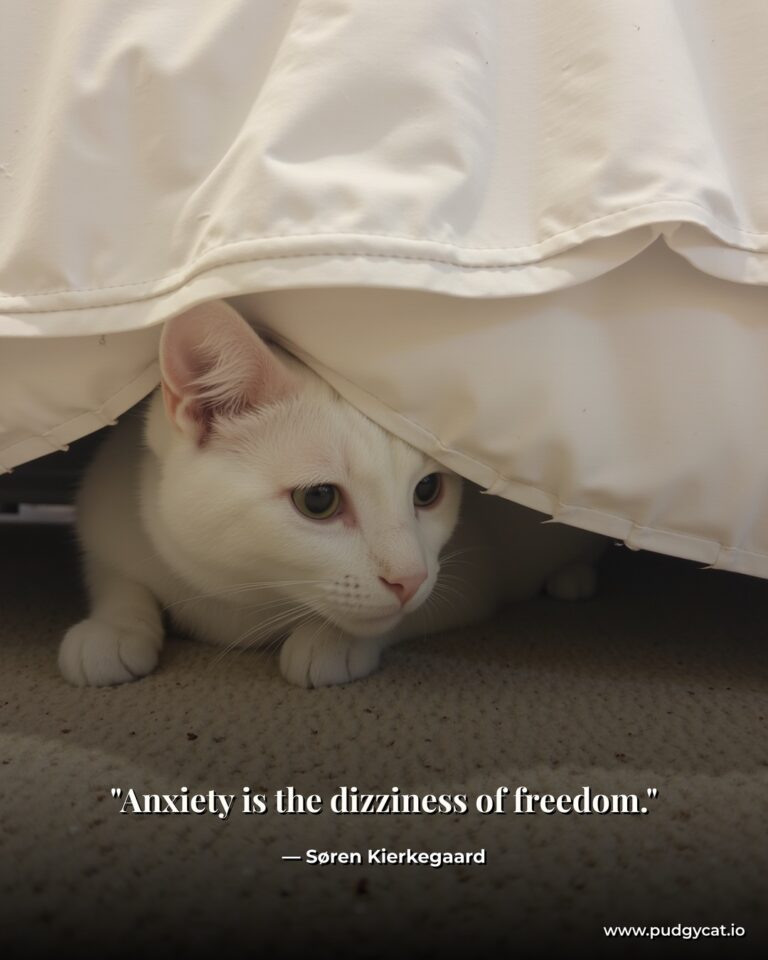
The young tabby stretching on a sunlit rug captures the moment before activity begins. There is a pleasing lack of ceremony about it. No productivity system is visible, and the rug has not requested a quarterly forecast. For the human reader, the picture can stand for the first ordinary movement out of delay. The whole day need not be conquered before one worthwhile thing is begun.
🐾 Visit the Pudgy Cat Shop for prints and cat-approved goodies, or find our illustrated books on Amazon.
More Cat Wisdom