 English
Remember that you must behave as at a banquet. Is anything brought round to you? Put out your hand and take a moderate share.
Epictetus
Source, Enchiridion, XV; English translation by Thomas Wentworth Higginson; teachings recorded by Arrian
Why This Quote Matters
Epictetus uses a banquet as a metaphor in section XV of the Enchiridion. When something reaches you, take a moderate share; the wider passage also considers waiting and letting things pass. Its subject extends beyond food to the way people reach for the circumstances of life. Desire is imagined at a table where nobody controls the entire service.
The metaphor is useful because it makes impatience visible. Leaning across everyone else, watching another person's portion, or treating every passing dish as the last chance for happiness can ruin a perfectly ordinary meal. The same posture appears around recognition, possessions, and opportunities. Moderation offers a different way to participate. It does not require refusing everything enjoyable. It asks whether enjoyment remains possible without turning the whole occasion into a contest of acquisition.
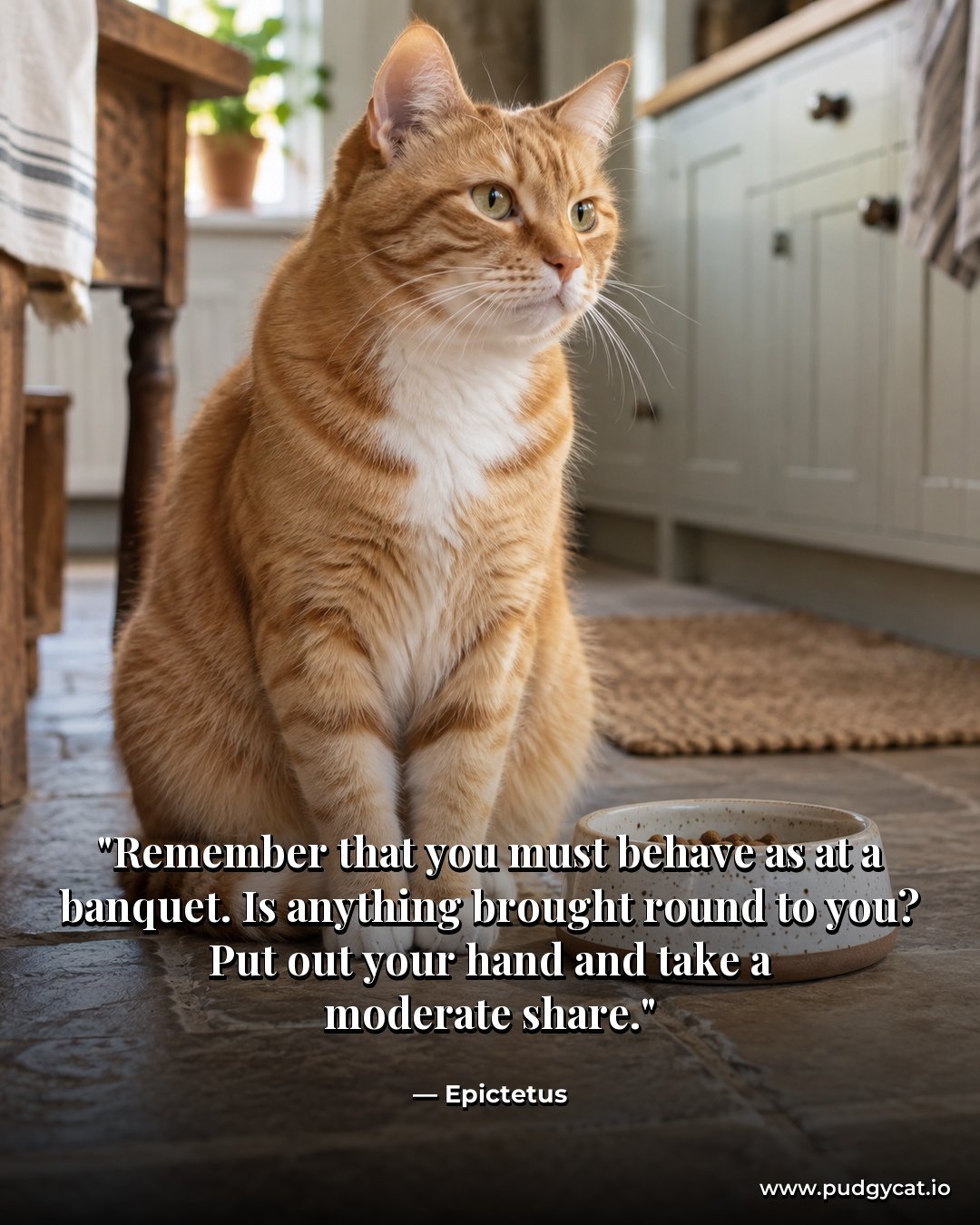
The ginger cat waiting beside a modest bowl brings the banquet down to kitchen-floor height. The scene is deliberately ordinary, with no costume or elaborate feast. It is a picture of anticipation, and perhaps a reminder that waiting is easier to praise than to perform. The human reader can appreciate the philosophy while the cat reserves judgment on the speed of service. A moderate share is still expected to arrive.
More Cat Wisdom