
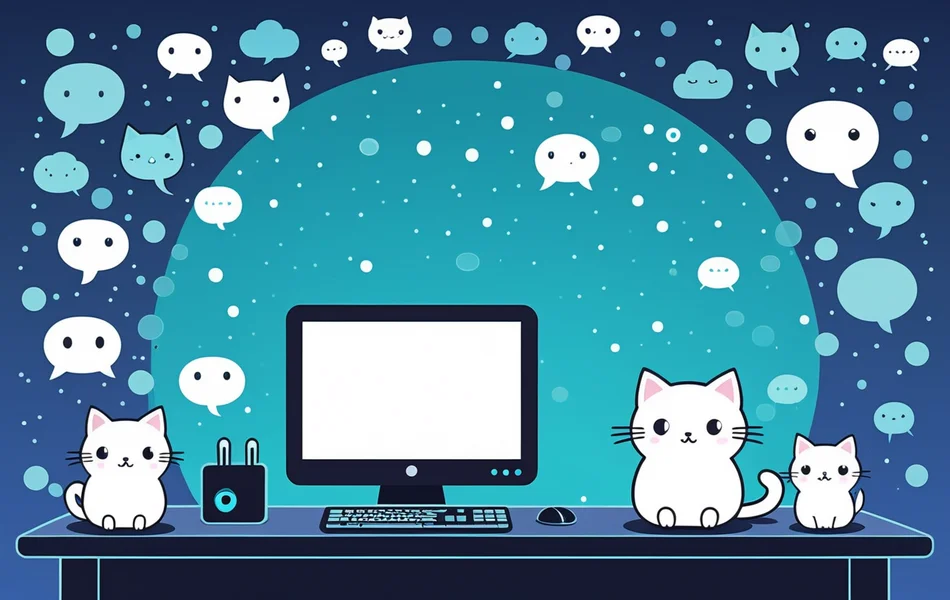
Back in 2021, an anonymous user on Agora Road’s Macintosh Cafe (a forum that sounds like it serves espresso alongside conspiracy theories) published a post titled “Dead Internet Theory: Most Of The Internet Is Fake.” The idea was simple and paranoid: most of what you see online isn’t made by humans. It’s bots, algorithms, and automated content, all the way down. People called it unhinged. A 4chan fever dream. The kind of thing you’d read at 3 AM and then close the tab, slightly unsettled.
Turns out, the conspiracy theorists were right. And they have the receipts.
Dead Internet Theory Gets Its Proof
HUMAN Security, one of the largest cybersecurity firms tracking automated traffic, dropped its 2026 State of AI Traffic report on April 9. The headline number: bots now generate 51% of all web traffic. For the first time in the history of the internet, automated systems collectively produce more traffic than actual human beings.
That’s not a rounding error. Automated traffic is growing eight times faster than human traffic. AI agent traffic alone surged 7,851% year over year. Nearly three quarters of newly published web pages now contain AI-generated content. When you scroll through search results, comment sections, or product reviews, the odds are better than a coin flip that what you’re reading was never touched by human hands.
From 4chan’s Paranormal Board to Peer-Reviewed Reality
The dead internet theory first surfaced around September 2019 on 4chan’s /x/ board, the paranormal section where people also discuss cryptids and government mind control. Not exactly the place you’d go for reliable tech analysis. The original claim was that since roughly 2016, most internet activity has been synthetic, manipulated by algorithms and coordinated bot networks to shape public opinion.
At the time, it sounded like classic internet paranoia. But like a regretful tech inventor looking back at what they built, the theory aged disturbingly well. The 2021 version by “IlluminatiPirate” (yes, that was the username) became the foundational text, and The Atlantic covered it later that year, giving it mainstream attention. Even then, most people treated it as a thought experiment. A fun “what if” to share on Reddit before moving on.
Five years later, the numbers say it’s not a “what if” anymore.
Who’s Doing All This Browsing?
The HUMAN Security report breaks down the bot traffic into specific players, and the market concentration is wild. OpenAI’s various bots (ChatGPT User, GPTBot, OAI-SearchBot, and ChatGPT Agent) account for roughly 69% of all observed AI-driven traffic. Meta’s ExternalAgent adds another 16%. Anthropic’s ClaudeBot and Claude-SearchBot make up about 11%.
In other words, three companies are responsible for the vast majority of non-human internet traffic. These aren’t malicious bots scraping credit card numbers. They’re AI systems reading, indexing, and summarizing the web so that their chatbots can answer your questions without you ever clicking a link. The irony is thick: the tools designed to make the internet easier to use are simultaneously making it less human.
The Collateral Damage Is Already Here
This isn’t just a philosophical problem. It’s an economic one. Business Insider’s organic search traffic fell 55% between April 2022 and April 2025, forcing a 21% staff reduction. Zero-click searches (where Google answers the question directly, so you never visit the source) jumped from 56% to 69% in a single year. When Google’s AI Overviews appear in search results, click-through rates drop by nearly half.
The pattern is clear: AI bots consume content created by humans, then serve it back through chatbots and search summaries, cutting out the original creators. The people who actually write, photograph, and research are watching their traffic evaporate while AI companies build their products on top of that work.
The Digg Experiment That Proved the Point
Want a concrete example? In January 2026, Reddit co-founder Alexis Ohanian and Digg creator Kevin Rose relaunched Digg in open beta. The iconic link-aggregator was supposed to ride a wave of nostalgia and social media fatigue. It lasted exactly two months. The official reason for shutting down on March 14? An “unprecedented bot problem.” The platform was overrun by automated accounts before it could build a real community.
Digg’s failure is a microcosm of the larger issue. Building new platforms for human conversation is getting harder when the bots show up faster than the people do. It’s like trying to have a dinner party in a house that’s already full of strangers who only speak in marketing copy.
The Feedback Loop Nobody Talks About
Here’s the part that should worry everyone: an estimated 30-40% of the active web is now synthetic content. Language models are increasingly training on data that was itself generated by language models. This creates what researchers call a “model collapse” feedback loop, where AI trained on AI output gradually degrades in quality, becoming more generic and less accurate with each generation.
Think of it like making a photocopy of a photocopy of a photocopy. Each generation loses fidelity. Except instead of blurry text, you get an internet where everything sounds vaguely the same, where running AI locally might become the only way to get something that doesn’t taste like reheated content soup.
So Now What?
The dead internet theory was wrong about one thing: it assumed a shadowy cabal was behind it all. The reality is both more boring and more alarming. There’s no conspiracy. Just market incentives. Companies build AI crawlers because they need data. Websites generate AI content because it’s cheap. Search engines surface AI summaries because users want quick answers. Nobody planned for bots to outnumber humans. It just happened, one optimization at a time.
The conspiracy theorists on 4chan’s paranormal board saw the shape of the future before the data caught up. They were mocked for it. Now the data is here, and the rest of us are the ones scrolling through an internet that’s half ghost town, wondering which comments are real.
Welcome to the dead internet. It was nice knowing you.
🐾 Visit the Pudgy Cat Shop for prints and cat-approved goodies, or find our illustrated books on Amazon.

Leave a Reply