There is a version of wellness that looks suspiciously like unpaid administration. Track your sleep, score your recovery, optimise your morning, and remember to relax correctly. The lighting is calm. The spreadsheet is not. Against that backdrop, meeting strangers beside a lake and screaming has a certain understandable appeal.
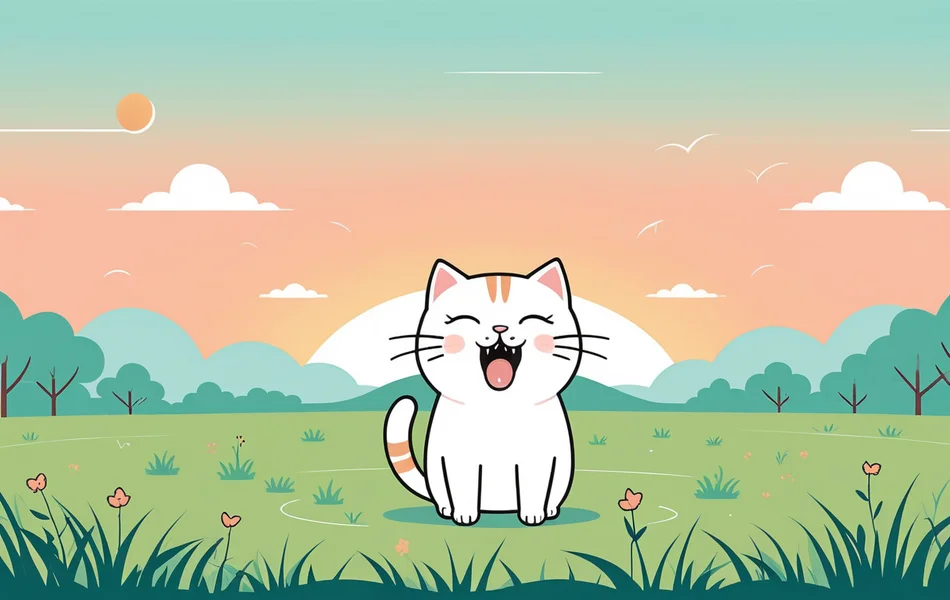
Scream clubs are real, and they have become part of the conversation about wellbeing in 2026. The cat, who has been issuing loud announcements from the hallway without a facilitator, is understandably unimpressed by our branding.
Yes, you can join a club that screams together
Scream Club Chicago grew out of a ritual shared by Manny Hernandez and Elena Soboleva. FOX 32 reported in July 2025 that the first public gathering took place on June 22 at North Avenue Beach Pier. Participants could set an intention before guided collective screams; the founders described an emerging community.
The club’s own October 2025 event listing called it a free weekly meetup and explicitly distinguished it from therapy. That is an important distinction, even if “people meet to yell by the water” already sounds like a group chat that escaped outdoors.
By March 2026, Associated Press reporting described chapters including Seattle, Austin and San Juan. Participants spoke about relief and connection. The gatherings can include breathing and vocal warm-ups as well as the scream itself.
That combination makes the experience more than a noise. There is an agreed place, an agreed time and the reassurance that everyone else has also come to do something a little ridiculous. Nobody needs to pretend they have arrived with their life completely organised.
Feeling a release is not the same as proving a reset
It is easy to imagine why someone might leave feeling lighter: time outdoors, company, laughter, a break from routine. Those are possible contributors, not a demonstrated explanation for every participant’s response.
The stronger story—that screaming reliably activates a stress response and then forces the nervous system into a restorative reset—needs evidence of its own. Adding “vagus nerve” to the sentence does not supply it. A satisfying moment and an established treatment are different claims.
Research on anger also complicates the familiar idea of simply blowing off steam. An Ohio State review of 154 studies, published in 2024, found that activities reducing physiological arousal were effective at reducing anger and aggression, while arousal-increasing activities were generally not.
That review was not a direct trial of Scream Club and does not prove nobody can enjoy attending. It does mean that “yell it out” should not be advertised as a reliable anger treatment. The distinction leaves plenty of room for a strange, sociable afternoon.
There is also a very ordinary physical limit: your voice. The NIDCD advises avoiding vocal extremes such as screaming. Forcing the loudest or longest sound is not a wellbeing achievement. A person who prefers to stay quiet has not failed the group.
The backlash against measuring everything
The Global Wellness Summit’s January 2026 forecast identifies an over-optimisation backlash and a growing interest in collective, playful experiences. It places this alongside continuing enthusiasm for technology and measurement. This is an industry forecast, rather than proof that everyone has thrown away their wearable.
Still, the contradiction is familiar. One pitch asks you to stop turning yourself into a project. Another offers better instruments for managing the project. There is probably a subscription waiting somewhere between the two.
We like the possibility of spending time with people without needing to report a personal best afterwards. A gathering can be worthwhile because it was enjoyable, not because a dashboard awarded it a green tick. And yes, an event rejecting performance can become a performance once the cameras arrive. The internet is very good at finding a second shift for your leisure time.
The cat would like royalties
As a comic role model for refusing self-optimisation, the cat is hard to beat. It does not track recovery. It occupies a sun rectangle until the rectangle moves, then relocates. It does not have a carefully curated morning routine. It has a morning, and there is a bird outside.
The hallway announcement at 3am has the theatrical confidence of a sold-out wellness retreat. No booking system, no branded tote bag, no closing reflection. Just a small furry performer making sure the household understands that something has been declared.
We can enjoy that resemblance without assigning human therapeutic motives to every feline noise. The cat has not submitted its nervous-system data for peer review. Its actual habits, including kneading blankets and investigating objects near table edges, are interesting enough on their own.
Wellbeing does not need a leaderboard
The appealing part of this trend is permission to arrive imperfectly and do something together. That might involve a scream club; it might involve a walk, a conversation or an afternoon that never becomes content.
You do not have to buy the neuroscience sales pitch to understand the social appeal. Nor do you have to yell to qualify for a break. The animal asleep on your laundry would like to recommend its own programme: fewer deliverables, better resting places, and absolutely no mandatory feedback form.