Birdwatching has acquired a number normally reserved for a very small cryptocurrency: a reported 1,088% rise among young adults in Britain since 2018. The robin in the hedge would like to stress that it has not launched a token.
Research from Fifty5Blue, publicised by the RSPB ahead of International Dawn Chorus Day, estimates that almost 750,000 people aged 16–29 in Great Britain regularly watch birds. That is a striking change in the audience for a hobby that can begin with simply looking out of a window.
What the Big Percentage Means
The May 2 account of the research and RSPB statements reports a 47% increase across all age groups since 2018, taking regular participation to more than four million people. Four million is the total, not four million additional birdwatchers. Reported growth was 216% among Millennials and 66% among Gen X; jewellery making ranked ahead of birdwatching for growth among Gen Z.
A 1,088% increase means roughly 11.9 times the starting level. It does not mean 1,088% of young people own binoculars, impressive though that would be for the binocular industry. Large percentages also look particularly dramatic when the starting group is small.
These are survey-based participation estimates, not a register of every individual birder. The figures establish growing interest; they do not, by themselves, explain each person’s motivation or guarantee that the growth will continue indefinitely.
A Hobby Without an Entrance Exam
You do not have to recognise every call to enjoy the next ten minutes. A bird on a wall is already doing something: looking for food, defending a patch, inspecting a suspicious human. Watching that small drama can be enough.
There is an appealing contrast with hobbies that seem to arrive carrying a shopping list. Birdwatching can involve expensive optics and long journeys, but it can also involve a familiar bench and no new equipment at all. The robin does not check which tier you subscribed to.
That makes screen fatigue, curiosity and the pleasure of noticing a place plausible reasons to try it. They are not a single proven explanation for a generation’s behaviour. Nor does everyone need to abandon technology to enjoy an outdoor hobby.
The Phone Can Help You Listen
Cornell Lab’s Merlin Bird ID is a useful example. Its Sound ID feature suggests birds from recordings, turning an anonymous burst of song into something you can investigate. Cornell’s 2021 introduction to Sound ID explains how to compare your recording with reference audio and use the app while offline.
Treat the result as a suggestion to check, rather than proof that a rare visitor is definitely in your hedge. Listen again, look for the bird if possible and compare the sound. Learning one familiar species well is more satisfying than confidently collecting five mistaken identifications.
You can then put the phone away. It has supplied a name; it does not need to supervise the entire afternoon. The cat on the windowsill, who has been conducting visual surveillance for years, may consider this an unnecessarily elaborate workflow.
The Cat in the Bird-Shaped Room
A cat watching safely from indoors is an excellent companion to this hobby. A cat catching the subjects is a different matter. We should not dismiss those losses by assuming that most captured birds were sick or would have died anyway.
Cats Protection’s advice includes keeping cats indoors at dawn and dusk, when prey is especially active, and providing interactive play as an outlet for hunting behaviour. Reducing opportunities to hunt is more useful than awarding the cat a honorary conservation badge.
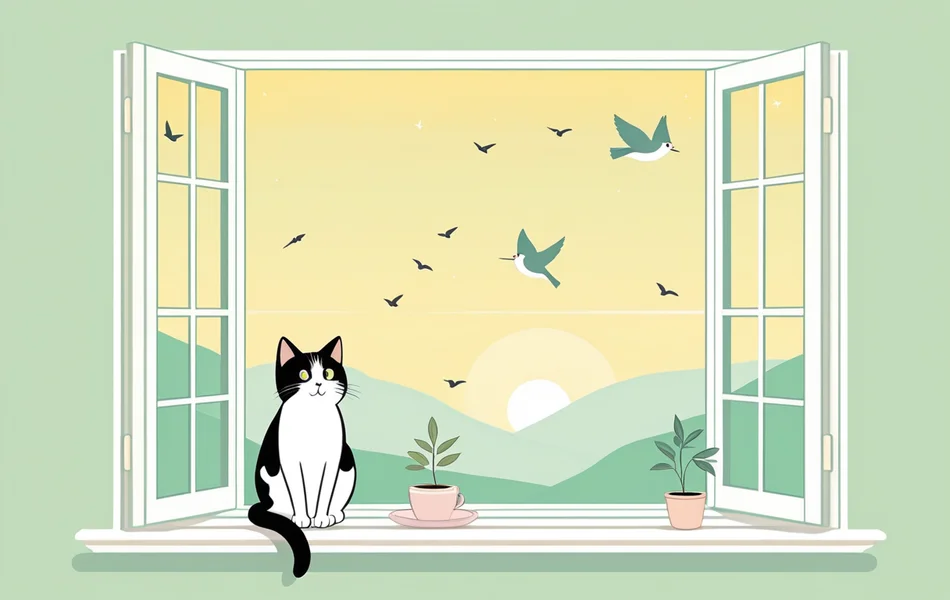
For the viewing arrangement, the original plan remains excellent: cat on the windowsill, human nearby, bird outside. Give the indoor cat things to do as well. Feather toys can handle the action sequences; actual birds need not audition.
More Birdwatchers Is an Opportunity, Not a Recovery Count
Interest in wildlife and the condition of wildlife are different measures. The RSPB’s April report on Big Garden Birdwatch 2026 records 650,279 participants and more than nine million birds counted. It describes the event as the world’s largest garden wildlife survey, a more specific claim than calling it the largest citizen-science project of any kind.
That organised count is also separate from the estimate of people who regularly birdwatch. Someone enjoying a blackbird from the kitchen has not automatically submitted a scientific record. If the interest leads them to learn identification and contribute carefully, it can become something more.
There is no need to promise a serotonin boost, a permanent cultural revolution or the birds’ best month in a decade to make this sound worthwhile. Try a quiet patch for ten minutes. Notice one sound you previously ignored. You may leave knowing a little more about the place you live.
For another small rebellion against frictionless digital life, there is our look at the return of wired headphones. For this particular outing, though, leave your ears available. The neighbours in the hedge have prepared a set.