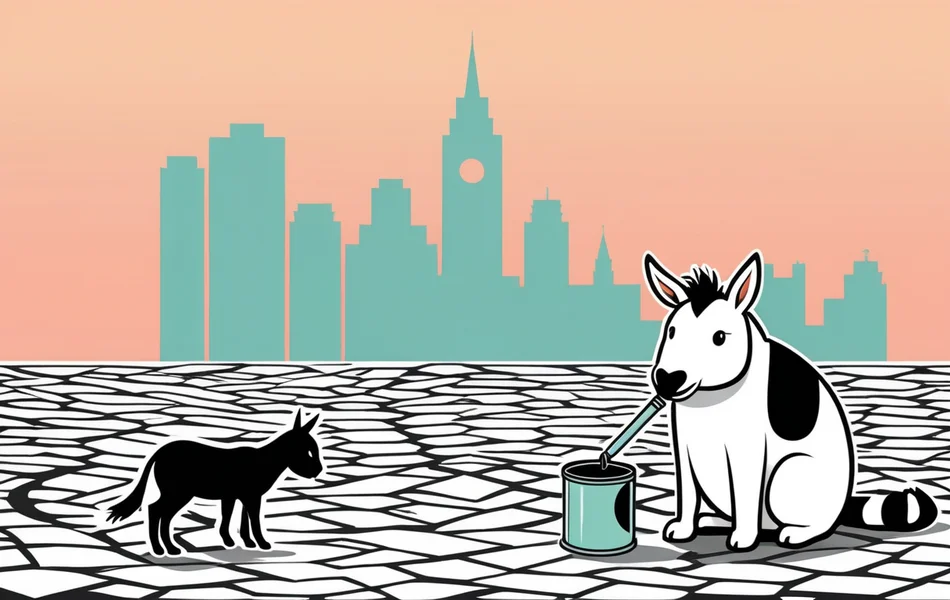
Yerevan had an apparent zebra escape on May 1. Then the zoo supplied an important correction: its zebras were still in their enclosure. The striped animal on Myasnikyan Avenue was a painted donkey.
A small change in species, a very large change in the story. Somewhere in the background, actual zebras were being blamed for a commute they had not undertaken.
The escape that was not an escape
UPI’s May 1 report says police received information that morning about a zebra loose on the avenue. The zoo subsequently told local outlet Shamshyan that a citizen had painted his donkey with stripes and brought it there to film a video. It said law enforcement was working to establish the person’s identity.
The zoo also confirmed that its zebras were safe and warned that chemical dyes can harm animals. That is the reported sequence. It does not establish a citywide chase, a particular charge, or what eventually happened to the donkey.
Fortunately, the core story does not need a fictional zebra-response squad to become absurd. A zoo having to explain that the zebra is a donkey already clears the bar comfortably.
A picture can be real and its caption wrong
The useful distinction here is between what a camera records and what somebody says it records. A striped animal on a street does not, by itself, demonstrate an escape from the nearby zoo. That conclusion needs more than stripes and proximity.
This is one reason corrections can feel less exciting than the original claim. An escape gives you a ready-made story with an institution, a failure, and an unexpected animal adventure. A correction asks you to take those pieces apart again. The donkey has inadvertently assigned everyone homework.
It is similar to the gap between an unusual observation and a confident explanation in the Paris weather-market story: the suspicious readings and the alleged hairdryer mechanism are not interchangeable facts. In Yerevan, the zoo’s account supplies the correction; invented details about emergency procedures would only make the next caption harder to untangle.
The animal is not a special-effects department
There is an obvious temptation to focus entirely on the visual joke. But the joke required a live animal to carry it. The zoo’s warning does not tell us which substance was used here or prove a particular injury. It does give a clear reason not to turn the incident into a craft tutorial.
The donkey did not need a redesign. A donkey is already a complete donkey, with a strong visual identity and very little need for a social-media rebrand. If the concept requires painting one, the concept can go back to the drawing board. Paper is available.
Nor should someone who sees a loose animal in traffic have to solve a zoological puzzle before reporting a hazard. Keep a safe distance and describe what you can actually see. Species uncertainty does not make a road safe.
The cat take
A cat would probably have strong editorial feedback for anyone approaching with a paintbrush. It would express that feedback promptly, and the filming schedule would suffer.
That is a joke, not a reliable comparison of animal patience. The serious preference is simpler: let the animal remain itself. You can enjoy a ridiculous news story while declining to applaud the activity that produced it.
For more on how a striking image becomes a reusable story, our history of internet memes follows the caption-making machinery. In this case, the correct caption is already hard to beat: the zebras are fine; somebody painted a donkey. The donkey has not commented.