Chonkers the 2,000 Pound Sea Lion Became San Francisco’s Most Viral Tourist Attraction

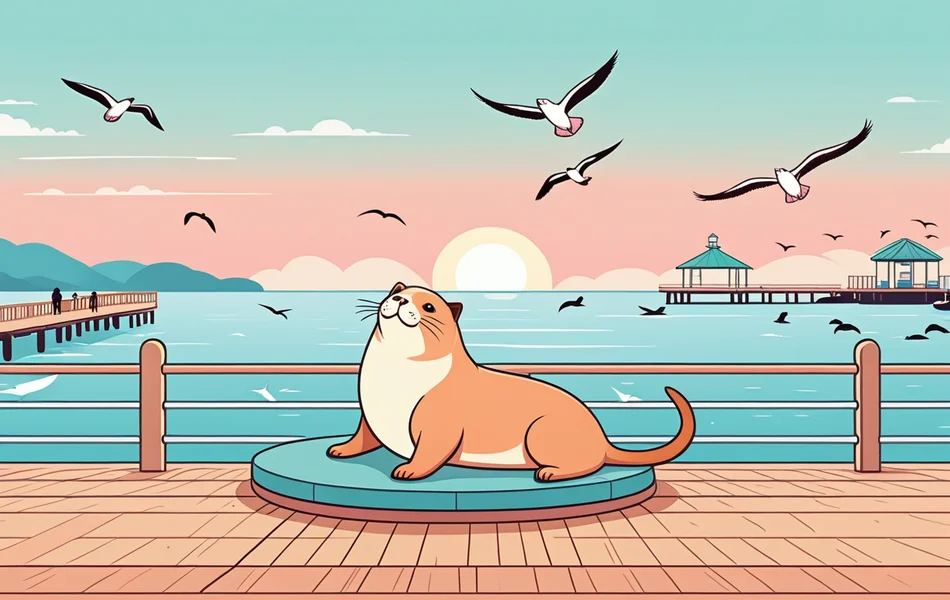
Somewhere between a tugboat and a sea monster, there is now a 2,000-pound Steller sea lion named Chonkers, and he is the most famous resident of San Francisco’s Pier 39. He weighs roughly twice as much as the other sea lions sharing his floating dock, and he became internet famous before most of the local newspapers even noticed he was there. The order of operations matters. Internet fame, in 2026, no longer waits for the news cycle. It generates one.

The first dated sighting was March 13, when the official Pier 39 Instagram account posted a clip of a very large, very mellow animal collapsing onto a wooden float with the energy of a couch arriving at a new apartment. Bay Area Reddit users had been watching him for days. A San Francisco user named Des Tan posted a photo, called the animal Chonkers, and the name stuck the way only good internet names stick: instantly, irreversibly, in defiance of anyone who might have preferred something more dignified.

Why a Steller Sea Lion at Pier 39 Is Genuinely Strange

Pier 39 has hosted sea lions since 1990, after a few showed up post-Loma Prieta earthquake and decided the new real estate was excellent. But those are California sea lions. Males top out around 800 to 1,000 pounds. Chonkers is a Steller sea lion, a different species that normally lives in colder water from the Pacific Northwest up to Alaska, where they can reach over 2,000 pounds. He is, to use the technical term, in the wrong neighborhood.

Pier 39 staff say he has been visiting for about 15 years, but only for a day or two at a time. His last cameo was two years ago. This time he stayed. The working theory: the San Francisco Bay is having a strong anchovy season, and a 2,000-pound carnivore who likes anchovies is going to follow the anchovies. The cute version: Chonkers is on a long lunch break. The accurate version: same.

Pier 39 staff describe him as “pretty mellow,” a guy who likes to sun himself on the floats, eat, and take naps in roughly that order. Tourists who arrived expecting a polite barking colony of California sea lions instead find one creature roughly the size of a Volkswagen wedged between two smaller ones, occasionally making a thud loud enough to register on the dock cameras when he flops down for another nap.

The Strange Pipeline From Reddit Photo to National TV

The Chonkers timeline is a clean little case study in how a 2026 viral animal actually gets famous. It starts with one Reddit photo from a regular user. Then a TikTok edit, usually with a slowed-down song and a caption like “POV: you discover a sea lion who has given up on cardio.” Then Instagram reels reposting the TikTok. Then Pier 39’s own social account, which acts as a kind of authoritative tag, confirming that yes, this is a real animal at a real place you can visit. Only after all of that does television arrive.

By late April, Axios had a local explainer. CBS, ABC, NBC, CNN, Fox News, and the wire services followed within a week. By May 1, CNN was running a science-tagged segment on the species difference. The animal had been on dry land for about six weeks and his story had cycled through every layer of the media stack in the order news editors used to call “below the fold.”

This is the same pattern that built Moo Deng, the pygmy hippo from Thailand whose face launched roughly a million pieces of merchandise in late 2024. It is the same pattern that turned P-22, the mountain lion of Griffith Park, into a Los Angeles civic mascot. It is the same pattern, slightly inverted, that has crows quietly demolishing Tokyo DisneySea. The pipeline is open, it works, and it always finds the most photogenic animal in the room.

What Chonkers Actually Tells Us About 2026 Internet Fame

The interesting question is not whether Chonkers is cute. He clearly is, in the specific way that creatures roughly the shape of an unbaked sourdough loaf are cute. The interesting question is why one local animal can outrun an entire city’s news cycle in 2026 when ten years ago he would have been a small item in a regional paper on a slow Tuesday.

One answer is that the social media stack has more or less swapped places with the wire services. Twenty years ago, you waited for AP to pick something up. Now you wait for one Instagram repost from an aquarium account or a parks department, because that single repost gives the algorithm a reason to surface the clip to non-locals. The newsroom moved to the docks. The forums that once curated this stuff went somewhere else, but the curation function did not disappear. It just got automated and given to an animal.

Another answer is appetite. Late April 2026 was a busy news month, full of synthetic, AI generated, or politically exhausting topics. A 2,000-pound sea lion with a goofy nickname and a documented lunch routine is a different category of object entirely. He cannot be deepfaked into saying anything controversial. He has no PR team. He responds to incentives that have not changed in 11 million years, which is roughly how long pinnipeds have been around.

The Question Nobody Is Asking About Chonkers

Here is the question worth a few minutes of your evening: how many other animals have always been doing exactly this, but without a local Reddit user to give them a name? A sea lion has been visiting Pier 39 for 15 years. He just never stayed long enough to get a meme cycle. Conservation people will tell you that most marine animal news goes unreported because nobody on shore happens to notice. Chonkers got famous because he picked a tourist hub with a coordinated social account and stuck around for the anchovies.

Multiply that by every working harbor, every city park, every coastline. The internet is not just amplifying the famous animals. It is changing which animals get to be famous, which is a quieter and more interesting story. The same pipeline that gave the world Chonkers will give the world fifty more in the next year. Most of them will not weigh 2,000 pounds.

Pier 39 staff have been clear about one thing. Do not feed him, do not approach him, do not try to take a selfie close enough to enrage him. A mellow 2,000-pound animal becomes a non-mellow 2,000-pound animal very quickly, and Steller sea lions move faster than their shape suggests. Watch him from the railing, from the webcam at pier39.com, or from the next viral repost, which will probably arrive before you finish this sentence.

Chonkers will probably leave when the anchovies do. The internet, however, will not forget him, because the internet has a remarkable memory for any creature that looks like he was rendered in low-poly.


🐾 Visit the Pudgy Cat Shop for prints and cat-approved goodies, or find our illustrated books on Amazon.

Stay Curious, Stay Engaged!
Get our best stories delivered weekly. No spam, no fluff.
Share this story

Leave a Reply

Your email address will not be published. Required fields are marked *