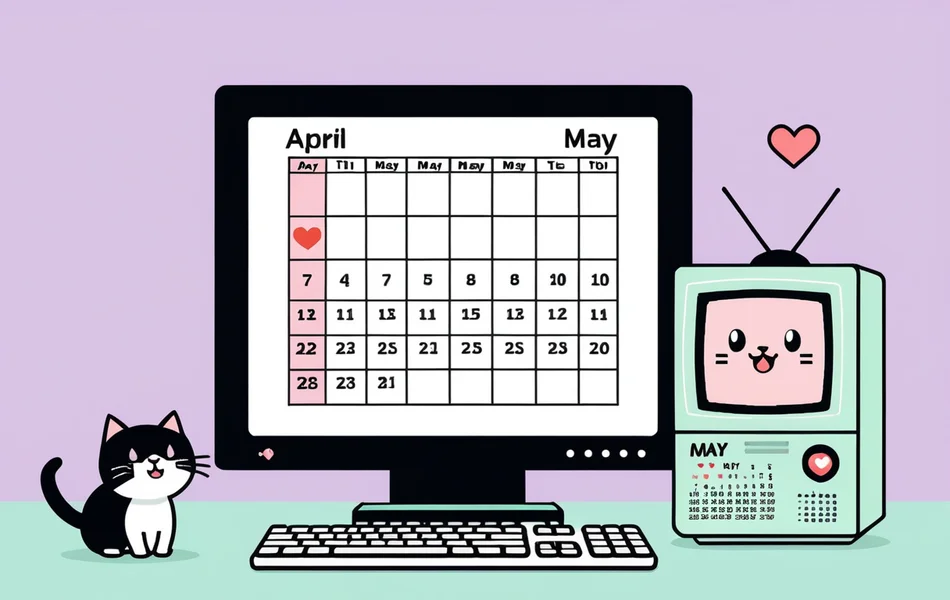
April has ended, May has arrived, and Justin Timberlake has once again fulfilled his unofficial calendar duties. Some seasonal traditions require decorations, travel, or a complicated meal. This one requires a picture and a vowel.
“It’s Gonna Be May” has been circulating since 2012. Fourteen years later, its annual return feels less like a surprise joke than a familiar knock at the door. You know exactly who is outside. You open it anyway.
The song supplies the entire premise
The joke comes from NSYNC’s 2000 song “It’s Gonna Be Me.” Timberlake’s delivery makes the final word sound like the name of the month. Move that sound into late April and the love song becomes a remarkably punctual forecast.
As Time’s history of the meme recounts, Timberlake attributed the pronunciation to direction from producer Max Martin. A small performance choice acquired a second career that nobody in the recording session needed to plan.
This is part of the charm. The song does not have to be about spring, and the joke does not need to improve the song. It simply borrows one sound and assigns it a seasonal job.
The trail leads back to Tumblr
Merriam-Webster’s account traces a captioned Timberlake image to the Tumblr user amyricha in January 2012. Know Your Meme’s archive also records an early calendar photograph posted by Nairobi-blue that March, with the image placed at the end of April.
Those are documented points in the joke’s circulation, not proof that nobody had ever heard the vowel that way before. Internet history is often better at preserving a post than identifying the first person to notice an obvious pun.
The calendar version gives the idea its little engine. A funny caption can be shared whenever you happen to encounter it. A caption attached to a date gives people a reason to remember it together.
Predictability is the feature
Our history of internet memes follows formats that spread through imitation and variation. This one has an especially convenient prompt: the month is changing. You do not need to understand a rapidly developing feud or learn why a new cartoon creature has acquired a cryptocurrency.
The timing also makes room for several kinds of participation. One person sincerely likes the joke. Another posts it because their friends groan. A third announces that they refuse to post it, thereby reminding everybody else of the joke. The calendar accepts all contributions.
That does not make the meme invulnerable to changing tastes or platforms. It gives it a recurring occasion. My reading is that the occasion now does much of the work: sharing the image says “we have reached this part of the year” as much as “listen to this funny pronunciation.”
There is comfort in recognizing a tiny ritual without needing to take it seriously. The joke can be tired and welcome at the same time. Anyone with a family group chat already understands this advanced branch of comedy.
Even the band is in on it
The performers have acknowledged the joke rather than leaving it entirely to everyone else. Know Your Meme records JC Chasez singing the familiar phrase during NSYNC’s April 30, 2018 Hollywood Walk of Fame ceremony. The timing was not exactly fighting the association.
That sort of participation adds another layer. An old performance becomes a meme, the performers respond to the meme, and the response becomes more material for the following year. It is cultural recycling with unusually reliable collection dates.
But we do not need to invent a streaming windfall or a universal theory of nostalgia to explain why someone posts it. Sometimes a person sees April 30 and thinks of Justin Timberlake. That is enough of an event for one small corner of the internet.
See you when the calendar comes around
Nobody can promise what people will be posting twenty-five years from now. Still, this particular format makes returning easy: the setup is already printed on the calendar, and the punchline has been rehearsing since 2000.
For now, May is here. The joke can put its feet up for a while. A surprising amount of annual administrative work has been completed by one man singing “me.”