The Gen Z pout and stare have become management-discussion material. Fortune’s April 23 headline frames both as warnings to CEOs.
We have a question. Has anyone in this conversation ever owned a cat?
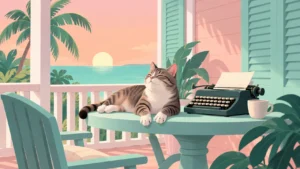
You enter the room. The cat sees you. The cat does not rise, applaud, or offer a reassuring update on its commitment to the household mission. In an office, somebody might call that disengagement. At home, it means you have met the cat.
A Selfie Pose Is Not a Performance Review
The labels cover different situations. A pout posed for a camera is a chosen image. A blank look during a conversation may be read as an absence of response. Putting them next to one another makes for a neat cultural comparison, but not a reliable test of someone’s work ethic.
A person can look detached while concentrating, look cheerful while thinking about lunch, or pose sullenly in a photograph and be perfectly chatty five seconds later. The face gives you some information. It does not arrive with a full transcript of the person’s motives.
The cat comparison is useful precisely as a joke about our urge to interpret. We keep assigning a board meeting’s worth of intention to one still face. Sometimes the chair of the board is simply waiting for you to open a cupboard.
The Pout Has Been Discussed Before
Rayne Fisher-Quann wrote about the “dissociative pout” in i-D in May 2022, describing an aesthetic of apparent detachment. Her essay treated posing as a cultural performance, not as a clinical diagnosis.
That earlier discussion complicates the idea that a brand-new expression has suddenly appeared in 2026. Styles can be renamed, revived, and moved into different conversations. A look circulating in photographs can become raw material for a workplace trend story without proving a whole generation has changed its personality.
Looking as though you are not trying can itself take effort. Anyone who has rejected eight nearly identical selfies understands the administrative workload of spontaneity.
There Is a Better Way to Ask What Workers Want
For a more direct view of attitudes, Deloitte’s 2025 survey examines how Gen Z and millennial respondents think about work, money, learning, and meaning. It reports that 89% of Gen Z respondents consider purpose important to job satisfaction and well-being.
That is a response to a question in a survey. It does not establish why a particular employee looked blankly at a manager, or show that every unsmiling worker is making a principled statement. The distinction matters if the aim is to understand people rather than give a meme a statistics appendix.
The practical questions are less glamorous than a generational diagnosis: was the instruction clear, did the person understand it, is the work getting done, and what feedback would help? These questions are harder to turn into a viral headline. They are also more likely to produce an answer you can use.
The Cat Has Read the Contract
Consider the household’s least cooperative content creator. The cat will sit in spectacular light until you raise your phone. It will demonstrate enthusiasm for the treat cupboard and none at all for your request to repeat an adorable gesture. It is selectively available, and it has no interest in documenting its reasons.
That is the comic appeal of comparing the stare to a cat. The expression seems to say, “I am here; further services are subject to negotiation.” It is not evidence that people and cats share the same employment strategy, and we do not need to date feline disapproval to a precise year in prehistory.
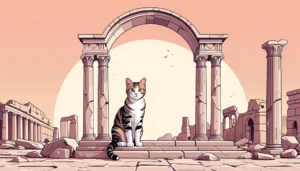
Nor do we need a mythical ancient statue whose expression perfectly matches a 2026 selfie. The cat currently occupying the clean laundry provides enough material.
Less Mind-Reading, More Conversation
Good communication matters. A colleague or customer may reasonably need a clear response. But asking for an acknowledgment is different from demanding a particular personality, and evaluating results is different from grading how brightly somebody smiled while producing them.
It works in the other direction too. A blank stare is not automatically rebellion, authenticity, or a sophisticated critique of capitalism. Sometimes people need to explain themselves. Even the cat eventually gets off the chair and walks toward the food bowl.
Internet labels make it easy to recognize a shared joke. They are less reliable as shortcuts for judging unfamiliar people. That tension appears throughout internet culture: a useful little shorthand starts getting asked to explain far too much.
The next time a facial expression becomes an organizational emergency, take a breath before commissioning a training deck. There may be a real conversation to have. There may also be a perfectly ordinary face, doing much less than the headline thinks.