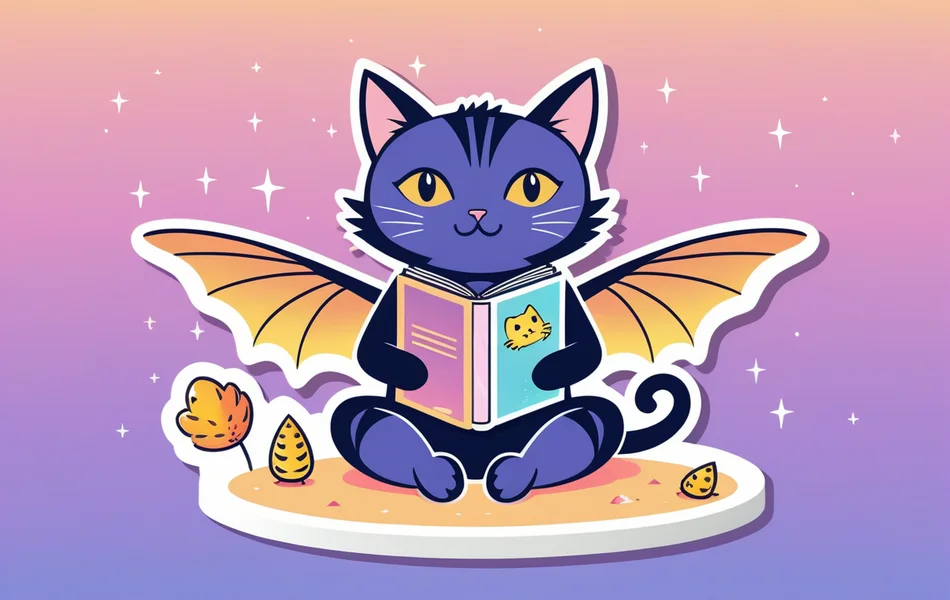
Somewhere in Italy, a ten year old is trading a holographic sticker of a crocodile fighter jet for a sticker of a humanoid coffee cup in a tutu. Neither of these things existed two years ago. Both began as digital absurdities before acquiring a life beyond the feed. Both of them have Panini albums now, and Panini has been printing sticker albums for Italian children since 1961.
This is Italian brainrot, a wave of AI-assisted meme characters that spread during 2025 and has carried into 2026. Fortnite added two characters as playable skins earlier this month. Newsstands in Rome and Milan stock trading card packs next to the soccer albums. Italian parents are giving up on dinner table conversation because they no longer understand what their kids are saying. A shark in Nike sneakers started it, and now we are here.
What Italian Brainrot Actually Is
The formula is simple and deeply stupid. Ask an AI image generator for an impossible chimera: a crocodile that is also a bomber plane, a coffee cup wearing ballet shoes, a wooden plank swinging a baseball bat. Feed the image to a text-to-speech engine set to Italian. Give the creature a nonsense name that scans like bad opera. Post it to TikTok.
Among the recognizable figures are Tralalero Tralala, a shark with three legs and sneakers; Bombardiro Crocodilo, the bomber crocodile; and Ballerina Cappuccina, the coffee-cup dancer. Tung Tung Tung Sahur comes from an Indonesian strand of the phenomenon, a reminder that “Italian brainrot” is not a tidy national family tree.
The voices speak Italian. Usually bad Italian, sometimes filler syllables arranged to sound Italian. The grammar is wrong on purpose. The cadence is stolen from folk songs and TV jingles your grandmother watched. It sounds like someone fed a Nonna into a blender.
Why Italian, Though
The exaggerated Italian-sounding delivery is part of the recognizable style. Why it catches on is open to interpretation: rhythm, repetition, familiar sounds put in unfamiliar combinations, and the pleasure of repeating something ridiculous all seem plausible. There is no need to invent a linguistic formula proving that one language was destined to produce the perfect bomber crocodile.
The label should not be mistaken for a complete account of who created every character. The material has been remixed across languages and communities. Sometimes the Italian is nonsensical; sometimes the words have meanings that the person repeating them may not understand. The shared joke travels more easily than its context.
The Panini Problem
Here is the part that breaks your brain. In Italy, trading sticker albums are a decades old kid ritual. You buy packs at the newsstand, you stick players into the World Cup album, you trade doubles at school. Panini has done this since 1961. Calciatori albums, Disney albums, Harry Potter albums. Their brand is childhood, in Italy, in a very specific and serious way.
Panini was already publishing the sticker collection in 2025, as its marketing team explained in a September interview about bringing the memes to print. That is distinct from Skifidol’s trading card game, although both turn the same broad meme phenomenon into physical collectibles. The absurd part remains intact: characters associated with AI-generated imagery have entered the familiar world of packets, albums, and playground swaps.
Fortnite Crashed the Party
Tung Tung Tung Sahur and Ballerina Cappuccina have also reached Fortnite’s item shop this month. Their presence is another step from remix culture into commercial entertainment. Somewhere, a perfectly serious commercial conversation has involved saying “Tung Tung Tung Sahur” out loud. Possibly several times.
What matters is the short trip between recognizing a strange character online and encountering it on merchandise. The relationship between online attention and publishing offers another version of that story. A screen is a remarkably effective shop window, even when the thing in the window is a wooden plank with a face.
The Parents Are Losing
For parents, the practical challenge can be understanding a joke that seems designed to defeat explanation. Asking a child what a character means may be more illuminating than assuming every nonsensical phrase is a diagnosis.
The term “brainrot” is a joke about media consumption, not evidence that these particular characters cause an attention disorder. Questions about how much time children spend with fast-moving feeds are worth discussing, but blaming a specific meme for an attention disorder is a much larger claim. A crocodile with jet engines is not a clinical study.
Collecting and knowing the joke can become forms of social currency, much as earlier generations used cards, catchphrases, or the ability to name every Pokémon. The scenery changes. The experience of being nine and insisting that everyone else must understand the thing you just discovered is familiar.
What Comes Next
The obvious question is whether any of this lasts. Brainrot looks like it ought to have the half life of pop rocks. Which characters will outlast the initial wave is still uncertain. A coffee cup ballerina at least has the advantage of making sense as a decorative object, which is more than most of us can say. The Panini album will be a time capsule. In five years the stickers will turn up in drawers and Italian adults will look at them the way we look at Tamagotchis.
The less boring answer is that the format survives even if the characters do not. Italian brainrot is a proof of concept. A bored person with a laptop can launch a character, a phrase, a whole cultural moment in under a year. Free image-generation and text-to-speech tools lower the entry barrier. TikTok distributes, Panini retails, Fortnite legitimizes. Brainrot skipped the line.
Somewhere a ten year old in Milan is explaining all of this to his grandmother. She is not following. He shrugs, pulls another sticker out of the pack, and tells her the coffee cup is dating the wooden plank. She does not follow this either. Neither do we. That is the whole joke.