
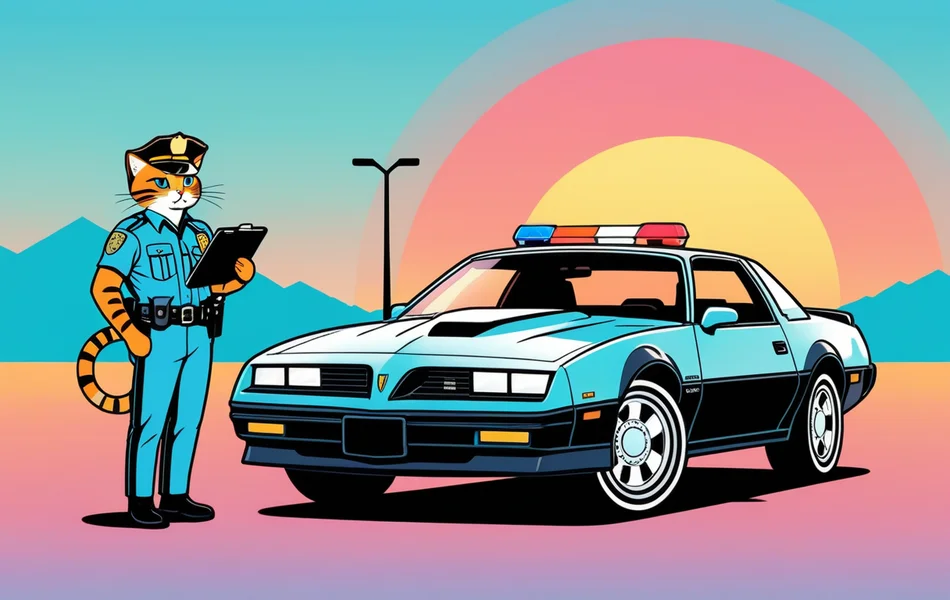
A museum exhibit has acquired a remarkably inconvenient pen pal: New York City’s traffic-ticket system. The Volo Museum in Illinois received a $50 speeding citation connected to a KITT replica that it says had remained on display. Local reporting on May 11 described a camera image from Ocean Parkway, Brooklyn, alleging 36 mph in a 25 mph zone on April 22. The talking-car fantasy has reached its least glamorous sequel: correspondence.
The amusing part is the mismatch. KITT belongs in a story about a crime-fighting car with a computer and a very strong opinion. Instead, the museum has a notice to dispute. The cat had expected turbo boost, not an administrative hearing.
The Ticket That Should Not Exist
The vehicle is a replica of the black Pontiac associated with Knight Rider, with the familiar KNIGHT display plate. Museum staff told reporters the citation was genuine and that they intended to challenge it. A prop-like plate is excellent for completing a costume; identifying a legally responsible owner is a rather different task.
How the museum became the recipient remained the important unanswered question. The notice does not prove that an algorithm searched Google, selected the most photogenic result, or followed a particular database chain. Those would be explanations to investigate, not facts to insert because they sound suitably ridiculous.
The Mystery Driver in Brooklyn
A photographed car and a familiar plate do not, on their own, identify the driver. Nor do they establish why that person used the plate. The mystery is already funny without assigning a stranger a surname, a registration history, and a criminal business model.
In the imaginary television version, Michael Knight would spend the episode tracking down his automotive double. In the administrative version, somebody needs to establish why the notice went where it did. The cat prefers the television version, because its forms are usually interrupted by a stunt.
Why Brooklyn, Why Now
The alleged speed belongs in the report. The driver’s destination and motives do not. We can picture a counterfeit KITT making an undignified grocery run, but that is the joke, not a sighting. Nothing diminishes a supercar fantasy quite like a shopping list with kitchen towels on it.
There is an appealing reversal here: a fictional intelligent car meets a real identification problem. It is tempting to turn that into a verdict on every automated system. One disputed notice cannot do that job. It can, however, make a strong case for keeping a usable route to correction.
The Dispute, Not a Confirmed Resolution
ABC7 reported on May 13 that the museum had requested a hearing and the city’s Department of Finance was looking into the matter. That report did not confirm cancellation of the fine. A tidy ending would be satisfying, but the paperwork had not supplied one.
The unanswered question is how the notice became associated with the museum. Until there is a documented explanation, “the computer picked the first result” belongs in a sketch, not the account of what happened. The cat is prepared to audition for the sketch.
Knight Rider, Forever Refusing to Die
Knight Rider’s original television run was in the 1980s, but the silhouette and red scanner still do a lot of cultural work. You do not need to have watched every episode to understand why a KITT replica makes this particular administrative error memorable. A perfectly ordinary sedan would have a much harder time booking the same publicity.
Some pop-culture images are exceptionally durable. We explored that afterlife in the “It’s Gonna Be May” meme and our history of cat memes. Recognition lets a new absurdity borrow an old punchline. Here, the punchline arrives with a return address.
The Cat’s Verdict
If a Knight Rider reboot needs a low-budget episode, this is promising material. No explosions required: just a replica, an envelope, and somebody repeatedly explaining that the exhibit has an alibi. The cat would like to know whether the role of increasingly irritated desk clerk has been cast.
If you work at the Volo Museum: the framed citation would make a memorable companion to the exhibit. A gift-shop shirt could read “My Car Went to Brooklyn and All I Got Was This Ticket.” This is a merchandising suggestion, not a report of what the museum has announced.
The serious point is modest: the recipient of a disputed notice should be able to get the mismatch checked and explained. The comic point is that KITT, a car famous for talking, has delegated the conversation to museum staff. After all those years of television dialogue, it has finally found something it would rather not discuss.