Nothing can bring you peace but yourself. Nothing can bring you peace but the triumph of principles.
Ralph Waldo Emerson
Source, Essays, Self-Reliance
Why This Quote Matters
These are the closing sentences of Ralph Waldo Emerson's essay Self-Reliance. Peace is connected first to the self, then to the triumph of principles. Reading the two together matters. Emerson is not merely saying that a person should feel confident. He ties that confidence to an inner allegiance that cannot be supplied entirely by favorable news, approval, or an improvement in outward circumstances. Read the source.
This makes the quotation more demanding than a promise of instant calm. If peace depends on doing what you believe is right, an audience cannot manufacture it by applauding a compromise. Equally, disapproval does not automatically prove that the compromise was necessary. The useful question is about the fit between judgment and conduct. Principles may require reconsideration, but they cannot do much work if they are surrendered every time the room becomes uncomfortable.
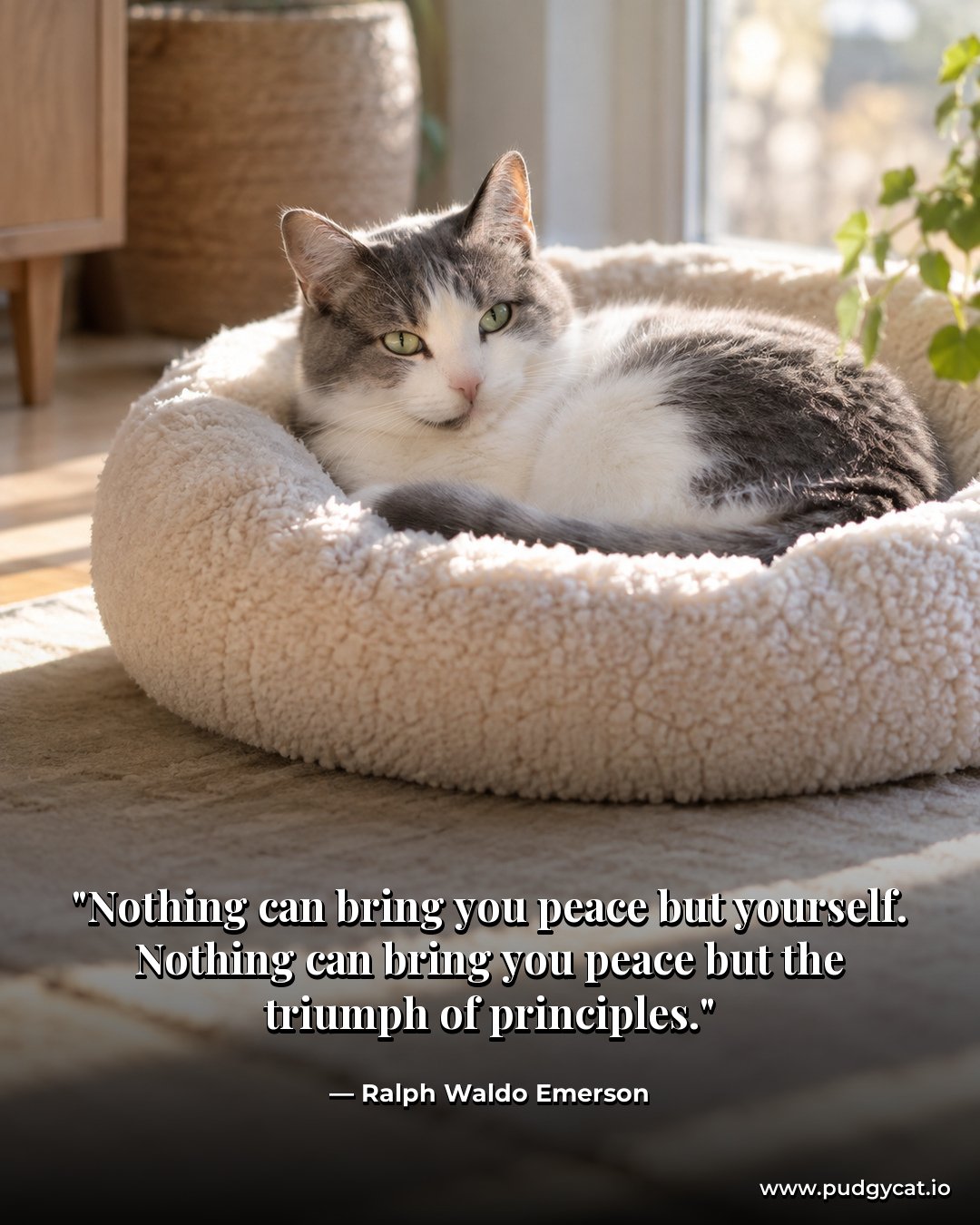
The white-and-grey cat curled into its round bed provides a visual pause beside that argument. The composition is settled, with very little happening beyond light and a resting animal. Its peace is a photographic impression rather than a philosophical achievement. For the human viewer, the contrast is helpful: a quiet room is pleasant, but a quiet relationship with one's own decisions is a different and more difficult comfort.
🐾 Visit the Pudgy Cat Shop for prints and cat-approved goodies, or find our illustrated books on Amazon.
More Cat Wisdom