 English
I could easily forgive his pride, if he had not mortified mine.
Jane Austen
Source, Pride and Prejudice, 5
Why This Quote Matters
Elizabeth Bennet says this in chapter 5 of Pride and Prejudice while discussing Darcy's pride. Jane Austen lets the joke turn back toward the speaker. Elizabeth's objection is not presented as entirely detached judgment: her own pride has been wounded. The sentence is funny because she can recognize that injury without immediately becoming free of its influence on what she thinks of him.
That small admission makes the line useful far beyond the novel's conversation. A criticism may be justified and still carry a personal grievance. Noticing the grievance can help explain why this particular fault, in this particular person, has become so absorbing. The discovery need not erase the criticism. It simply removes the convenient fiction that judgment is always being delivered from a perfectly neutral place. Austen allows intelligence and vanity to share the same sentence, which is often where they live in ordinary life.
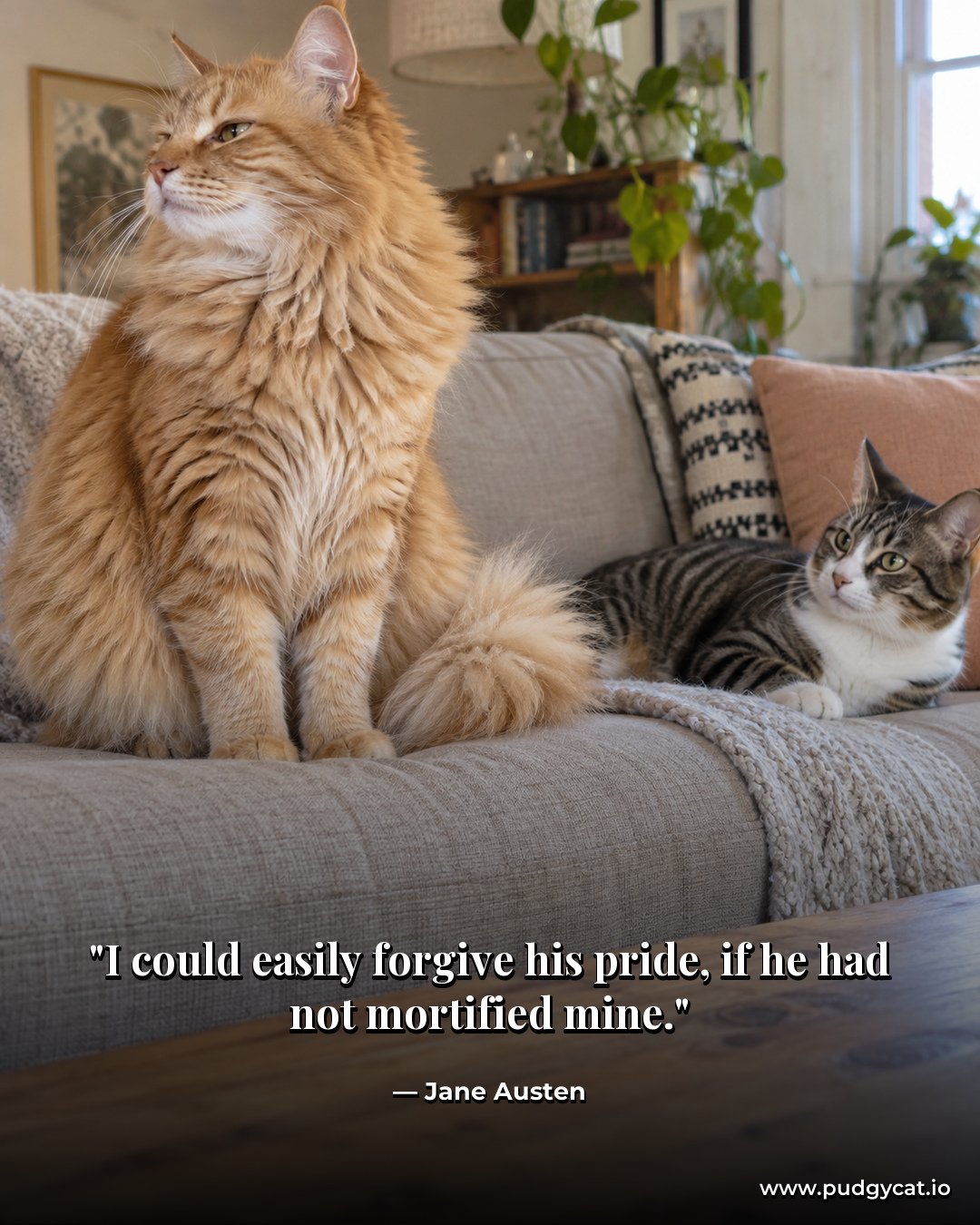
The fluffy ginger cat turning away from another cat on the sofa offers an excellent visual suggestion of offended dignity. No serious quarrel needs to be invented for the expression to work. The picture gives Elizabeth's admission a comic companion: sometimes the behavior we find hardest to forgive has touched the exact spot where our own self-importance was sitting comfortably a moment earlier.
More Cat Wisdom