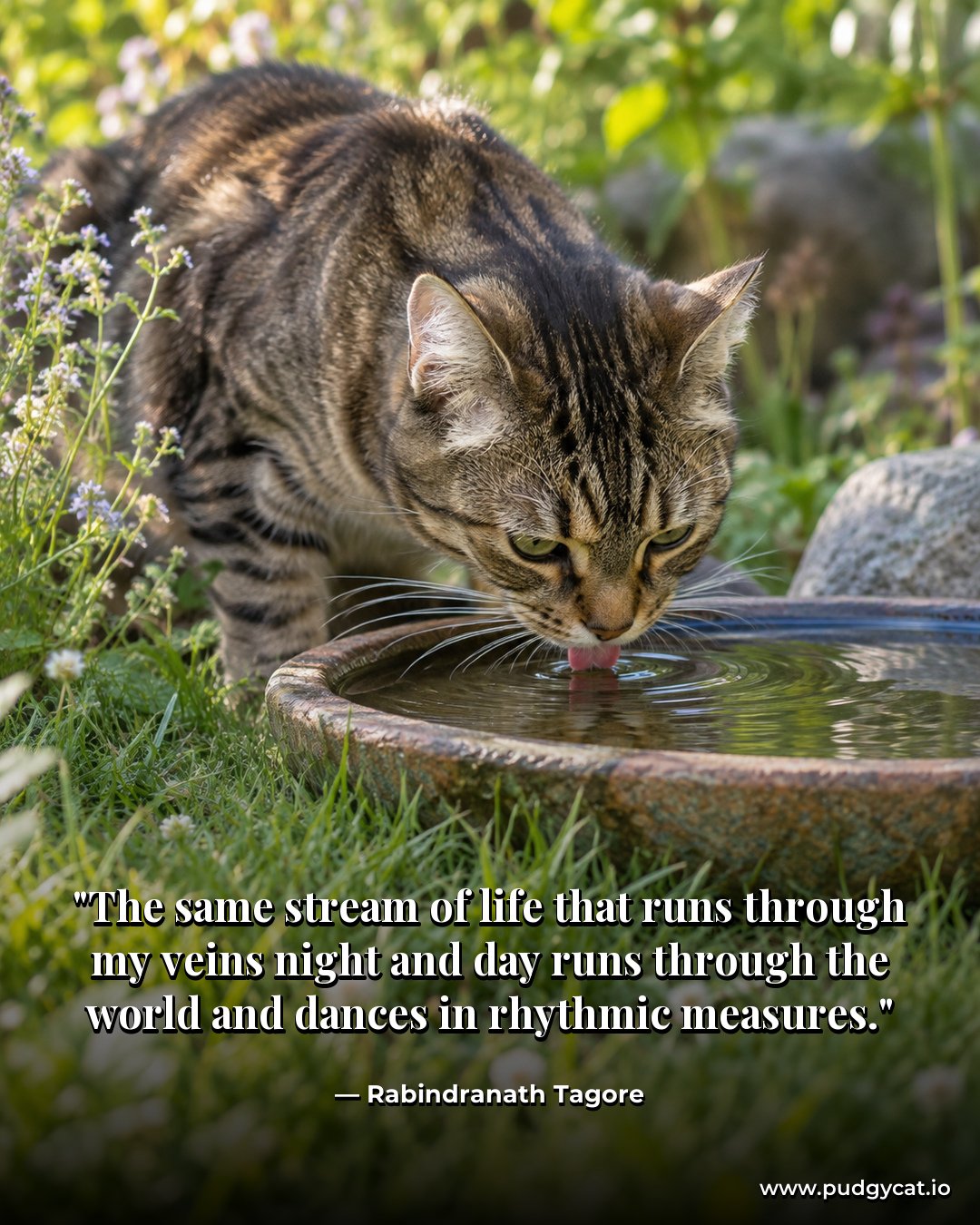
The same stream of life that runs through my veins night and day runs through the world and dances in rhythmic measures.
Rabindranath Tagore
Source, Gitanjali, 69; English prose version by Tagore
Why This Quote Matters
In poem 69 of Gitanjali, Rabindranath Tagore imagines a single stream of life moving through the speaker and the world. The passage continues through grass, leaves, flowers, birth, and death. Its movement is poetic and spiritual, creating a sense of continuity between a person and the living surroundings that might otherwise be treated merely as scenery beyond the self.
The quotation can change the scale of attention. A private concern remains real, but it takes place within a world that is doing much more than reflecting it back. Plants grow, water moves, and ordinary creatures continue their particular activities. Tagore's image invites participation in that larger movement. It does not need to become a scientific explanation to have value. Poetry can make a relationship newly felt, especially a relationship so familiar that it has become easy to overlook while hurrying through it.
The tabby drinking from a shallow garden dish gives the stream of life a small domestic meeting place. Grass, water, light, and an animal occupy the same moment. Nothing spectacular needs to happen for the connection to become visible. The photograph offers a useful pause in a human day that may have grown too narrow: the world has not stopped being alive simply because we have been busy thinking about something else.
🐾 Visit the Pudgy Cat Shop for prints and cat-approved goodies, or find our illustrated books on Amazon.
More Cat Wisdom