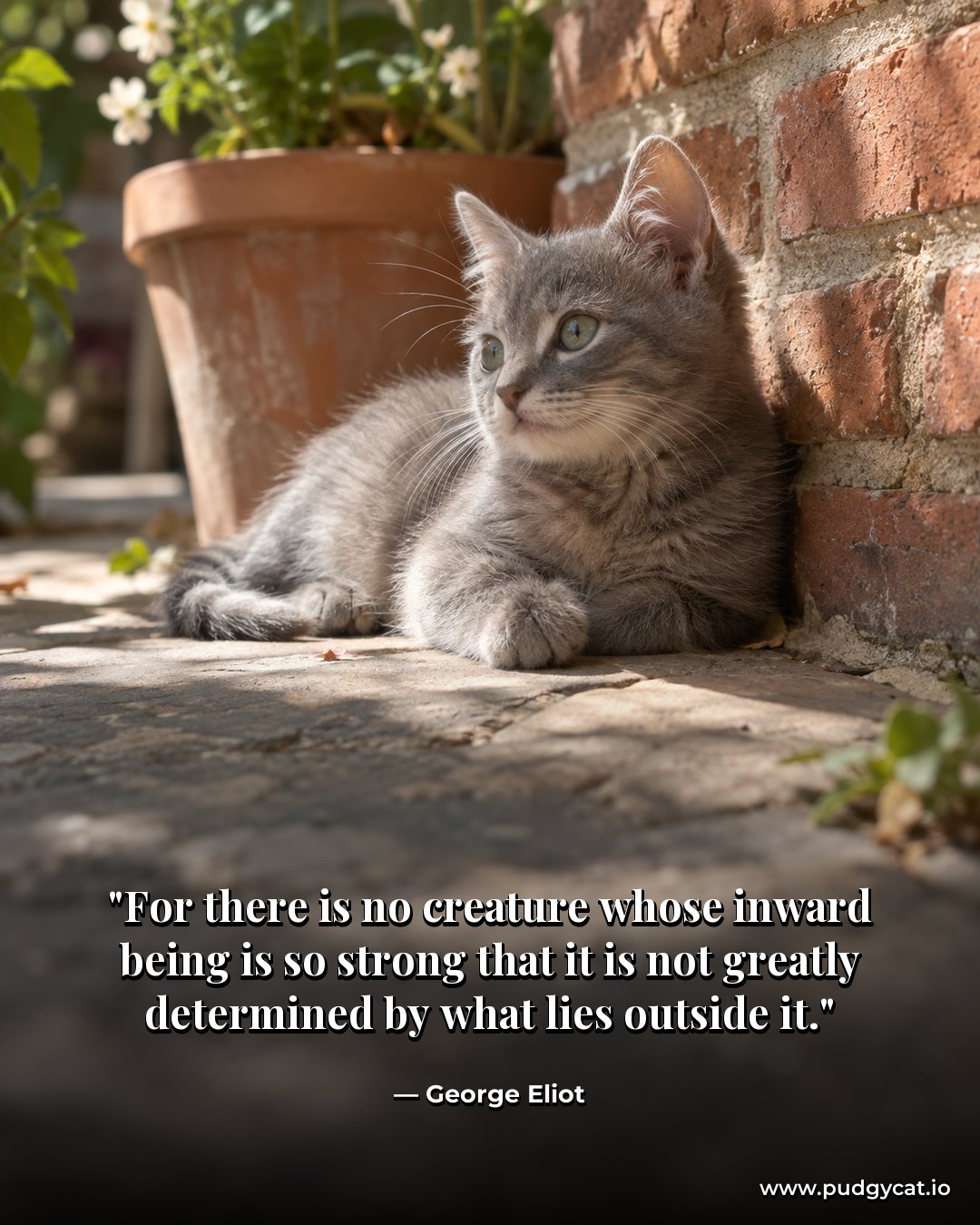
For there is no creature whose inward being is so strong that it is not greatly determined by what lies outside it.
George Eliot
Source, Middlemarch, Finale
Why This Quote Matters
In the Finale of Middlemarch, George Eliot's narrator considers how individual lives are shaped by social conditions. This sentence resists the idea that a strong inner character can exist independently of its surroundings. The surrounding reflection connects aspiration with the opportunities a particular time and community make possible. An individual's will matters, but it is not the only force determining what that individual can become.
The observation complicates easy judgments about success and failure. Effort is visible in one person, while the conditions enabling or obstructing it can remain less obvious. Family expectations, available work, resources, and other people's small decisions all contribute to the field of action. Eliot's sentence invites attention to those relationships without erasing personal responsibility. It asks for a fuller account than either pure self-determination or complete helplessness can provide. Character is exercised somewhere, among circumstances it did not entirely choose.
The grey kitten resting in warmth beside a brick wall gives the influence of surroundings a gentle visual form. Shelter and sunlight are part of what makes the scene comfortable. The picture does not need a dramatic before-and-after story to make the connection clear. A small life is being lived in a particular place, and that place contributes something real to what the life can feel like.
🐾 Visit the Pudgy Cat Shop for prints and cat-approved goodies, or find our illustrated books on Amazon.
More Cat Wisdom