 English
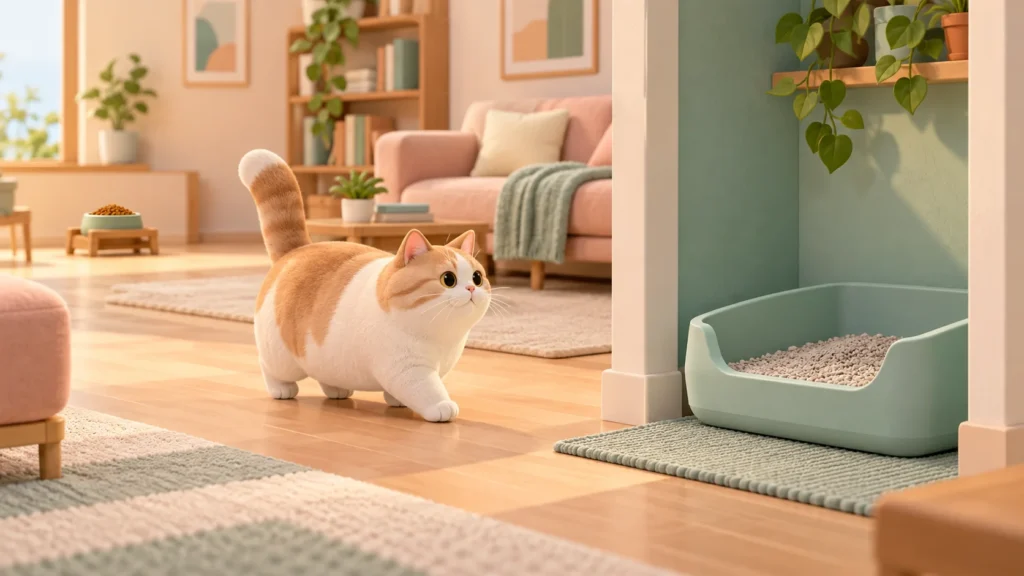
The cupboard beside the washing machine keeps the litter tray out of sight. From a human point of view, the problem is solved.
From a cat's point of view, there may be a loud appliance, a narrow entrance and no easy way past another animal waiting outside. Position matters as much as whether the tray fits.
Start with the route
Cats Protection recommends quiet, accessible locations away from food, water and sleeping areas. Busy corridors, cat flaps and noisy appliances can make a toilet area feel exposed or unpredictable.
Walk through the route your cat uses. Does a door need to be open? Does the cat have to squeeze past stored objects? Is there a place where a dog or another cat regularly lies?
A location that works at lunchtime may fail when the bathroom door is shut overnight. Include the household's ordinary routines in the assessment.
Spread the options around
One tray per cat plus an extra is a common starting recommendation. Their distribution matters: several trays lined up together still concentrate access in one place.
On a simple sketch of your home, mark each tray and trace the route from the cat's usual resting spots. This makes bottlenecks easier to notice. It can also show why an additional tray on another floor may be more useful than a third one beside the first two.
For households adding another cat, preparing separate resources before introductions helps avoid making every essential activity a shared encounter.
Privacy needs an exit
Consider two possible corners. One sits beside a frequently used doorway; the other is quiet but behind a heavy door that sometimes swings shut. Neither is ideal just because it is discreet.
Try to solve the specific obstacle. Keep access dependable, move clutter out of the approach and choose a tray the cat can enter and turn around in comfortably. An older animal may need a lower entrance.
Keep the tray clean enough that the cat is not being asked to accept an unpleasant place simply because it is convenient for you.
Try following the route at the times your household is busiest. A quiet corner in the afternoon may be beside a noisy appliance or a crowded passage in the evening.
Think about the way out as well as the way in. If another cat waits just outside an enclosed tray, the animal inside may have few comfortable choices. You do not need to witness a fight to recognise a poor layout. A sketch of entrances, furniture and resting places can reveal why moving a tray a short distance would offer a more open approach.
A changed habit needs attention
Sudden toileting changes can have medical causes. Arrange a veterinary check rather than assuming your cat has become difficult. Never punish an accident.
Straining with little or no urine can signal an emergency, especially in male cats. Cats Protection's urinary-problem guidance explains why prompt veterinary care matters.
If health problems have been addressed and the current location still seems unsuitable, offer a better alternative and observe which tray the cat uses. A successful arrangement is one your cat can reach calmly every day, even when the house is busy.