
 English
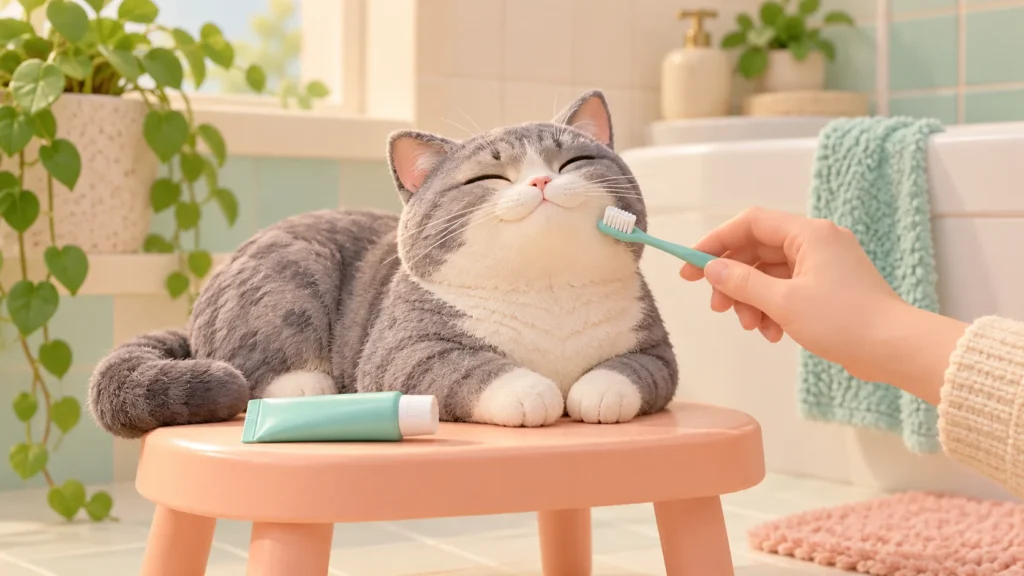
The toothbrush is ready. The toothpaste is ready. The cat has noticed an unusual level of preparation and is considering leaving the room.
Home dental care asks a cat to accept contact in a sensitive place. Starting with a full brushing session can make the equipment memorable for all the wrong reasons. A slower introduction gives the animal time to understand what is happening.
Check the mouth before starting a routine
Cornell's overview of feline dental disease distinguishes gingivitis, periodontitis and tooth resorption. These conditions can cause pain, and a cat may show changes in eating or other behaviour rather than conveniently presenting an obvious sore tooth.
Brushing belongs to preventive care. It cannot repair a damaged tooth or substitute for treatment of painful disease. If there is bad breath, bleeding, drooling, difficulty eating or another change, arrange a veterinary assessment before attempting to scrub the problem away.
The point is to make care tolerable. A painful mouth gives you a very different starting position from a comfortable one.
Introduce one small part at a time
In Cornell's guidance on bad breath and prevention, Dr Davis describes pairing gentle introduction of feline tooth gel with something the cat enjoys, then progressing from a finger to a brush as the animal accepts the contact.
Keep the practical aim modest at first. Let the cat investigate the equipment. Use a product intended for cats and follow your veterinary team's advice about the brush and technique. Human toothpaste is not an appropriate substitute.
A brief, calm attempt that ends before a struggle is more useful than forcing through a complete session. If the cat withdraws, let it. Repeated restraint can teach the animal to avoid the place or the person long before the toothbrush appears.
Make the routine predictable
A familiar location and an achievable step help both participants. You are learning how much contact the cat currently accepts, not demonstrating that it ought to accept more.
Our article on clear rewards in cat training explains why timing matters when an animal is learning a new task. Dental care benefits from the same attention to small, understandable steps, although training does not remove the need to check for pain.
Once brushing is established, your veterinarian can advise on a suitable routine and any additional products. Claims on treats, gels and water additives should be considered individually rather than assumed to equal mechanical cleaning.
Choose a place where you can see comfortably and the cat can leave without slipping. Put the equipment within reach before starting, so that an encouraging moment is not interrupted by a search through a drawer.
It can help to agree the same approach with everyone in the household. One person's patient practice is harder to maintain if another turns the task into an unexpected wrestling match.
Keep professional care in the plan
A cat that allows brushing can still develop dental problems. Home observation and preventive care help you notice changes; they do not let you inspect everything below the gumline.
If progress stalls, ask the veterinary team to demonstrate a manageable approach. The useful outcome is a routine that can continue, with the cat remaining comfortable. An impressive first attempt followed by months of hiding whenever the drawer opens is a poor bargain.