 English
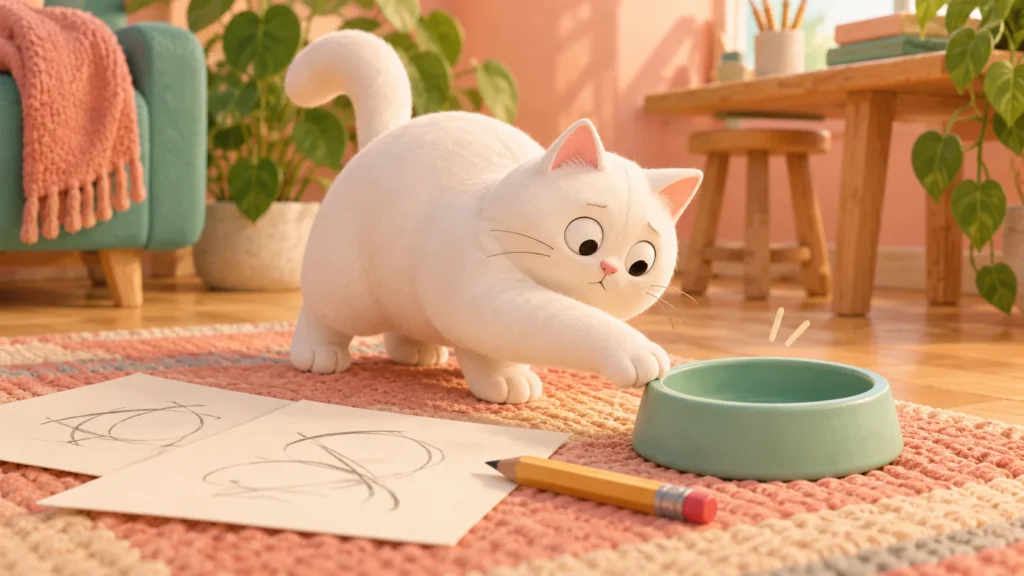
The cat has a request. The person has another activity in mind. Much of domestic life can be arranged around that disagreement, and Simon's Cat has found an extraordinary supply of comedy in it.
Simon Tofield's animated series makes the animal's intention easy to follow while leaving the human to discover how inconvenient it will become. The joke is often recognisable before the trouble has fully developed. Anyone who has tried to finish a task while a cat wanted attention knows the negotiation.
Observation before exaggeration
Tofield's official biography identifies him as an English animator whose interest in drawing began with childhood flipbooks. It also places cats and an interest in wildlife alongside animation in his working life.
That combination offers a useful way into the films. A believable movement gives the exaggeration somewhere to start. A cat waiting, watching or reaching for something can be funny without being dressed as a person or supplied with a long speech.
The character's simple appearance also makes small changes legible. Eyes, ears and posture have to carry information that a more detailed image might bury. When a viewer can immediately see where the cat is looking, the next movement can become a surprise rather than a puzzle.
Two incompatible schedules
The recurring domestic situations work because both participants have understandable priorities. The human wants to continue an ordinary activity. The cat wants the human to respond.
Animation can stretch that mismatch much further than a real household safely could. An action can be repeated, delayed or escalated until it becomes a visual argument. The cat's persistence supplies the structure; the person supplies the obstacle.
This is also why the humour travels well. Recognising an impatient animal does not require a complicated explanation of the room, a current news story or knowledge of a particular celebrity. The situation gives viewers somewhere to place their own experiences.
The silence also gives a viewer room to supply familiar household details. You may imagine your own kitchen, a particular cupboard or the sound of your cat arriving just before dinner. The drawing supplies enough information to trigger recognition without specifying every object in the room.
That is why a simple animated cat can feel more familiar than a much more realistic portrait.
The difference between a comic cat and a viral pet
Our history of feline internet memes follows the circulation of photographs, captions and recognisable animals. Simon's Cat offers another kind of familiarity: a continuing fictional character, built to return to the same everyday friction from different directions.
That changes what the viewer is waiting for. With an unfamiliar pet clip, the surprise may be the unusual thing an animal happens to do. In a recurring animation, knowing the character can make the anticipation part of the pleasure. You suspect the cat will persist. The question is how the scene will find another way to make persistence funny.
The series is best approached as animation rather than a handbook for interpreting every feline action. Its timing serves a joke. For real cats, space, health and the rest of the animal's behaviour still matter. But when the bowl is empty and somebody is refusing to notice, the opening conditions are wonderfully familiar.