 English
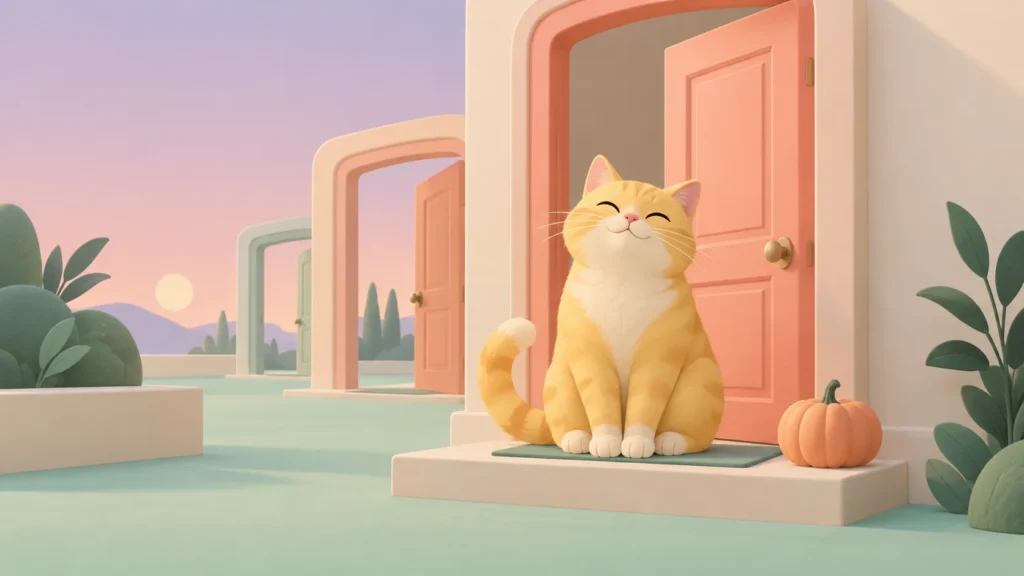
A man wants a cat gone. The cat returns. Once that pattern is established, an audience can anticipate the next failure before it happens, which only makes an increasingly elaborate attempt more enjoyable to watch.
The Cat Came Back has travelled from a nineteenth-century song to folk performances and animation. Its persistent cat is especially good company for Halloween, when a story can be funny and a little alarming at the same time.
A song with a long paper trail
The Lester S. Levy Sheet Music Collection at Johns Hopkins holds an 1893 edition of the song, credited to Harry S. Miller and published by Will Rossiter in Chicago. The catalogue gives us a firm historical object to consult rather than an origin guessed from a modern recording.
That is a useful habit with songs that feel as though they have always existed. Repeated performance can make a work seem ownerless, while an early printed edition preserves a name, a date and a particular version.
Later versions should be approached as versions. Words, verses and presentation can change as a song moves between performers and audiences. A familiar refrain may connect them without making every detail part of the same original text.
The joke depends on the return
Repetition is doing much of the work. The listener learns the pattern and begins waiting for it. Each new attempt raises an obvious question about how the story will get back to the cat.
The owner keeps treating the problem as something a bigger effort will solve. The audience increasingly understands that the effort itself is the entertainment. Once the cat’s return feels inevitable, attention moves to the consequences of trying again.
That makes the animal an effective centre for the joke. Cats already have a familiar reputation for choosing their own routes and appointments. Exaggerating that independence into an impossible return needs very little explanation.
Cordell Barker’s animated version
The National Film Board of Canada’s page for the 1988 film identifies Cordell Barker’s short as an animated treatment of the folk song. Mr. Johnson’s efforts to remove a small yellow cat become an escalating sequence of disasters.
In a curatorial discussion of Barker’s films, the NFB describes the apparently welcome arrival of the cat and the damage that turns Johnson against it. That change gives the struggle a starting point before the increasingly absurd consequences take over.
The film earned an Academy Award nomination, as noted in the NFB’s Barker collection. It is a compact piece of dark comedy, and the animation is worth watching for how it handles anticipation as much as for the eventual mishaps.
A Halloween viewing with a musical ear
This was not originally a Halloween song. The seasonal connection comes from the uncanny persistence of the cat and the darker comic possibilities in its return. Animation can make a cheerful-looking animal and a thoroughly dreadful situation occupy the same frame.
When watching, listen for how the music helps you expect a repetition. Then notice what the pictures do differently on the next attempt. Our collection of songs about cats offers other examples of the ways a feline character can organise a piece of music.
Barker’s short is an especially neat illustration of a story that knows you know the pattern. The question has become how much trouble the human will cause before accepting it.