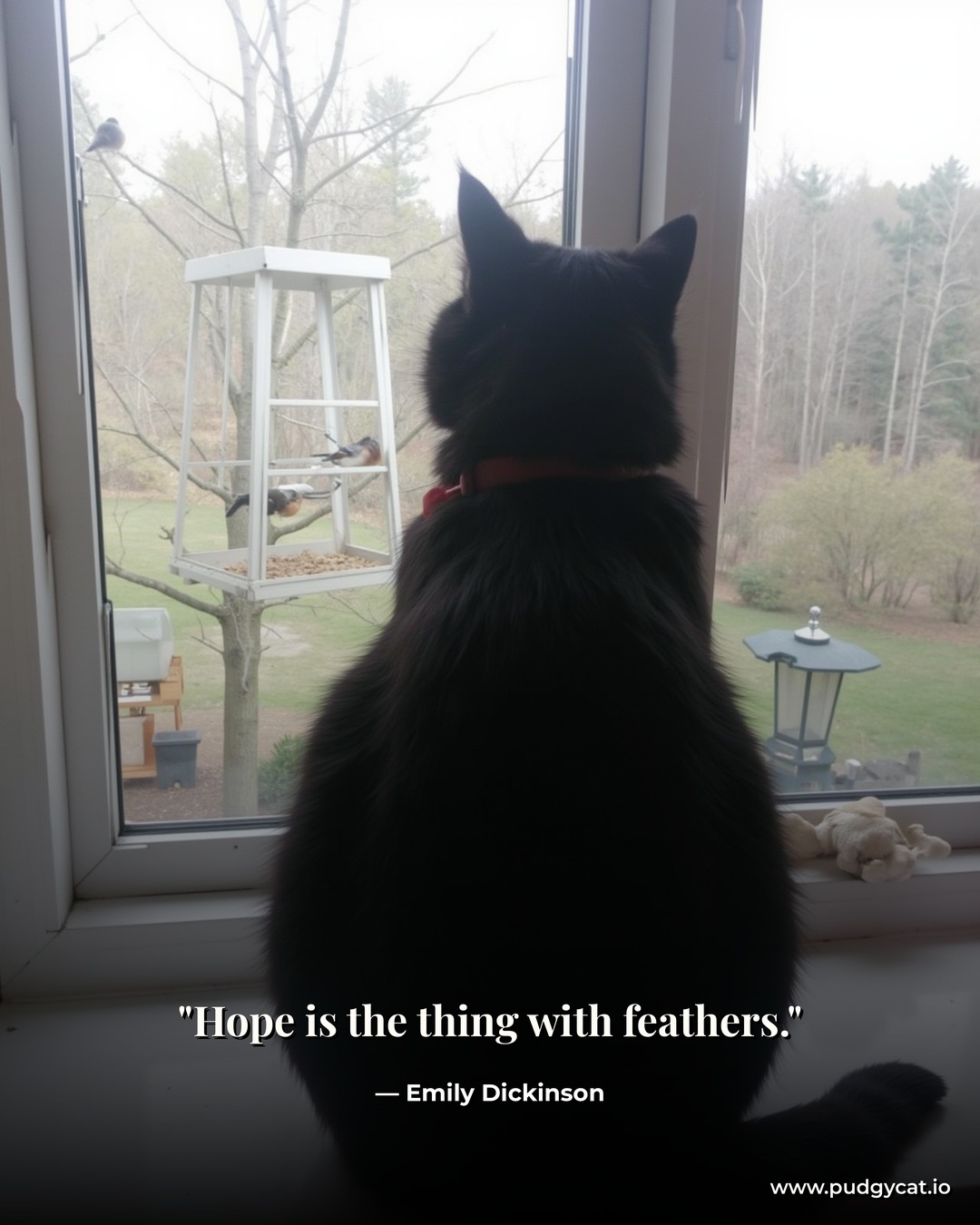
Hope is the thing with feathers.
Emily Dickinson
Source, poem 314, c. 1861
Why This Quote Matters
Emily Dickinson wrote this around 1861 in Amherst, Massachusetts, in a white dress, in a room she rarely left. The poem was published after her death along with most of the rest. The line is so famous that it has almost stopped meaning anything. It survives the overuse because the metaphor is stranger than it first appears.
Dickinson did not write hope is a feathered creature. She wrote hope is the thing with feathers. The thing. Something not quite identifiable, recognized mostly by its covering. Hope, in her rendering, is not warm, reassuring, or even particularly pleasant. It is a small animal that perches inside you and sings in bad weather without being asked, and does not stop for your permission. It is autonomous. That is closer to accurate than most of the plush versions we have since stitched onto it.
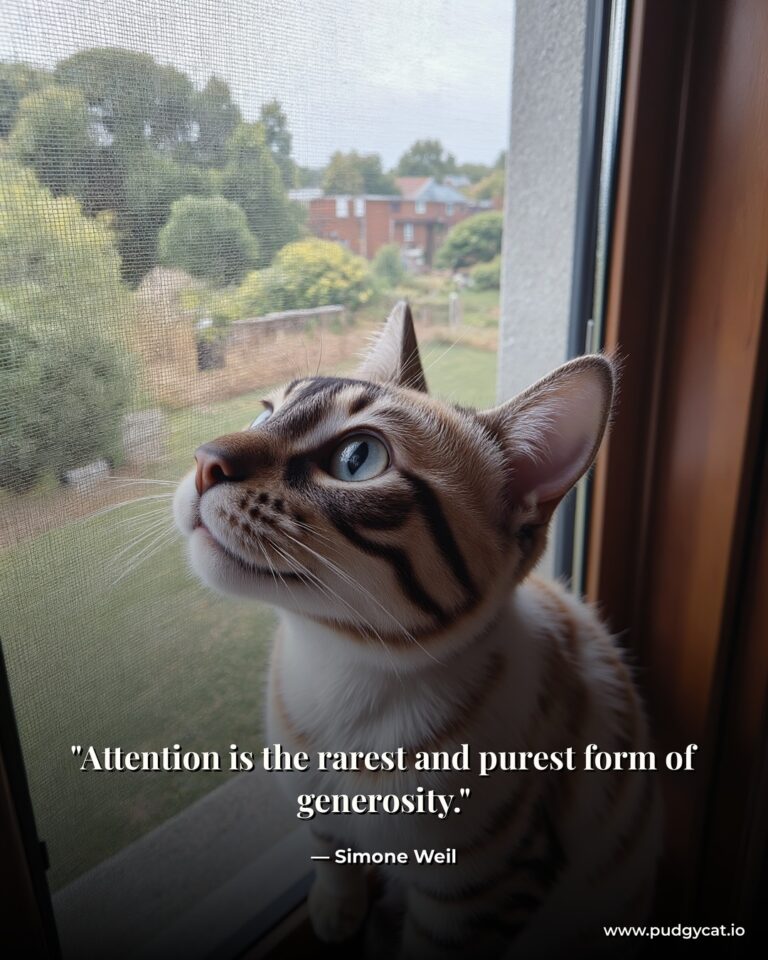
A cat at the window, tail twitching, locked on a bird it will never catch, is a diagram of exactly this. The bird is outside the frame. The cat will not touch it. The chirr that rises from the cat's chest is not reasonable. It is the feathered thing perching and singing anyway. We keep catching ourselves doing the same. Most of what we call ambition is just the sound we make at the glass.
🐾 Visit the Pudgy Cat Shop for prints and cat-approved goodies, or find our illustrated books on Amazon.
More Cat Wisdom