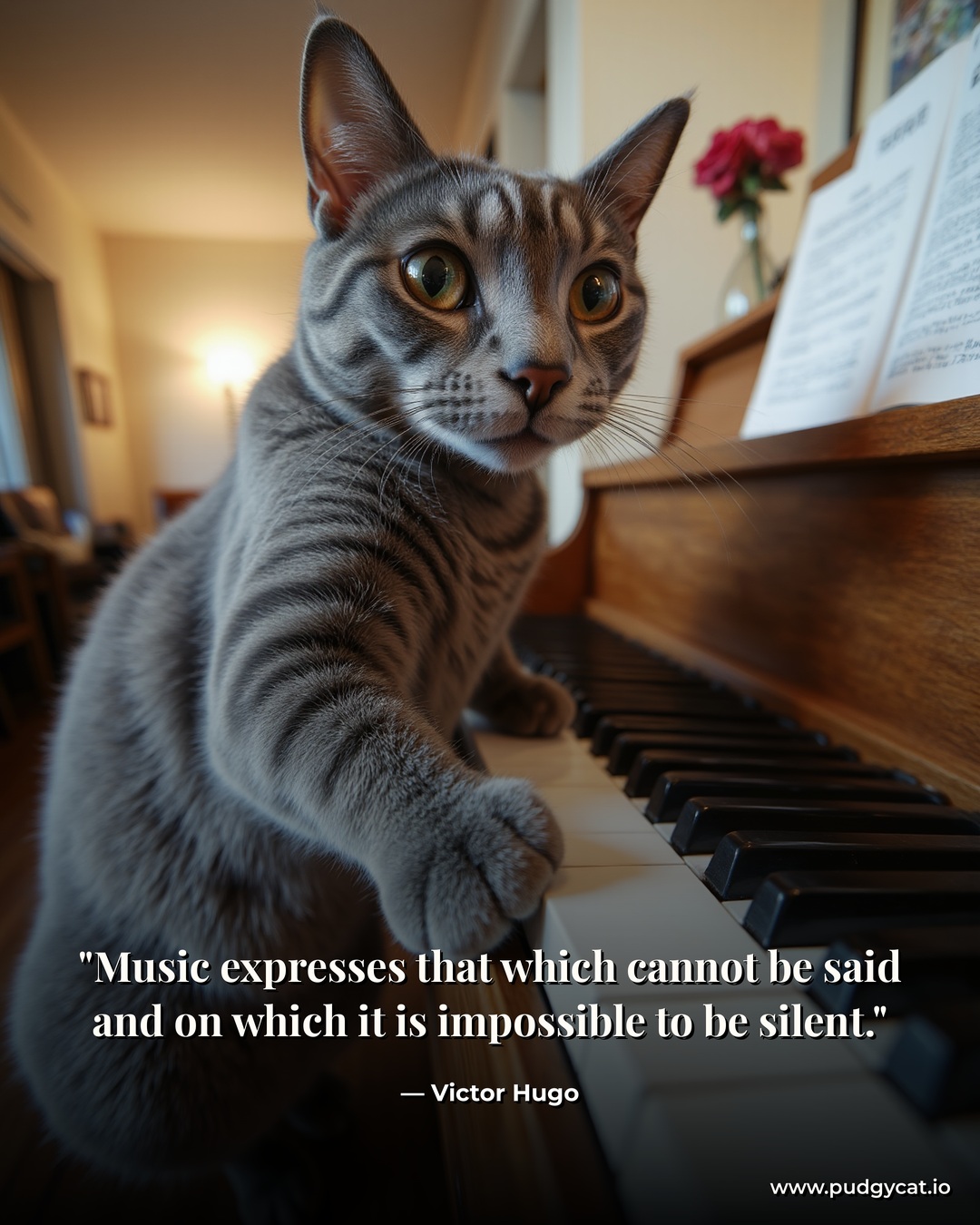
Music expresses that which cannot be said and on which it is impossible to be silent.
Victor Hugo
Source, William Shakespeare, 1864
Why This Quote Matters
Victor Hugo wrote this in William Shakespeare in 1864, an odd book that is ostensibly about Shakespeare and quickly becomes about everything. Hugo was in exile on Guernsey, a small island in the English Channel, having been chased out of France for writing the wrong things about Napoleon III. He had time, opinions, and a piano. The sentence reads like a composer's manifesto by a man who was not, technically, a composer.
The trick in the line is the second half. Music expresses what cannot be said, which is the part everyone quotes. Hugo then adds: and on which it is impossible to be silent. That is the harder clause. There are feelings too large for language and too urgent for silence. Music is what gets built when that pressure finds a crack. It is not decoration. It is the only pressure-release valve on certain human weather.
A cat resting one deliberate paw on a piano key is a cartoon of the same impulse. No melody. No training. Just a small creature noticing that the box makes noise when touched, and finding this interesting enough to keep touching. Most musical life begins exactly there. Someone is full of something. A key is nearby. The clause about impossible silence takes over from the clause about ineffable expression, and the note, however clumsy, leaves the instrument.
🐾 Visit the Pudgy Cat Shop for prints and cat-approved goodies, or find our illustrated books on Amazon.
More Cat Wisdom