
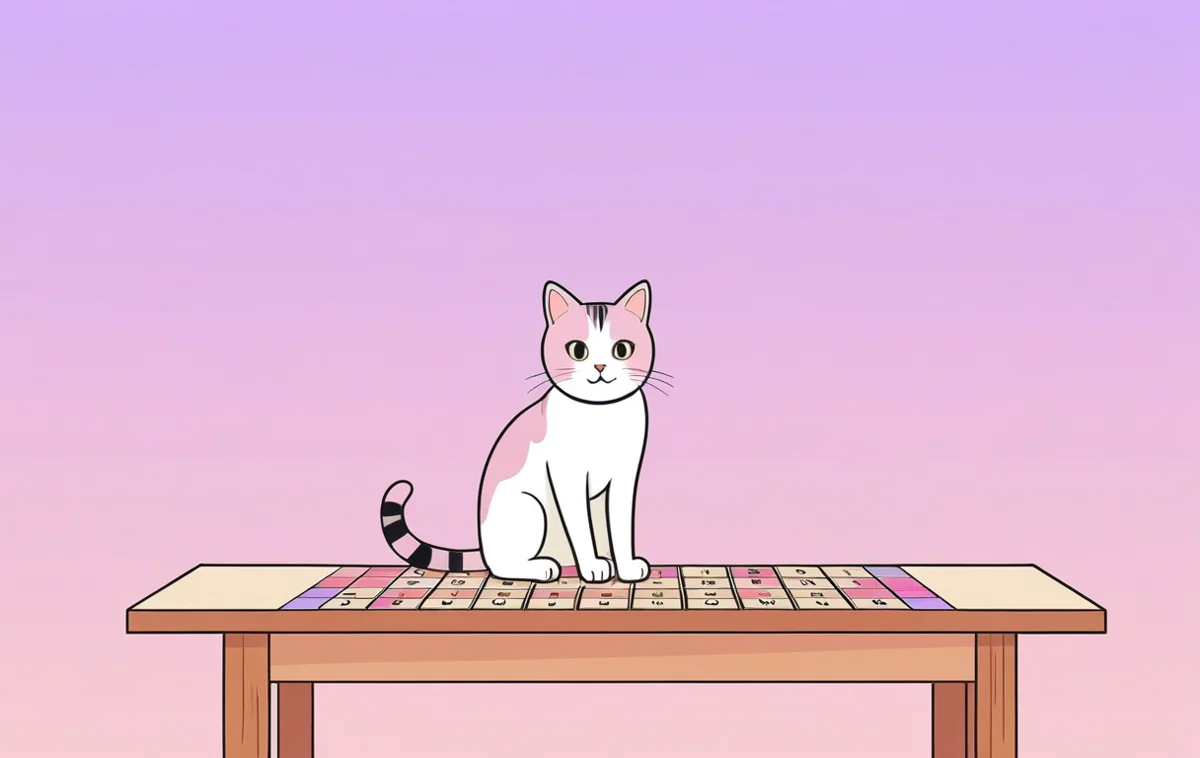
There are roughly 150 million Scrabble sets in circulation across the planet. That number covers 29 languages, family game nights, competitive tournaments with actual prize money, and approximately one million arguments about whether “qi” is a valid word.
The whole thing started with one unemployed architect counting letters.
The Architect Who Lost Everything
Alfred Mosher Butts was 30 years old when the Great Depression hit and took his job with it. It was 1931. He was trained as an architect, but nobody was building anything. He had time, no income, and a particular kind of restless mind that needed something to solve.
Butts noticed that most games fell into one of two categories: pure luck (dice, cards drawn from a shuffled deck) or pure skill (chess). He wanted to build something in the middle, something that rewarded knowledge but still allowed a bad draw to surprise you.
Word games seemed like the answer. But existing ones were too simple. He wanted something with weight, something that punished carelessness and rewarded the person who actually paid attention to the board.
The Method Behind the Madness
Here is where Butts did something most people would never bother with. He took newspaper editions and started counting. Every letter, in every article, across page after page of the New York Times. He tracked frequency, calculated ratios, worked out how common each letter was relative to the others.
This was not a quick project. He did this systematically, over time, until he had solid data on English letter distribution. Then he used that data to design a tile set where common letters like E, A, and I were abundant and low-value, while rarer ones like Q, Z, and X were scarce and worth more points.
His scoring system was not guesswork. It was empirical. The Q is worth 10 points because it shows up in roughly 0.1% of written English. The E is worth 1 point because it appears in about 13% of letters. He worked this out by hand, with a pencil, from physical newspapers, during a depression.
The connection between obsession and quality is real. You see it in people who become quietly extraordinary by caring about something most others dismiss. Asha Bhosle recorded over 12,000 songs through sheer relentless dedication to her craft. Butts counted every letter in a newspaper because the math had to be right, and no shortcut would do.
Rejected by Everyone
He called the game “Criss-Cross Words” first, then just “It.” Neither name exactly screamed mass-market hit. He tried to sell it to every major game company of the era. Parker Brothers said no. Milton Bradley said no. Every significant manufacturer passed without much hesitation.
Butts kept making sets by hand in small batches and selling them to friends and neighbors. He made no real money. The game existed in this quiet limbo for over a decade, known to a small circle of people who played it at kitchen tables and told others about it.
This is a familiar pattern in creative work. The thing that eventually becomes canonical often spent years being ignored by the people with the money to scale it. The inventor of infinite scroll built something that took over the entire internet and later publicly wished he had not. Butts built something that was ignored for a decade and later became one of the best-selling games in history. Different outcomes. Neither expected.
The Macy’s Accident
In 1948, a man named James Brunot licensed the rights from Butts, tweaked the rules slightly, renamed it Scrabble, and started manufacturing it properly. He and his wife made sets by hand in a converted barn in Connecticut. They lost money for the first few years.
Then in 1952, the president of Macy’s was on vacation somewhere. He played Scrabble, loved it, came back to New York, and asked why his stores didn’t carry it. Nobody could explain why. An order went in. Then another. Then many more.
By the end of 1952, Brunot’s operation couldn’t keep up with demand. The game went from a curiosity that couldn’t find a single corporate backer to a product with a months-long waiting list, almost entirely because one man played it on holiday and asked a question when he got back.
The business world tends to call this an overnight success. It was not. It was 20 years of rejection followed by a lucky break at exactly the right moment, after Butts had already stopped expecting one.
Why the Math Still Holds
Here is the part worth dwelling on: the tile distribution and point values Butts calculated from his newspaper counts in the 1930s are essentially unchanged in modern Scrabble sets. The tile bag he designed by hand, from data, with no computer or spreadsheet, has lasted nearly 90 years without significant revision.
Serious competitive players will note that the official word lists have expanded dramatically over the decades. Two-letter words that feel like cheating are part of deliberate tournament standards. But the tile bag itself, the actual game mechanic, is what Butts built.
Most design work produced with modern tools, budgets, and software doesn’t last a decade before it needs to be rebuilt from scratch. There’s something worth noting there about what careful, obsessive, data-driven thinking produces when the person doing it actually cares about getting it right.
The Credit Problem
Butts never made serious money from Scrabble. He sold the rights for royalties that were decent but not spectacular by the standards of what the game eventually became. He was not wealthy from it. He worked as an architect when architecture recovered and kept his name largely out of the mainstream story of the game’s success.
The brain drain isn’t always geographic. Sometimes it’s structural: the person who builds the thing doesn’t end up controlling the narrative around it, or profiting at scale. Brunot and Macy’s became the story. Butts became a footnote in a game he invented by counting letters for years with no audience and no guarantee anyone would ever care.
He didn’t seem to mind much. In interviews late in his life, he talked about Scrabble with obvious affection. He was proud of the letter frequency work. He played the game. He won occasionally. He died at 93 in 1993, having watched the thing he built in unemployment and obscurity become one of the most played games on earth.
Today is National Scrabble Day, April 13, his birthday. He was born in 1899 and spent a decade counting letters in newspapers before anyone would sell his game. Some things are worth doing carefully, regardless of who notices first.
🐾 Visit the Pudgy Cat Shop for prints and cat-approved goodies, or find our illustrated books on Amazon.

Leave a Reply