 English
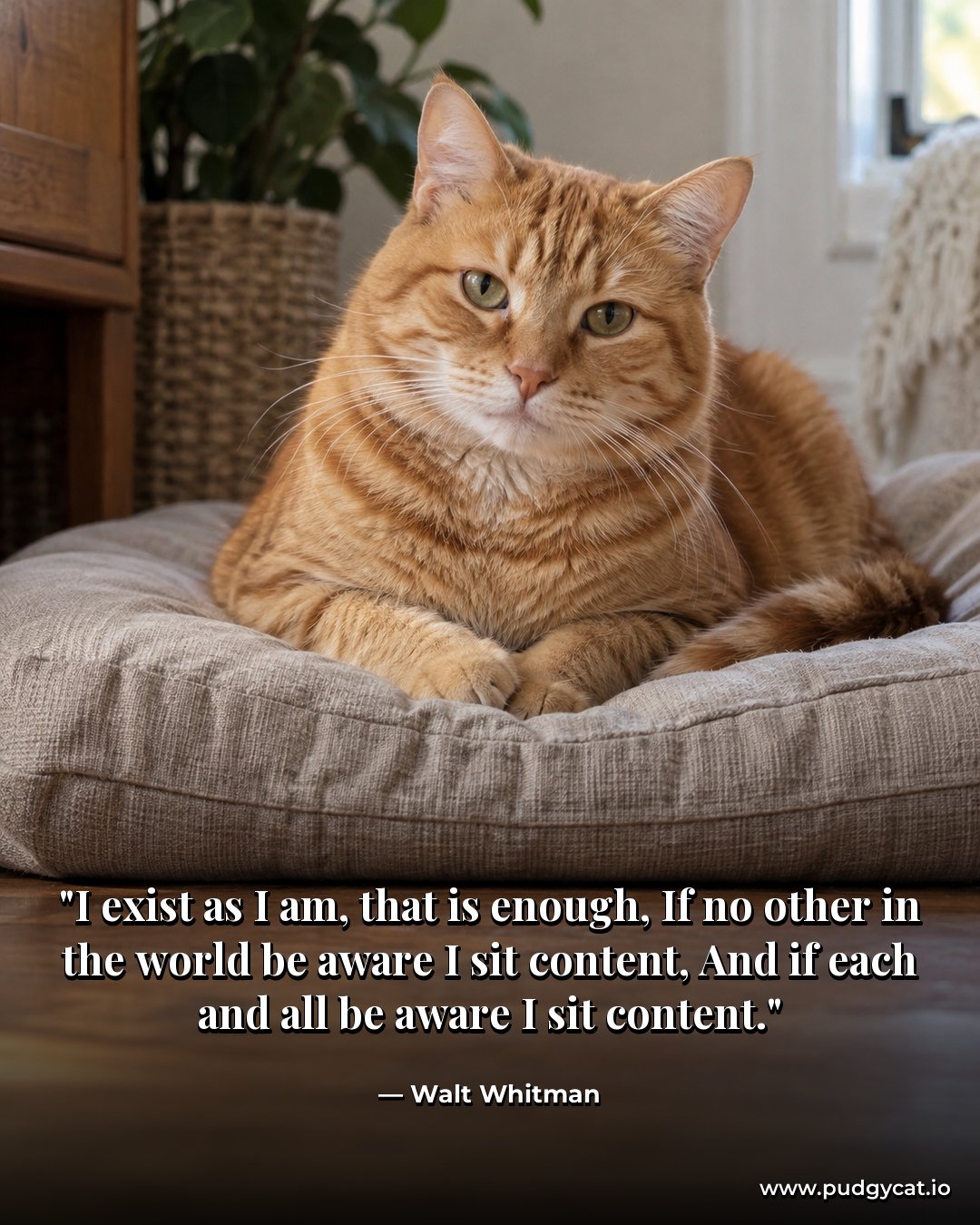
I exist as I am, that is enough, If no other in the world be aware I sit content, And if each and all be aware I sit content.
Walt Whitman
Source, Leaves of Grass, Song of Myself, 20
Why This Quote Matters
In section 20 of Song of Myself, Walt Whitman's speaker declares a contentment that remains the same whether the world notices or not. These lines, collected in Leaves of Grass, give existence value before public recognition arrives. The paired possibilities are important: both obscurity and universal awareness lead to the same seated contentment. The audience changes, while the speaker's basic claim to enoughness remains in place.
The thought is useful wherever being seen begins to replace experiencing something directly. Approval can be welcome, but it is a precarious foundation for a life if every quiet interval feels invalid without it. Whitman's poetic confidence offers another starting point. A person can continue learning, working, and changing without treating their present existence as a provisional application awaiting acceptance. The quotation is not a ban on ambition. It asks whether ambition can grow from a life already acknowledged as real and worthwhile, rather than from a permanent attempt to earn that acknowledgment.
The ginger cat settled comfortably on a simple cushion gives the declaration a wonderfully ordinary posture. The camera is present, but the comfort seems not to depend on it. Human self-acceptance is less easily arranged than a cushion. Still, the picture offers a useful image to keep nearby: an attentive audience may add something pleasant, but it need not be what makes the moment count.
More Cat Wisdom