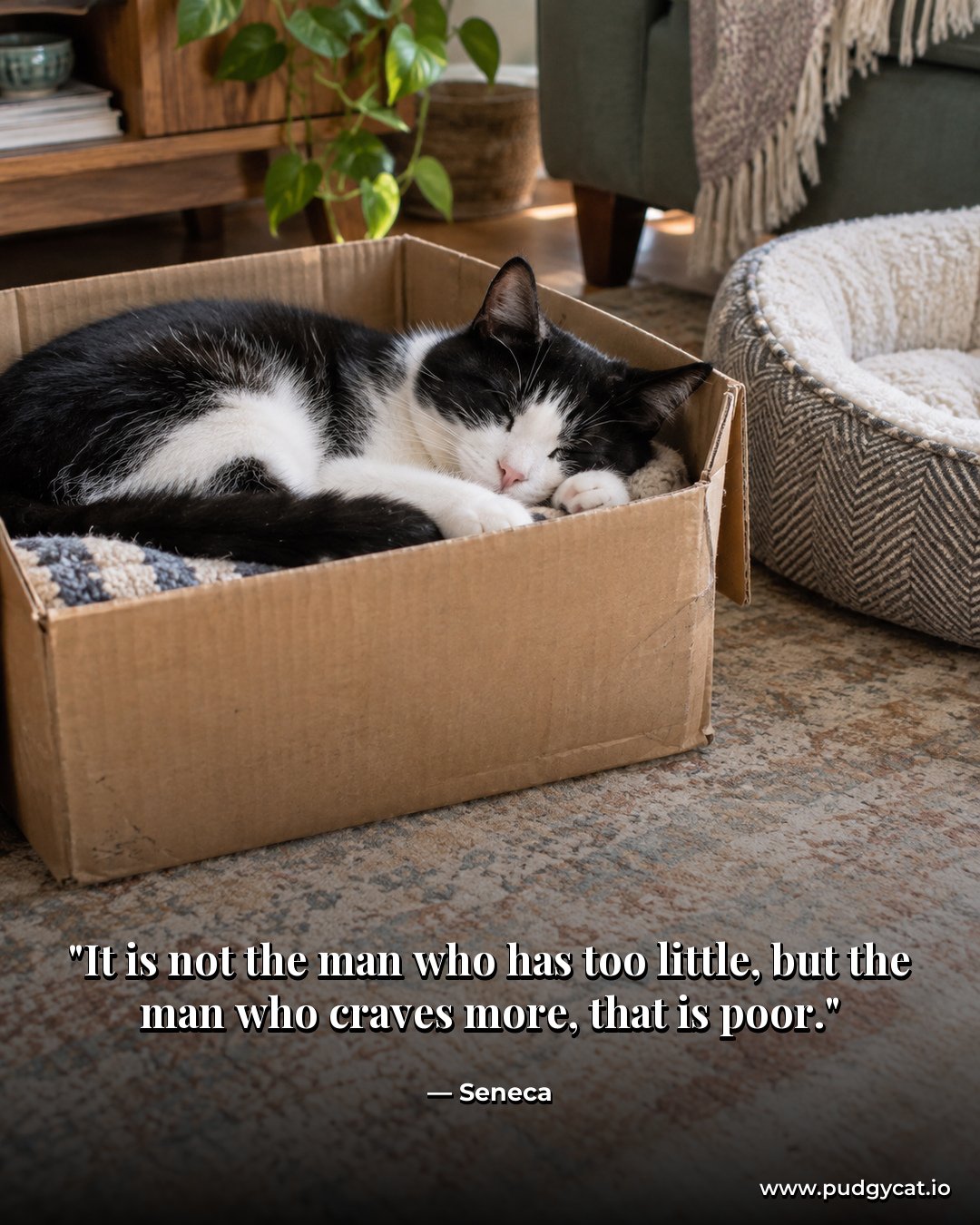
It is not the man who has too little, but the man who craves more, that is poor.
Seneca
Source, Moral Letters to Lucilius, 2.6; English translation by Richard M. Gummere
Why This Quote Matters
In the second Moral Letter to Lucilius, Seneca reflects on reading, sufficiency, and desire. This sentence is his comment following a quotation from Epicurus. Keeping that distinction preserves the attribution: the words here belong to Seneca's discussion, even though another philosopher has helped prompt it. Poverty, in the sentence's moral sense, is measured by craving rather than by an inventory alone. Read the source.
That distinction should not erase material need. Lacking food or shelter is not a problem solved by deciding to want less. The quotation becomes most useful where enough repeatedly moves out of reach despite having what is necessary. Another purchase or another comparison can make satisfaction conditional on the next acquisition. Seneca asks whether the appetite has any stopping rule. Without one, possessions may increase while the experience of having enough remains permanently postponed.
The cat asleep in a worn cardboard box gives the idea an appropriately inexpensive illustration. A plush bed sits nearby, losing the competition to packaging. We need not pretend the animal has rejected consumer culture to enjoy the joke. The box makes a comfortable point: the thing that satisfies a need and the thing marketed as its finest solution are not always the same object.
🐾 Visit the Pudgy Cat Shop for prints and cat-approved goodies, or find our illustrated books on Amazon.
More Cat Wisdom