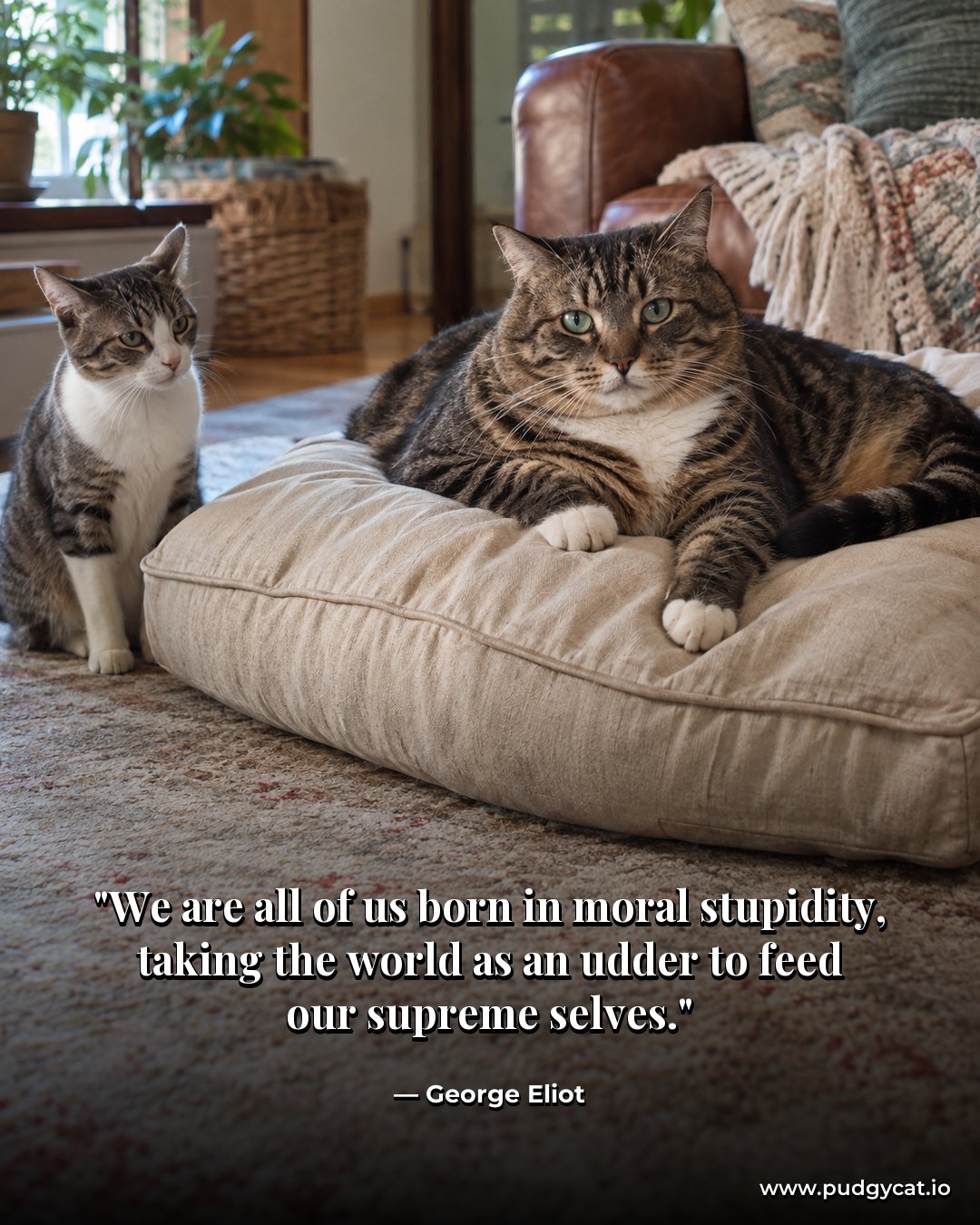
We are all of us born in moral stupidity, taking the world as an udder to feed our supreme selves.
George Eliot
Source, Middlemarch, 21
Why This Quote Matters
In chapter 21 of Middlemarch, George Eliot's narrator describes the difficulty of recognizing another person's independent center of experience. The passage concerns Dorothea and Casaubon, but its opening claim extends the problem to everyone. The deliberately unflattering feeding metaphor makes self-centeredness look basic and hungry. The world is first encountered as something expected to supply the needs of the self at its center.
The next step is more demanding than simply knowing that other people exist. It involves feeling that their fears, wishes, and interpretations have a reality comparable to our own. Good intentions can still be organized around a private story in which everyone else plays a supporting role. Eliot's observation asks whether another person has actually been understood, or merely assigned a convenient part in an account of how generous, helpful, or misunderstood we ourselves are trying to become.
The large tabby occupying the middle of a cushion while a smaller cat waits beside it gives the metaphor a much softer version. There is plenty of fabric, but its current arrangement suggests a strongly centralized theory of comfort. Human selfishness is often less visually obvious. The picture makes a useful joke of it: sharing the world may begin with noticing that someone else could reasonably want a portion of the cushion.
🐾 Visit the Pudgy Cat Shop for prints and cat-approved goodies, or find our illustrated books on Amazon.
More Cat Wisdom