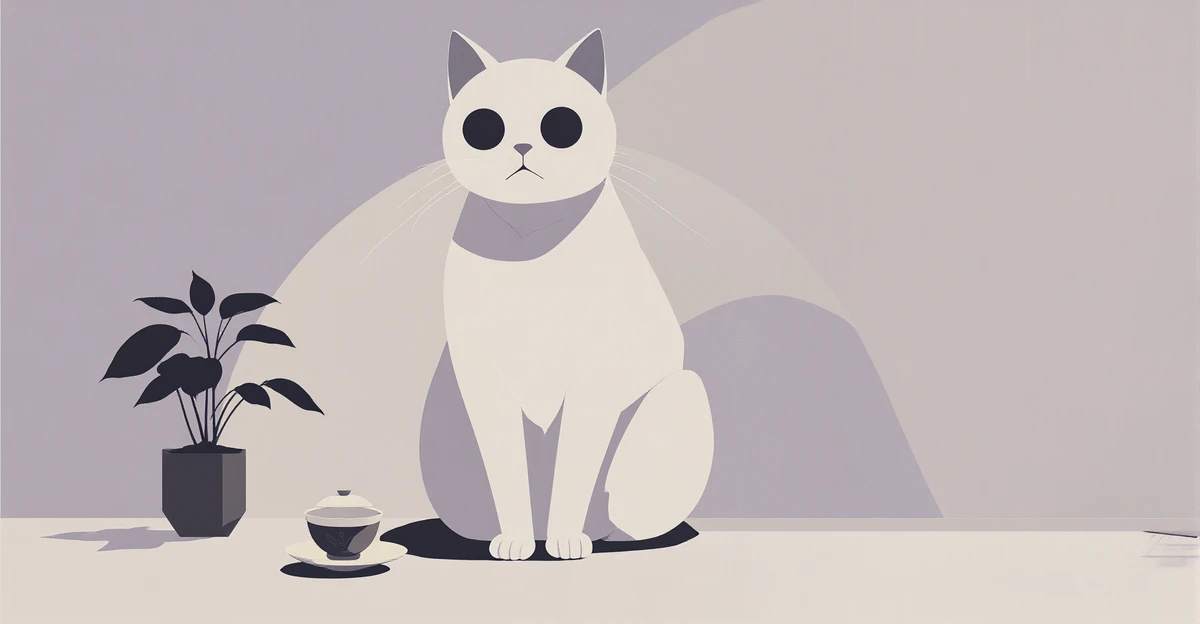
The minimalist movement has been selling you a paradox for about fifteen years now: buy less stuff by buying the right stuff. Curated white spaces, capsule wardrobes, $300 water bottles that are somehow the last water bottle you will ever need.
There is a real idea underneath the aestheticized version, though. The question is whether you can get to it without buying a course about it first.
Why Stuff Actually Costs More Than Money
The standard argument for owning less is financial. Objects cost money, storing them costs space, maintaining them costs time. A bigger house does not make you happier once you account for the time spent cleaning it, insuring it, and paying for it. This is true, as far as it goes.
The less obvious cost is attention. Every object in your environment makes a small claim on your cognitive resources. Studies on decision fatigue suggest that the number of small choices and micro-decisions you make throughout the day depletes your capacity for larger, more important decisions. Clutter is not just aesthetically unpleasant. It is a continuous low-level demand on your attention, even when you are not consciously thinking about it.
This is why some famously productive people wear the same clothes every day or eat the same breakfast. The choice is not about fashion or nutrition. It is about preserving cognitive resources for decisions that actually matter. Barack Obama and Steve Jobs are the examples everyone cites, but the principle extends further than tech billionaires.
The research on environmental psychology consistently shows that cluttered environments correlate with elevated cortisol levels and reduced ability to focus. A 2011 Princeton University study found that visual clutter in your surroundings competes for your neural representation, making sustained focus harder. This is not metaphorical. It is a measurable physiological effect.
The Acquisition Treadmill
There is a pattern in consumer behavior that researchers call the “arrival fallacy.” You imagine that acquiring a specific object will change how you feel. When it arrives, the emotional boost is real but brief. Within days or weeks, the new baseline absorbs it, and the sense of lack returns. The hedonic treadmill keeps moving, and the answer always seems to be the next object.
This connects to something broader in how modern retail works. The business model of many consumer categories depends on your dissatisfaction. Fashion cycles create seasonal obsolescence. Technology products release annually with marginal improvements sized to trigger upgrade anxiety. Home design trends shift every few years. The restlessness is partly manufactured, which does not make it less real, but it does mean that more stuff reliably fails to resolve it.
This also overlaps with the dynamics around how algorithmic recommendation systems work in media: optimized to keep you wanting the next thing rather than satisfied with what you have. The business models share a structural similarity.
What Minimalism Actually Is (Under the Aesthetic)
The aesthetic version of minimalism, all white surfaces and perfectly arranged bookshelves containing exactly 11 books, is a style choice, not a philosophy. The actual principle is simpler and less photogenic: keep things that you use or that genuinely matter, release things that you do not.
The Japanese concept of “ma,” often translated as negative space or pause, describes the value of emptiness in architecture, music, and design. It is not about having nothing. It is about the quality of what remains when you remove what is unnecessary. The empty space is not a lack. It is what makes the present objects meaningful.
Marie Kondo became a global phenomenon in 2015 partly because she was selling something that was not stuff. The “spark joy” framework is easy to mock but it describes a real thing: the difference between owning objects because you need them or because they matter to you, versus owning them because you accumulated them and have not addressed them. The second category is genuinely optional, which is not obvious until someone points it out.
The Practical Version (No Aesthetic Required)
You do not need a capsule wardrobe or a specific furniture brand or any particular visual style to apply the underlying principle. Some approaches that work regardless of what your space looks like:
The one-year rule for clothing. If you have not worn it in a year, you probably will not. Exceptions exist (formal clothes for rare occasions, sentimental items you genuinely want to keep), but the default should be release rather than storage.
The one-in-one-out rule for categories. When you buy something new in a category, something else in that category leaves. This is not about deprivation. It is about keeping category size stable so that management stays manageable.
The 20/20 rule. For borderline items: if you could replace it in under 20 minutes for under 20 dollars, it is probably fine to let it go. The fear of “I might need this someday” is largely a false emergency.
Storage as a signal. If something has been in a box for three years, the box is not protecting the object. The box is protecting your decision to keep the object from being examined. The box can usually go.
What Gets Released When Stuff Does
The part that is hard to convey before you try it is what happens to the space that opens up. Not the physical space, though that is real. The mental space.
People who have gone through a significant declutter of their physical environment consistently report something similar: an unexpected lightness, a feeling that there is less to manage and maintain, more room for attention to go somewhere it actually wants to go. This sounds like wellness copy, but it maps onto the research on cognitive load and working memory in predictable ways.
The analogy to digital life is direct. The same principles that apply to notification management and screen time apply here: the goal is not ascetic deprivation but intentional design of your environment, so that what is in it is what you chose, not what accumulated.
The Class Dimension Nobody Wants to Address
Mainstream minimalism has a significant class blind spot. The aesthetic is coded as affluent in a way that makes the underlying philosophy feel irrelevant to people with fewer resources.
Owning things as backup and buffer is a rational strategy when you cannot afford to replace them easily. People who did not grow up with much sometimes accumulate for reasons that are not about psychology but about material security. The emotional relationship with objects is different when scarcity has been real.
This is worth naming because the philosophy, when it gets detached from context, can slide into something obnoxious: well-off people congratulating themselves for owning fewer things as a virtue signal while the people selling the minimalism lifestyle have plenty of backup options and the runway to make choices. The principle is sound. The branding is often not.
Where the Real Gain Is
The most honest version of the argument is this: most people in wealthy countries own considerably more than they use, often because acquiring things triggers a brief positive response and disposing of them triggers a brief negative one (loss aversion is a well-documented cognitive bias), and the default result is accumulation.
The accumulation is not neutral. It takes up space, requires maintenance, and makes a continuous claim on your attention. The flip side is also true: reducing it is not a moral achievement or a lifestyle identity. It is just a practical adjustment that frees up resources, including the kind you cannot buy more of.
You do not need to become a minimalist. You might just need to take an afternoon and figure out which parts of your home you actually use, and stop maintaining everything else. The white walls are optional. The freed-up attention is the part that matters.
🐾 Visit the Pudgy Cat Shop for prints and cat-approved goodies, or find our illustrated books on Amazon.