
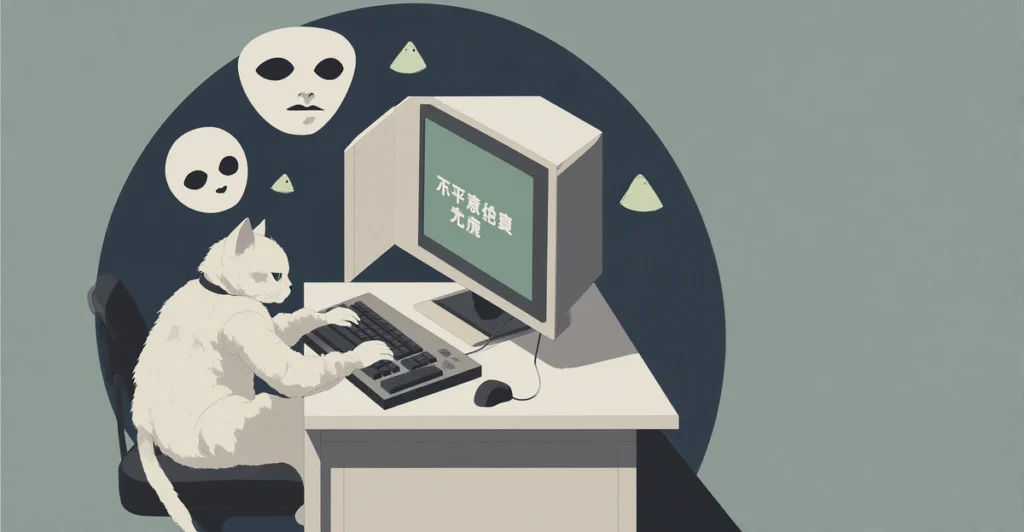
Imagine an online conversation where the speaker’s profile is often missing and the conversation itself may soon disappear. Now imagine giving that room a very large box of pictures. This helps explain 4chan’s peculiar cultural influence, though it is not a complete safety briefing.
Christopher Poole, known as “moot,” founded the imageboard in 2003 while still a teenager. His TED profile and talk on anonymity describe the site’s role in online culture and his case for participation without a persistent real-name identity. That is the founder’s perspective, worth understanding without treating it as the last word.
A conversation without a permanent name tag
Posting without an established identity can make an idea feel less dependent on its author’s reputation. You cannot assume an anonymous contribution comes with a familiar follower count or a trustworthy professional history. Sometimes that reduces social inhibition in useful ways. Sometimes it removes context you very much wanted to have.
Anonymity does not mean every participant is technically untraceable. Nor does it mean a site has no rules. These distinctions matter because the mythology often outruns the actual design.
Disappearing threads, persistent culture
A 2011 study of 4chan’s /b/ board examined anonymity and ephemerality through content analysis and data collection. It describes a fast-moving environment where threads disappear and users still develop recognizable practices around identity and participation. It studied one board at a particular time, not every part of 4chan forever.
The interesting contradiction is that temporary conversations can produce durable references. A thread disappears, but somebody saves an image, repeats a joke or carries a phrase elsewhere. The building is made of sand; somehow the graffiti gets a world tour.
Disappearance from the original board therefore does not guarantee disappearance from the internet. Copies, screenshots and archives complicate any comforting promise of “gone.”
Influence is not the same as authorship
It is tempting to credit a single site with every meme that passed through it. That confuses creating an image, making a particular remix and helping it circulate. Internet culture travels through overlapping communities, and a famous stop on the route is not necessarily the starting point.
Our histories of the Dancing Baby and Hampster Dance are useful reminders that viral nonsense already had a busy life before 4chan existed.
The cost belongs in the story
Creative experimentation is not a reason to romanticize harassment or hateful material. Anonymity can protect vulnerable speakers; it can also make identifying an abusive speaker more difficult. Which outcome a community encourages depends on behaviour, norms and moderation, not just the presence or absence of a username.
The site’s different boards also should not be treated as one person with one opinion. Equally, “it was a joke” cannot automatically explain away a campaign directed at a real person.
4chan is worth understanding as an influential experiment in online participation. Its story is more revealing when it includes both the inventiveness and the costs, instead of turning the whole thing into either a heroic origin myth or a single cartoon villain.