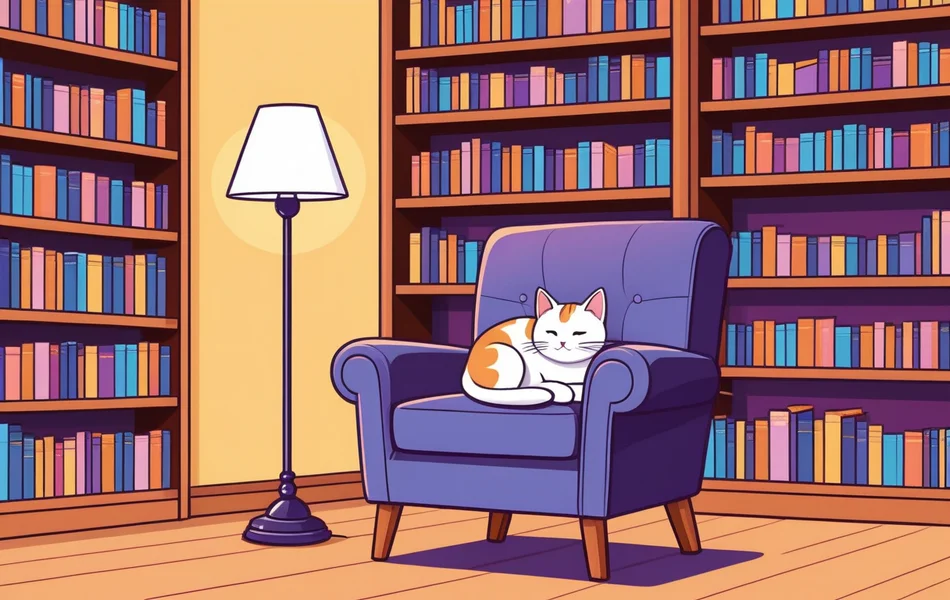
The independent bookstore was supposed to become a nostalgic footnote: creaking floors, a shop cat named Hemingway, and no answer to the internet. Yet the revival is old enough to have its own research literature. Harvard Business School’s Ryan Raffaelli published a study of that resurgence in 2020. It examined recovery during the preceding decade rather than declaring the business finished. The obituary had already encountered a plot problem.
Next Saturday, April 25, is Independent Bookstore Day. It is a good occasion to look at what a physical shop offers, and why the conversation need not begin and end with matching an online price. It is also an excellent excuse to acquire another book while calling the purchase community participation.
The death that did not happen
The concerns were not imaginary. Online retail, large chains, and changing reading habits put pressure on independent bookselling. Raffaelli’s study describes the subsequent recovery using ABA figures and interviews with people in the trade. Those association counts help trace a trend; they are not automatically a census of every bookstore in the country.
That assumption was wrong in a quiet, interesting way. Indies are not competing with Amazon on convenience, because they already lost that fight. They are competing on something Amazon cannot ship: the feeling of being in a room full of books chosen by a specific human who read them. The algorithm can surface a thousand matching titles in a second. It cannot put a handwritten card under a paperback that says, “I cried on the train reading this. You will too.”
Why the shop cat strategy is winning
Raffaelli groups part of the explanation into community, curation, and convening: a connection to a place, a distinctive selection, and reasons for readers to gather. It is a useful description of what a small store can offer. It is not a guarantee that every shop with a reading group will turn a profit. The cat is excellent company but notoriously unreliable at the accounts.
Readers can discover a title on a screen and buy it in a shop. The BookTok phenomenon is a reminder that online attention and physical reading are not opposites. For a bookseller, the opportunity is to turn interest into a useful recommendation or an enjoyable visit. That is more concrete than appointing an entire generation as the savior of print.
The analog backlash is real and it is weirder than influencers admit
Anyone who has spent five minutes on TikTok this year has probably seen the “analog lifestyle” trend, where influencers announce they are going offline, reading more, printing their photos, and (this part always kills us) documenting the whole thing on video for their followers. The contradiction is almost charming. But the underlying hunger is real, and it is the same hunger that makes indie bookstores work. People are tired of feeds that refresh every three seconds and want a few hours of their week to feel slower.
Reading a physical book is one of the last activities where you cannot be interrupted by a notification unless you personally invite the interruption. Bookstores sell that quiet as much as they sell the books. Which is why the stores that thrive are not just retail spaces. They are cafes with shelves, event venues with inventory, reading rooms that happen to ring up sales. It is the same instinct behind the broader push for a digital detox, just with better lighting.
What Indie Bookstore Day actually looks like
Plans vary by store. Author appearances, special merchandise, reading events, and local bookstore crawls give visitors different reasons to turn up. Check the participating shop’s own listing rather than assuming that every location has the same offers. A bookstore crawl is a lovely idea until you plan the route around a place that is closed.
The ABA’s March planning notice describes Libro.fm’s Golden Ticket promotion: participating shops receive a ticket worth twelve audiobook credits to hide for a winner. An event can introduce a reader to a store they have never visited. Whether that becomes a regular relationship is something the shop still has to earn after the festivities.
The broader pattern, and the part worth paying attention to
It is tempting to turn the story into a universal rule that small businesses win on meaning while large ones win on efficiency. Real stores have to manage both. A warm atmosphere is more useful when the opening hours are reliable, the staff can find what you need, and the rent still gets paid. Charm is an advantage, not an accounting method.
It connects to the same instinct driving readers toward genres like cozy fantasy and literary slow reads: the desire for content you sit with instead of scroll past. The same instinct that made weird fiction feel like a secret passed between friends instead of an algorithm recommendation. And it overlaps neatly with the broader minimalism conversation: people want fewer things, but better things, and they want to know where the things came from.
What to do with this on a Saturday
If there is a bookstore near you and you have not been in a while, April 25 is a good excuse. Ask the person at the counter what they are excited about, browse somewhere outside your usual section, and check the event details before setting out. The result may be a book you would never have searched for. That possibility is a substantial part of the appeal: a room full of other people’s choices can interrupt your own habits in a pleasant way.
The business is still demanding, and no national trend can promise that a particular shop will survive. But the idea remains worth rooting for: readers, booksellers, handwritten recommendations, and perhaps a cat refusing to move off the display. We know which side of that counter we would like to spend Saturday on.