Longcat was a real Japanese cat called Shiro, widely known online as Nobiko. Her owner dates the famous stretched-out photograph to 2004 on Futaba Channel. The image became a template for ever-longer edits, while fans invented a dark rival called Tacgnol. The household story and the apocalyptic internet lore are worth keeping separate.
Table of Contents
- Origin on Futaba Channel
- The 4chan crossover and the Longcat Is Long format
- Catnarok, Tacgnol, and the longcat mythology
- Beyond the imageboards
- Who actually owned longcat
- September 2020: the day longcat died
- Why the history of longcat still matters
- FAQ
Origin on Futaba Channel
In a February 2024 interview with Netorabo, owner Miiko placed the famous photo in 2004 on Futaba Channel. She described taking it during a gathering with friends and posting it to the cat board, where users nicknamed the cat Nobīru-tan. It is a helpful firsthand account behind a picture so often separated from its household.
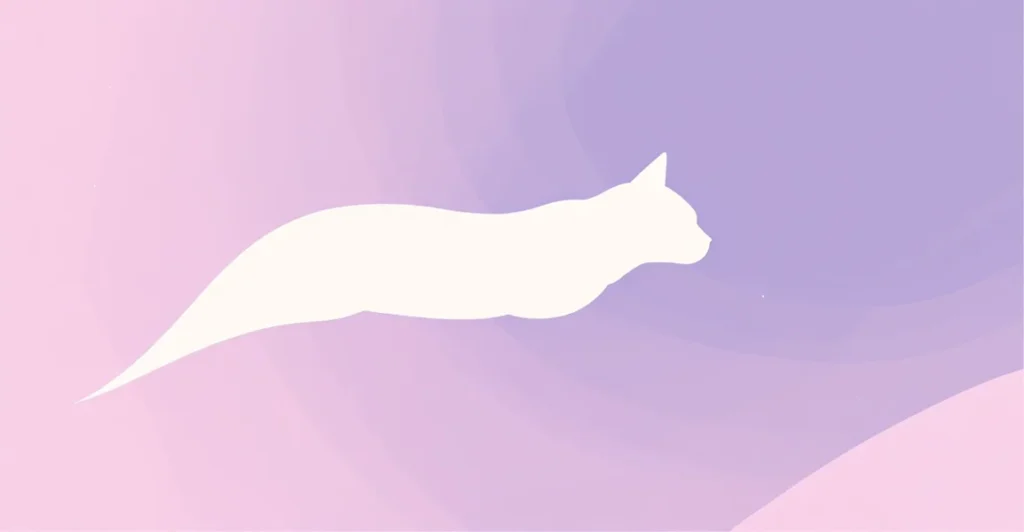
The pose makes the cat look remarkably long before anyone edits a pixel. The remix takes that impression and removes the stopping point. Why settle for a long cat when the page could contain a cat longer than the page? That is the mechanism: a small visual observation made increasingly unreasonable.
What made the original photo work
The pale, elongated body has a simple silhouette, and the front-facing pose makes it easy to recognize even in an absurd setting. Extending it vertically exaggerates the feature that already catches the eye. You do not need a complicated caption to explain which part of the image is supposed to be funny. The cat has arrived with her own visual premise.
The 4chan crossover and the Longcat Is Long format
Know Your Meme’s archive documents the imageboard crossover, a September 2006 Urban Dictionary entry, and surviving 4chan examples. Those records show the joke becoming established; they do not identify every first post or the exact person who coined its English name.
“Longcat is long” has the confidence of a scientific conclusion and approximately none of the paperwork. Extra letters can make the caption stretch along with the body. The tautology is the joke: the picture tells you the cat is long, and the words solemnly confirm it. There is no hidden exam at the end.
The first photoshop wave
A remix can move the cat into a new landscape or make the surroundings smaller by comparison. Either way, scale becomes the playground. Our guide to the Backrooms and its internet mythology follows another case of an image acquiring a story much larger than its original frame. The moods are very different; the appetite for adding more is familiar.
Catnarok, Tacgnol, and the longcat mythology
Tacgnol is Longcat spelled backward: a dark counterpart in the fan-made Catnarok mythology. Know Your Meme’s Tacgnol entry dates its account to a February 2007 thread, though the entry remains marked as under research. In the joke, the two elongated cats face an ultimate battle. Treat that as internet lore, with versions and embellishments, rather than a single official story.
The pleasure is in the mismatch between the source material and the scale of the claims. Two cat images become cosmic opposing forces. A visual pun gets the tone of a prophecy. You can participate by adding another elaborate illustration or simply treating the approaching cat apocalypse with the seriousness it obviously deserves.
Why the mythology spread
A shared rival and a dramatic name give people something to riff on. Recognizing the reference becomes part of the pleasure, and nobody needs to own the entire plot to contribute another joke. That is a useful way to read the mythology, without claiming it directly invented every later collaborative horror project.
Beyond the imageboards
The Longcat archive records a Tim and Eric appearance in May 2007 and later collections of edits. Such references show the image moving beyond its original threads. They do not establish that one broadcast single-handedly made it mainstream, or that a search-interest peak can be explained by one cause.
Once a character is recognizable, the surrounding joke can travel through a picture, a song, or an object someone makes. Longcat is particularly well suited to a narrow strip of space: the format practically argues with the edge of the medium. The important point is recognizability, not an invented sales timeline for every mug and plush toy.
Where longcat sits in the cat meme canon
Longcat offers one route through cat culture: an editable photograph. Captioned lolcats and videos of cats doing something entertaining offer others. These approaches overlap; they are not three neat eras replacing each other. Our history of cat memes explores the wider family resemblance.
Who actually owned longcat
Miiko’s Netorabo interview identifies the cat’s household name as Shiro and says her husband brought her home as a thin kitten in May 2002. The owner was not permanently anonymous: she spoke publicly about the cat and continued sharing memories. The distinction is between how much a meme viewer happens to know and whether that information exists.
The owner’s account gives the picture a specific home and history. It also corrects the idea that the cat remained entirely offline or that her household was permanently unknown. Reposts can strip away that context without making it unavailable.
September 2020: the day longcat died
Nobiko died on September 20, 2020, at the reported age of 18. Contemporary coverage the following day described the announcement and the online tributes. The exact size of a social-media reaction is less important here than the reminder that the endlessly remixed image had a real cat behind it.
Revisiting an old meme can bring back the place where you first saw it: a forum layout, a friend’s message, a much younger version of yourself. That helps explain why a tribute can feel personal even to someone who never met the animal. The affection is not just for a joke, but for the memories attached to it.
The mythology after death
Catnarok gives the imagination a cosmic ending; the real cat’s death belongs to a different story. There is no need to invent a community vote on which rival “won.” The contrast is poignant enough on its own: the mythical creature can keep stretching through edits while the pet is remembered by the people who loved her.
Why the history of longcat still matters
Longcat is a useful example of imageboard culture traveling through edits and reposts. A recognizable image could move between communities without a single official account directing each appearance. That does not make her the ancestor of every later meme, but it does make her a good doorway into this part of internet history.
The basic joke is easy to revive: make the long cat longer. It requires less explanation than a reference tied to one week’s news. Our history of internet memes puts that durability in a broader context, while the recurring “It’s Gonna Be May” joke offers a different kind of return engagement.
Archives and old posts let a new viewer encounter a joke after its busiest moment has passed. You do not need to claim knowledge of an image model’s training data to explain that. The surviving record is already interesting, and our history of internet forums explores the spaces that helped such records accumulate.
FAQ
What is the longcat meme?
It is an image-editing joke built around an elongated white cat. Edits exaggerate her length, and the familiar caption points out what you can already see. The simplicity is the appeal.
What was longcat’s real name?
Her owner identifies her as Shiro in the 2024 interview. Nobiko is the name widely associated with her online; older English accounts also use Shiroi.
Who is Tacgnol?
Tacgnol is the dark counterpart in the Catnarok joke, with a name that reverses Longcat. The fan-made rivalry gives a very simple picture an extravagantly apocalyptic setting.
When did longcat die?
She died on September 20, 2020, at the reported age of 18. Contemporary coverage recorded tributes from people who remembered the meme.
Is longcat still a popular meme?
She remains recognizable to people familiar with early imageboard memes. Popularity varies by community; an old format can reappear without being the internet’s dominant joke of the week.
The takeaway
Longcat has both a documented household story and a much less orderly life in edits, reposts, and fan lore. That combination is the point. A cat photo can be funny on its own, become an absurd folk character, and later carry a surprising amount of nostalgia. If you grew up with the joke, seeing her again can feel like finding an old familiar room. A very long room, naturally.