Niksen is the Dutch art of doing nothing on purpose, and it is the only wellness concept a cat would actually endorse. The word comes from the verb niksen, which literally means “to do nothing” or “to be idle.” Not nothing as in scrolling a phone, not nothing as in folding laundry while a podcast plays. Real nothing. Sitting in a chair and staring out a window with no plan to get up. If you have ever watched a cat occupy a sunny patch of floor for three hours and judged it as lazy, you have misunderstood the most advanced relaxation technique on the planet. The cat is doing niksen. You are the one who forgot how.
This guide explains what niksen actually is, where it came from, what research on rest can—and cannot—tell us, and how to practice it without feeling guilty. It is a calm, low-effort idea, which is the entire point.
Table of Contents
- What Is Niksen, Exactly?
- Where Niksen Came From
- Niksen vs Mindfulness: Not the Same Thing
- The Science of Doing Nothing
- How to Practice Niksen Without Feeling Guilty
- Cats Already Know How to Do This
- Common Niksen Mistakes
- Frequently Asked Questions
What Is Niksen, Exactly?
Niksen is the practice of consciously letting yourself do nothing, with no goal and no productive outcome attached. That last part matters. We are very good at “nothing” that secretly produces something. A bath is relaxing, but it also gets you clean. A walk clears your head, but it also counts as exercise. Niksen strips all of that away. You are not trying to relax, not trying to recharge, not trying to come back sharper for work. You simply stop doing things and let time pass.
Writer Olga Mecking helped popularize niksen internationally. In her own explanation, the emphasis is on allowing idleness without making it serve a productive goal. You do not need to submit a business case for looking out of the window.
In practice, niksen looks unremarkable. Looking out a window. Sitting on the couch with no screen. Lying in the grass watching clouds drift. The activity is invisible from the outside, which is exactly why our productivity-obsessed culture struggles to value it. There is nothing to photograph, nothing to track, no streak to maintain.
Where Niksen Came From
Niksen is a genuine Dutch word, not a marketing invention. For years it carried a slightly negative tone in the Netherlands, closer to “loafing” or “slacking off.” Doing nothing was not something you bragged about. The cultural reframe happened around 2019, when a wave of articles in international press repackaged niksen as the next Scandinavian-style lifestyle export, a Dutch answer to a wider hunger for calm.
Its appeal is easy to recognize if every quiet moment in your day seems to acquire a job: answer a message, learn something, track something, optimize something. Niksen offers a small rebellion against that pressure. Even rest can start to feel exhausting when it comes with a performance target.
The Dutch word came before its international wellness packaging. Mecking’s Dutch publisher presents her book as an exploration of that familiar activity. You do not need to imagine an entire country following a single relaxation routine to appreciate the idea. No equipment, subscription, or special clothing is required.
Niksen vs Mindfulness: Not the Same Thing
Niksen is not another name for mindfulness meditation. Many mindfulness practices cultivate awareness of present experience; niksen, as used here, does not prescribe an attention exercise. Mindfulness itself includes different approaches, so it is not simply a synonym for concentrating hard on one thing.
Niksen does not ask anything of your attention. Your mind can wander wherever it likes. You can daydream, you can stare at a wall, you can think about what you might cook later and then forget about it. There is no correct way to do it and no state you are supposed to reach. Where mindfulness is a discipline, niksen is the absence of discipline. That is liberating for the many people who feel they are somehow “bad at meditation.”
A Quick Comparison
- Mindfulness: intentionally cultivating awareness; the practice may involve a chosen focus or broader observation.
- Niksen: passive, unfocused, lets the mind roam freely, has no technique.
- Daydreaming: overlaps heavily with niksen, and is welcome rather than discouraged.
If mindfulness feels like a workout for your attention, niksen is the rest day. Both have value. They are not competitors.
The Science of Doing Nothing
Doing nothing outwardly does not mean the brain switches off. The 2001 paper describing a default mode of brain function helped establish a research framework for activity that changes during externally directed tasks. It does not identify a special niksen switch, or show that one network takes over every time you sit down.
A wandering mind can produce an unexpected connection, or it can produce a detailed recollection of something awkward you said in 2014. Rest is not a guaranteed ideas machine. There is no need to judge a quiet break by whether it delivered a revelation before the kettle boiled.
What Idleness Does for Stress and Creativity
One 2012 creative-incubation experiment found that an undemanding task helped participants return to previously encountered creativity problems, compared with several other break conditions. That is interesting evidence about a particular task and setting. It is not a trial showing that niksen lowers everyone’s stress hormones or improves every kind of problem-solving.
Other research on mind wandering and creativity has not found the same straightforward benefit. The outcome depends on what someone is doing and how creativity is measured. You can value an unfilled few minutes without turning a mixed research literature into a medical promise.
How to Practice Niksen Without Feeling Guilty
For some people, the awkward part is guilt: the feeling that a free moment ought to be useful. Others simply get bored or restless. Here are a few gentle ways to try it, with no requirement to become exceptionally talented at sitting down.
- Start small. Five minutes of genuine nothing is plenty at first. Sit in a comfortable chair and look out the window. That is the entire exercise.
- Remove the screen. A phone is the enemy of niksen. Scrolling feels like rest but it is input, and your brain is still working. Put it in another room.
- Drop the goal. Do not do this to recharge or to be more creative. Do it because doing nothing is allowed. You do not have to produce a benefit to justify the pause.
- Pick a comfortable spot. A couch, a seat by a window, a patch of grass, a bench. Comfort matters because discomfort gives your brain a task to solve.
- Let the mind wander. If thoughts drift, good. There is nothing to bring your attention back to. Wandering is the feature, not the bug.
You may find it easier with familiarity, or discover that another form of rest suits you better. An enjoyable walk or a book is not inferior because it fails a strict definition of “nothing.” The point is to loosen the pressure, not add a new rule to feel guilty about.
Cats Already Know How to Do This
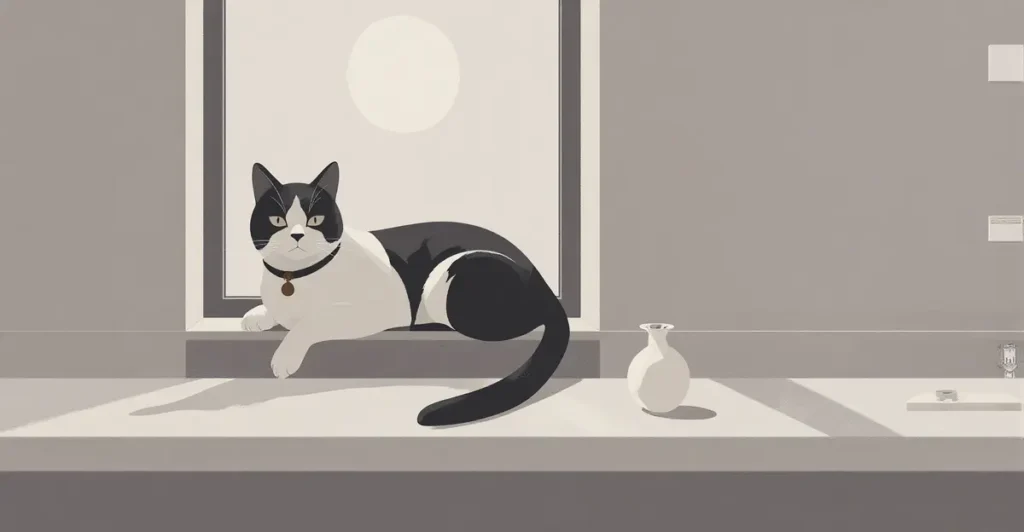
No animal has mastered niksen like the domestic cat. A cat will find the one warm rectangle of sunlight in a room and occupy it with total commitment, no agenda, no guilt, no glance at the clock. It is not waiting for something. It is not recharging for a hunt. It is simply being idle, and it has zero shame about it. We could learn a great deal from this.
The cat does not justify its rest. It does not feel it needs to earn the nap by being busy first. If you have ever wondered why your cat seems perpetually calm while you run on fumes, this is the difference. The cat practices doing nothing as a default state, while we treat it as a reward we are rarely allowed to claim. If you want a teacher, you probably already own one, and it is asleep on your keyboard right now. For more on the calm, slightly absurd logic of cat behavior, our piece on why cats knock things off tables covers another habit that makes more sense than it looks.
Common Niksen Mistakes
The easiest trap is turning niksen into another task you can fail. If a thought about dinner floats through, that is not a disciplinary offence. You do not need to force a blank mind. You can simply notice that you have started actively planning, and decide whether to leave the planning for later.
Scrolling, watching a film, and playing a game are activities rather than literal idleness. They can still be enjoyable ways to unwind. For this particular experiment, leave the screen aside so you can find out what an unfilled moment feels like. If notifications keep interrupting, our piece on notifications and attention explores that separate problem.
Frequently Asked Questions
Is niksen the same as being lazy?
Niksen means allowing some unoccupied time. It need not be a moral judgment about how busy anybody is. Rest, avoidance, fatigue, and competing obligations are more complicated than a simple lazy-versus-disciplined label.
How long should a niksen session last?
There is no fixed length. Five to fifteen minutes is a comfortable starting range, and some people stretch it longer once the guilt fades. The clock is not the point. Even a few minutes of true idleness gives your brain a useful pause.
Can I practice niksen at work?
If your work and surroundings allow a break, a quiet couple of minutes without a screen may be a pleasant option. There is no established rule that it restores attention better than coffee, and it should not replace attention when the task requires it.
Does niksen actually improve creativity?
It might leave room for ideas, but the evidence on mind wandering and creative incubation does not establish niksen as a reliable creativity treatment. A useful idea is a possible bonus, not a required outcome.
Why is doing nothing so hard for some people?
Some people associate rest with guilt; others dislike boredom or find that quiet time brings unwanted thoughts. There is no single explanation that applies to everyone. You can start gently or choose a different way to rest. Our piece on minimalism and attention considers another approach to making space.
Conclusion
Niksen is a small idea with an outsized payoff. It asks for nothing, costs nothing, and gives your overworked brain the idle space it quietly needs. The trick is to stop treating rest as something you have to earn. Cats figured this out millennia ago, claiming sunbeams without a shred of guilt. You can borrow the same wisdom. Sit down, look out the window, and for a few honest minutes, do absolutely nothing. Your to-do list may disagree. It has never been particularly good at taking a hint. For more calm reading from the cat’s point of view, browse the rest of our Pudgy Cat blog.