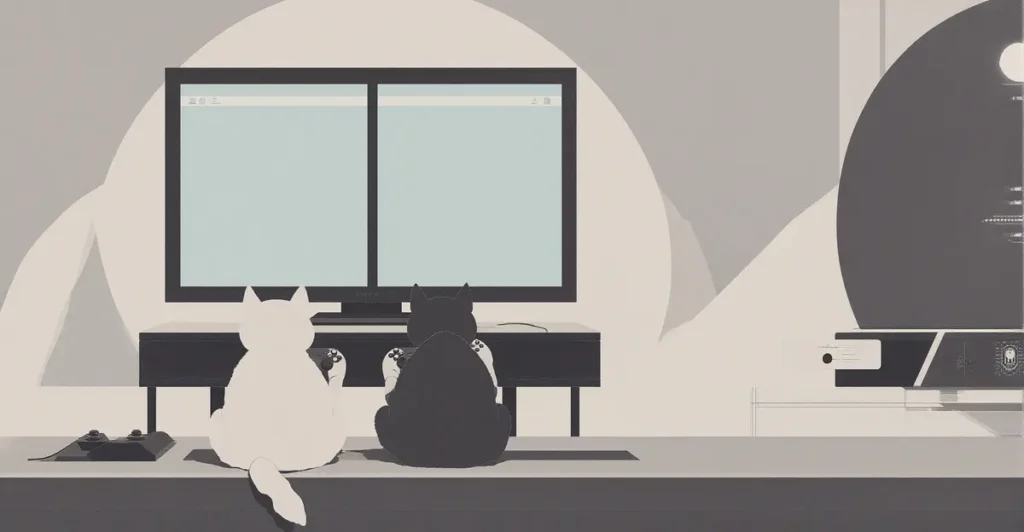
Split-screen gaming is the feature that taught a generation to play games while elbowing a sibling in the ribs. Two, three, sometimes four players, one television, one screen carved into rectangles. It was loud, chaotic, and gloriously personal. Online lobbies and headsets changed how many people played, and some series moved away from split-screen. Other games kept it central, while new releases found fresh reasons to divide the picture. This guide explains how the technology worked, why some developers leave it out, and why the couch refuses to stay empty.
If you grew up on a single console shared by a whole household, you already know the appeal. If you did not, stick around. The story of the divided screen is also the story of how gaming slowly migrated from the living room to the internet, and how a stubborn slice of players dragged a piece of the living room back.
Table of Contents
- What Is Split-Screen Gaming?
- How Split-Screen Rendering Actually Works
- The Golden Age of the Divided Screen
- Why Some Games Leave Split-Screen Out
- Why the Format Keeps Finding New Uses
- Games That Got Split-Screen Right
- Frequently Asked Questions
What Is Split-Screen Gaming?
Split-screen gaming is a form of local multiplayer where a single display is divided into separate viewports, one per player, so two or more people can play the same game on the same device at the same time. Each player gets an independent camera and an independent slice of the screen. The game still runs as one program, but it draws the world from multiple points of view and stitches those views together into a grid.
The format matters because it offers a particularly immediate way to play together. Online multiplayer connects friends and strangers across distances. Split-screen connects the person sitting twelve inches to your left. You can see their face, hear them groan, and watch them peek at your half of the screen to find out where you are hiding. That last habit even has a name in competitive circles: screen peeking, or screen looking, and it is the eternal sin of couch play.
Split-Screen vs Shared-Screen
Not all local multiplayer is split-screen. Some games use a single shared camera that keeps every player inside one frame, which is common in fighting games, beat-em-ups, and party platformers. Split-screen is specifically the approach where the display is cut into pieces because the players need to move independently, often far apart, like in a racing game or a shooter. The camera design is a choice: some games keep players together, some give them separate views, and some switch between the two as the players move.
How Split-Screen Rendering Actually Works
Supporting more than one viewpoint has technical costs, but counting rectangles does not tell you the entire performance bill. The engine, scene, output resolution, and gameplay all matter.
A split-screen game supplies multiple camera views within the same display. Unity’s documentation on multiple cameras illustrates how a scene can provide views assigned to different screen regions. Each viewpoint can require additional visibility checks and drawing work. But a second camera does not inherently require a second copy of the whole physics simulation, and assets can be shared. Dividing one display also gives each pane fewer pixels than the full display. Four players therefore does not automatically mean exactly four times every kind of work.
Developers may reduce effects, draw distance, resolution, or frame-rate targets to keep multiple views manageable. The compromise varies by game and hardware; there is no universal rule that a four-player mode runs at one quarter of the detail. The design challenge is to keep each smaller view readable and responsive enough that the room notices the race rather than the rendering budget.
Why Modern Graphics Made It Harder
Visually ambitious worlds can leave less performance headroom for additional views. Players exploring different places can also increase loading and memory demands. Interface layout, audio, menus, and testing add work beyond graphics. It is possible to build an attractive split-screen game, but it helps to plan for the format from the start. In a 2021 interview about It Takes Two, Josef Fares describes designing with its two viewpoints and technical constraints in mind.
The Golden Age of the Divided Screen
For many console players, the late 1990s and early 2000s made split-screen part of everyday multiplayer. The Nintendo 64 had four controller ports, supporting a memorable living-room tradition around games such as Mario Kart 64 and GoldenEye 007. That was one important strand of gaming, alongside shared-screen games, PC networking, and online play. Not every console had four built-in ports, and not every multiplayer evening needed a divided image.
This era produced rituals that still feel sacred to anyone who lived through them. Calling dibs on the bottom-left pane. Holding a couch cushion up to block a screen-peeker. The slow descent of an evening from friendly competition into accusations and laughter. Split-screen gaming was not just a feature, it was a social format. The cat, naturally, preferred whichever seat contained the controller cable.
The Living Room as Arena
What made the golden age special was friction. You could not mute a player who was sitting next to you. You could not rage-quit cleanly when the disc tray was three feet away and everyone would see you walk over. The shared physical space enforced a kind of social contract that online play quietly removed. The screen was divided, but the room was not.
Why Some Games Leave Split-Screen Out
There is no single explanation for every game that omits split-screen. Several practical pressures help explain why it may not make the feature list.
- Different multiplayer priorities. A game designed around online sessions may spend its development effort there rather than also building local play.
- Performance limits. Extra views compete for resources, especially when players can explore different parts of a large world.
- Interface and design work. Smaller viewports change what players can read and see; menus, cameras, progression, and accounts also need to work for multiple local participants.
- Production tradeoffs. Building and testing another mode takes time. A studio must weigh that work against the intended audience and other features.
Business priorities can influence those decisions, but the claim that every missing split-screen mode exists to sell four copies is too simple. Local players do not universally share one account, and game access or monetization arrangements vary. The absence of the feature alone does not reveal why a particular studio left it out.
Why the Format Keeps Finding New Uses
Split-screen never stopped having advocates. A game built around cooperation can make looking across at your partner’s view part of the experience. Competitive games can turn the same shared space into delightfully petty rivalry. Smaller local-multiplayer projects also belong in the wider story of independent games. Neither appeal requires us to declare the format dead first. Online and local versions can also coexist, letting players choose how to get together.
More capable hardware can offer additional headroom, but it does not remove the need to choose priorities. Art direction, scene complexity, and engine design all affect the result. A stylized game is not automatically cheap to render, and an independent studio is not automatically uninterested in ambitious graphics. The useful question is how the chosen design supports two or more simultaneous views.
Cooperation Is Not Always Cozy
A cooperative game can be gentle, frantic, demanding, or all three within ten minutes. Sharing a display does not promise a relaxing evening. It does make coordination immediate: you can point to what your partner is seeing, ask for help, or negotiate whose fault that last fall was. The divided screen can become part of the game’s communication, not just a way to save a television.
Games That Got Split-Screen Right
A few specific examples show what the format can do, from competition to a deliberately paired adventure.
- GoldenEye 007 (1997). Its two-to-four-player multiplayer is a landmark example of competitive console play on a shared display.
- Mario Kart 8 Deluxe (2017). Separate views let racers take their own routes and make their own mistakes while sharing a console.
- It Takes Two (2021). The adventure is built around a pair of players and mechanics that ask them to cooperate.
- Split Fiction (2025). Another two-player adventure built around complementary experiences, with local and online ways to play.
These are not merely remembered categories. Nintendo describes GoldenEye’s multiplayer history, and EA’s June 2025 Split Fiction announcement shows couch co-op among its play options. The common thread is intention: the separate views serve what the players are doing, rather than being an afterthought.
The Hardware That Helps
Split-screen rewards a little setup: enough compatible controllers, seating with a good view, and text large enough to read in each pane. Before organizing an evening, check the specific platform version, supported modes, and local player count. “Multiplayer” by itself does not promise split-screen, and a feature on one platform need not exist on every port. Snacks remain a personal hardware decision.
Frequently Asked Questions
Why do split-screen games look worse than single-player?
Additional views can increase rendering and other workload, so some games reduce visual settings or frame-rate targets. The cost is not automatically multiplied by the player count, and a well-designed split-screen mode need not look bad. It depends on the engine, scene, and hardware budget.
Why did so many games drop split-screen?
Supporting local views adds design, interface, performance, and testing work. Some productions prioritize other modes. Those are possible pressures, not proof that every omission has the same technical or financial explanation.
Is split-screen gaming still around?
Yes. Games such as It Takes Two and Split Fiction show it can remain central to new adventures, while racing and other local multiplayer games continue using it. These examples demonstrate continuity and creative interest; they do not by themselves establish a measured industry-wide boom.
What is the difference between split-screen and shared-screen?
Split-screen divides the display into separate panes, one per player, so each person has an independent camera and can move freely apart. Shared-screen keeps every player inside a single frame with one camera, which works when players stay close together, as in many fighting and party games.
Can you play split-screen and online at the same time?
In some games, yes. Nintendo’s Mario Kart 8 Deluxe instructions describe online play with up to two players on one console. Always check the particular game and mode; support for local split-screen and support for online play do not automatically mean they can be combined.
The Couch Was Never Really Empty
Split-screen gaming offers a distinctive kind of company: separate views, shared space, and a reaction you can hear without a headset. It has technical tradeoffs, but it can also be a creative foundation. Sometimes the smaller slice of screen buys you a much bigger evening. The couch was never really empty; somebody was probably sitting on the spare controller.