
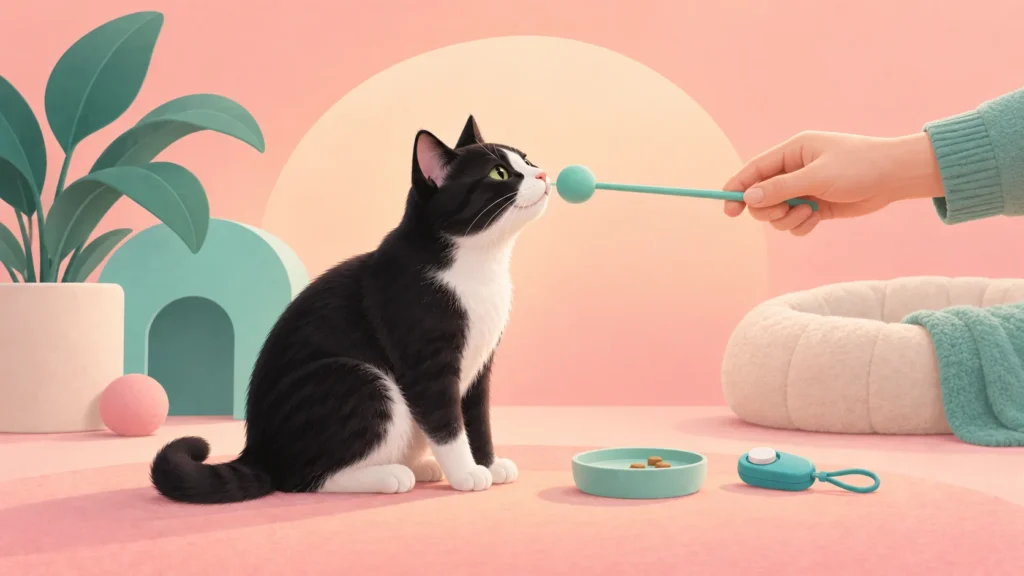
A cat touches a target with its nose. A click follows, then a small reward. The action is modest, but the exchange is remarkably clear: that movement is what earned the treat.
Clicker training gives a person a way to identify a moment precisely. It also gives a cat a chance to participate. The most useful early goal is not an impressive trick. It is a short interaction in which both sides understand what just happened.
Make the sound mean something
Cats Protection’s clicker guide begins with an association: a click is followed promptly by a reward the cat values. Start when the cat is awake, relaxed and willing to engage, with few distractions.
The sound should not startle the animal. If a clicker is uncomfortable, a gentler, consistent marker can be a better fit. The device itself has no special power; its usefulness comes from a predictable connection with what happens next.
Once that connection is familiar, mark a simple action as it occurs. Keep the reward ready. A long search through a pocket makes the sequence harder to follow, especially if several other movements happen in the meantime.
Choose a goal small enough to succeed
A nose touch offers a straightforward example. Present a safe target nearby, allow the cat to investigate and mark a voluntary touch. There is no need to move the target into the cat’s face or steer the animal physically.
The practical challenge for the human is deciding exactly what counts. “Be good” is too vague. “Touch this object with your nose” is observable. That difference is why a tiny goal can be more productive than an ambitious plan.
A 2017 study involving 100 shelter cats assessed four behaviours before and after fifteen five-minute training sessions. Performance improved across the tested behaviours, with food motivation related to gains on some tasks. It supports the possibility of learning; it does not promise the same timetable for every household cat.
Useful skills can grow from quiet beginnings
Training can also help build familiarity with a carrier. Cats Protection’s carrier advice recommends leaving it accessible, allowing exploration and gradually building positive associations. Closing the door comes after the cat is comfortable inside.
Those are separate steps. Walking towards a carrier is not consent to being shut in immediately. Treating each step as its own achievement helps avoid turning a promising interaction into a surprise the cat will remember next time.
The larger lesson is useful beyond training equipment: ask what the animal is actually ready to do. A successful nose touch today may be all the session needs. Repeating it until the cat becomes irritated does not improve the earlier success.
Keep the session easy to leave
Use small rewards, account for food within the daily allowance and finish while the cat remains interested. Never use punishment for a missed response or withhold needed food to force participation. Turning away, leaving or losing interest is a reason to pause.
If the cat stops doing something it previously managed comfortably, consider the context rather than assuming stubbornness. Discomfort, distraction or an unclear request can change an interaction. Persistent concerns about movement, appetite or health belong with a vet.
Our piece on why cats knock things off tables explores how consequences can help sustain everyday behaviour. Clicker training makes one part of that exchange deliberate. The reward still belongs to the cat; the responsibility for clarity belongs to us.