 English
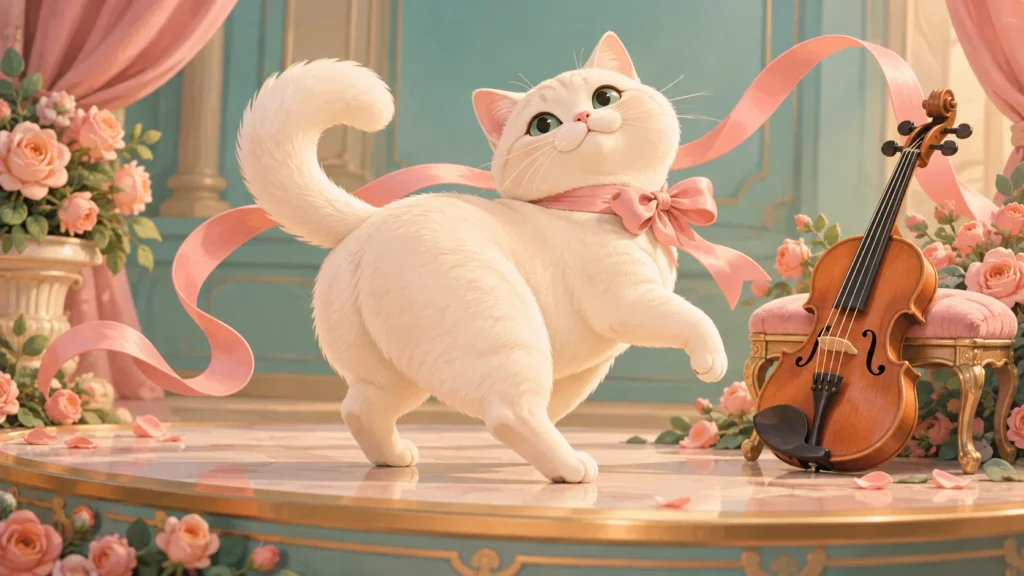
A waltz invites you to expect a certain kind of elegance. Leroy Anderson gives you that elegance, then lets a cat interrupt it.
The Waltzing Cat is a short orchestral piece built around a wonderfully economical idea: the animal's voice can belong inside the melody.
The cat is in the strings
The official account of Anderson's music describes an imaginary feline dancer and a graceful tune shaped by strings imitating a meow.
Listen for the sliding movement between pitches. A string player can move smoothly through the space that a piano normally divides into separate keys. That slide, or glissando, gives the musical phrase something of the shape of a vocal sound.
The resemblance does not need to be exact. Once the title has suggested a cat, a small change of pitch and emphasis can complete the image in your mind.
Keep listening to the dance
It would be easy to remember only the imitation. The waltz around it is what gives the joke its setting.
The regular dance pulse creates an expectation of poise. When the meow arrives within that framework, it can sound like a lapse in manners or a character briefly showing through the formal occasion.
Try one listening pass concentrating on the accompaniment rather than the conspicuous feline phrase. The music keeps moving while the joke happens. That continuity is part of the craft: the piece has to remain a dance as well as an amusing title.
The dates belong to different versions
PBS's account of the composition records its completion in February 1950 and Anderson's first recording that September. Mitchell Parish added lyrics in 1951, and Anderson recorded it again in stereo in 1959.
Those dates can explain why different years appear beside the same title. A recording date is not necessarily the date a work was written.
They also make comparison worthwhile. If you find more than one performance, notice how the tempo and the treatment of the comic gestures affect the cat you imagine. A brisk entrance and an unhurried one can suggest very different personalities.
The title gives the listener a starting image before the first note. You are primed to hear a cat, which makes certain gestures stand out. Listening without telling someone the title can produce an interesting comparison, provided it remains a conversation rather than a test with a correct answer.
Ask what kind of movement the music suggests. A listener might describe a dance, a comic entrance or something deliberately elegant. Then reveal the title and listen again. The notes have not changed, but the story attached to them may alter where attention goes.
A good first stop for a curious listener
You do not need to read a score to follow this piece. Start with the dance rhythm, locate the sliding meow and notice how quickly the musical character becomes clear.
Our collection of cats in opera and classical music offers other ways composers have approached the animal. Anderson's contribution is particularly approachable because the central gesture is audible almost at once.
A few minutes are enough for the orchestra to suggest a whole scene: a grand occasion, a confident dancer and a voice that refuses to remain entirely dignified.