 English
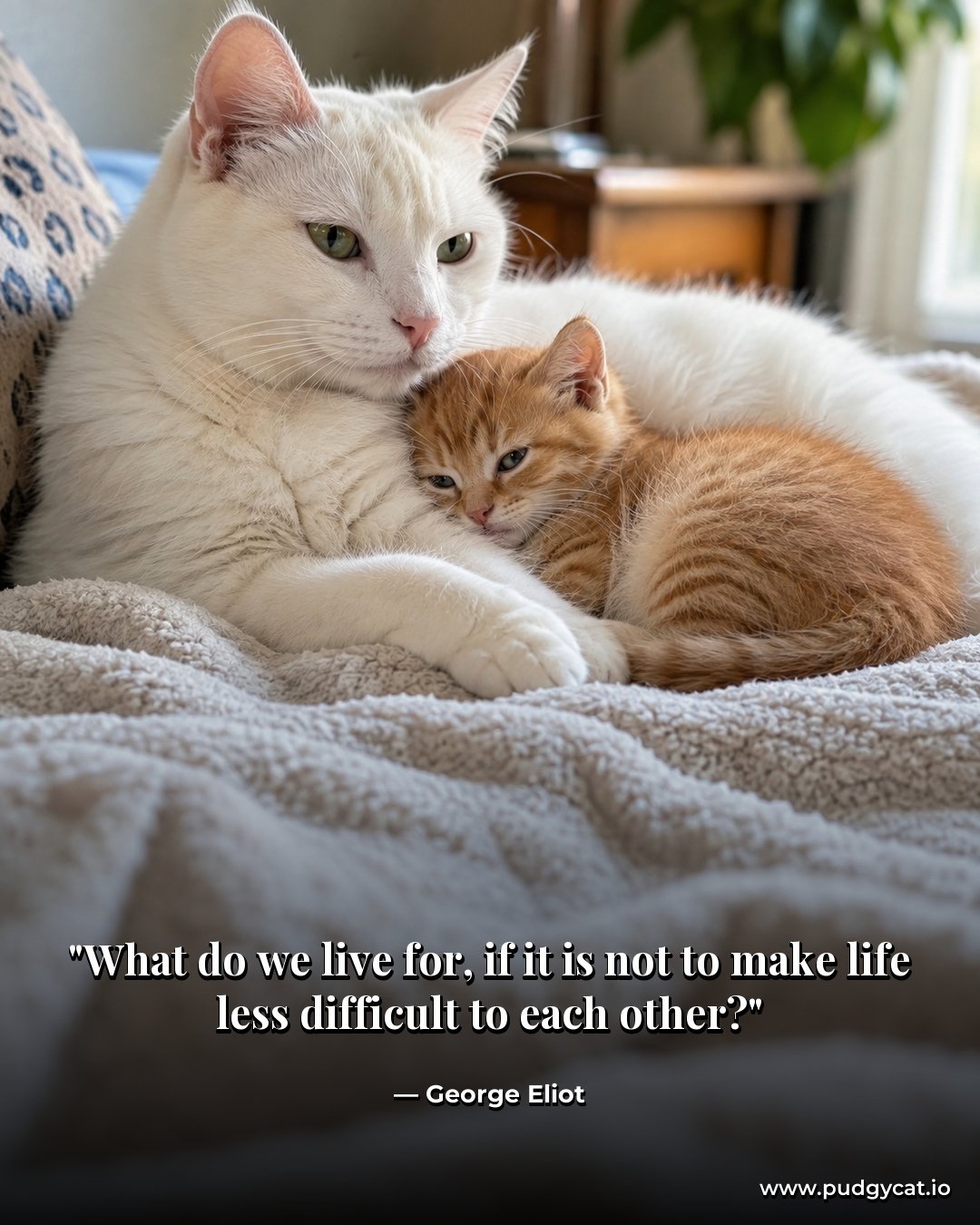
What do we live for, if it is not to make life less difficult to each other?
George Eliot
Source, Middlemarch, 72
Why This Quote Matters
Dorothea Brooke asks this question in chapter 72 of Middlemarch while trying to help Lydgate. George Eliot places it in a situation involving suspicion, reputation, and the willingness to stand beside someone in trouble. The sentence is therefore more than a general compliment to kindness. It accompanies an attempt to make assistance concrete when cautious distance would be the easier social choice.
The wording gives care an achievable scale. Making another person's life less difficult does not require solving every problem they face. It might mean clarifying a misunderstanding, doing one necessary task, or offering support without requiring the recipient to perform gratitude. Dorothea's question also challenges the habit of treating involvement as an optional interruption to more important business. Sometimes helping is the important business. The difficulty lies in noticing where our position allows a useful action and then being willing to take it.
The adult white cat making room for a ginger kitten gives that action a small, warm shape. The whole world has not been repaired; one resting place has become easier to inhabit. That modest outcome suits the line. Human generosity is often described in enormous terms, but much of its daily value lies in removing a little friction from somebody else's path and allowing the benefit to be enough.
More Cat Wisdom