 English
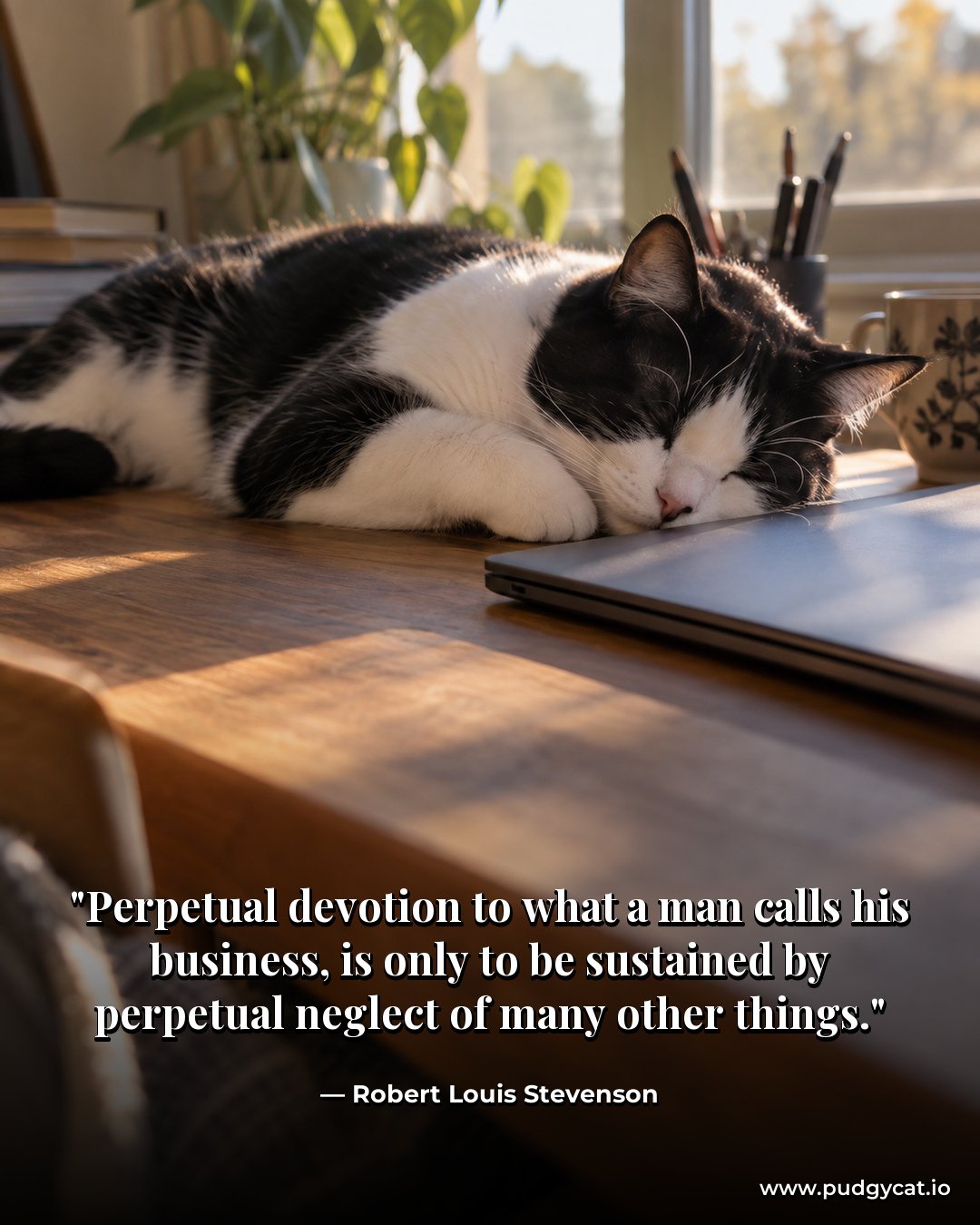
Perpetual devotion to what a man calls his business, is only to be sustained by perpetual neglect of many other things.
Robert Louis Stevenson
Source, Virginibus Puerisque, An Apology for Idlers
Why This Quote Matters
Robert Louis Stevenson writes this sentence in An Apology for Idlers, within Virginibus Puerisque. The surrounding passage considers the effects of relentless occupation on family, friends, and even casual companions. Constant devotion to business is presented as a choice with consequences, not an isolated personal virtue. Time committed without limit in one direction must be withdrawn from other parts of a shared life.
The useful question is what has been made invisible by the appearance of diligence. A full schedule can conceal unanswered letters, unattended relationships, and interests that never receive enough time to become real. Stevenson does not argue that work has no value. He challenges its automatic claim to be the most important thing at every moment. The balance cannot be solved once for everyone, but it can be examined. Calling a commitment necessary should not prevent noticing the things it repeatedly asks us to neglect.
The black-and-white cat asleep beside a closed laptop supplies the argument with an admirably clear stopping point. The device remains available; it simply does not occupy the entire scene. Human work is harder to set down than that, especially when it follows us into every room. The picture offers a modest question rather than a universal solution: what else could receive this particular hour if the lid stayed closed a little longer?
More Cat Wisdom