 English
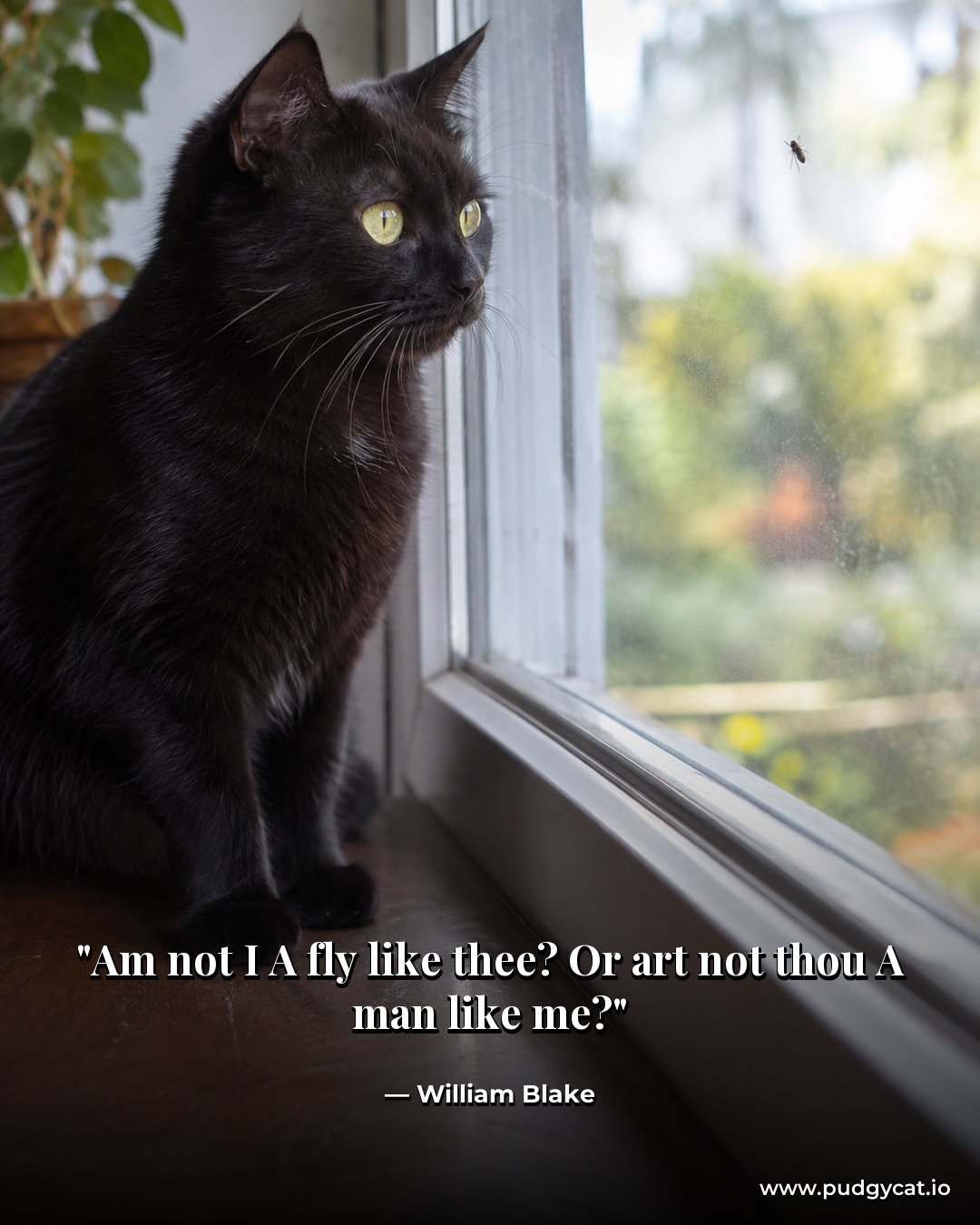
Am not I A fly like thee? Or art not thou A man like me?
William Blake
Source, Songs of Experience, The Fly
Why This Quote Matters
In The Fly, part of Songs of Experience, William Blake's speaker compares their own life with that of a small insect. These questions follow an accidental interruption of the fly's activity and lead toward a reflection on fragility. The poem unsettles a comfortable hierarchy: the human who can so easily brush aside another creature is also vulnerable to forces beyond their own immediate understanding or control.
The comparison works through imaginative sympathy rather than literal equivalence. Human and insect lives are different, yet difference need not make the smaller life meaningless. Blake asks what happens when the observer recognizes some shared condition of being alive and exposed to interruption. The result can be a more attentive way of inhabiting the world. An ordinary creature at the edge of notice may deserve more than the automatic response usually given to something classified as insignificant or merely in the way.
The black cat watching a tiny fly beyond a closed window gives the poem an unusual arrangement of observers. The glass keeps the encounter quiet, while scale makes the insect easy to overlook beside the cat's face. The human viewer occupies another position outside the frame. That layered attention suits Blake's questions: who is looking at whom, and how might the scene change when importance is no longer measured only from the largest creature's point of view?
More Cat Wisdom