 English
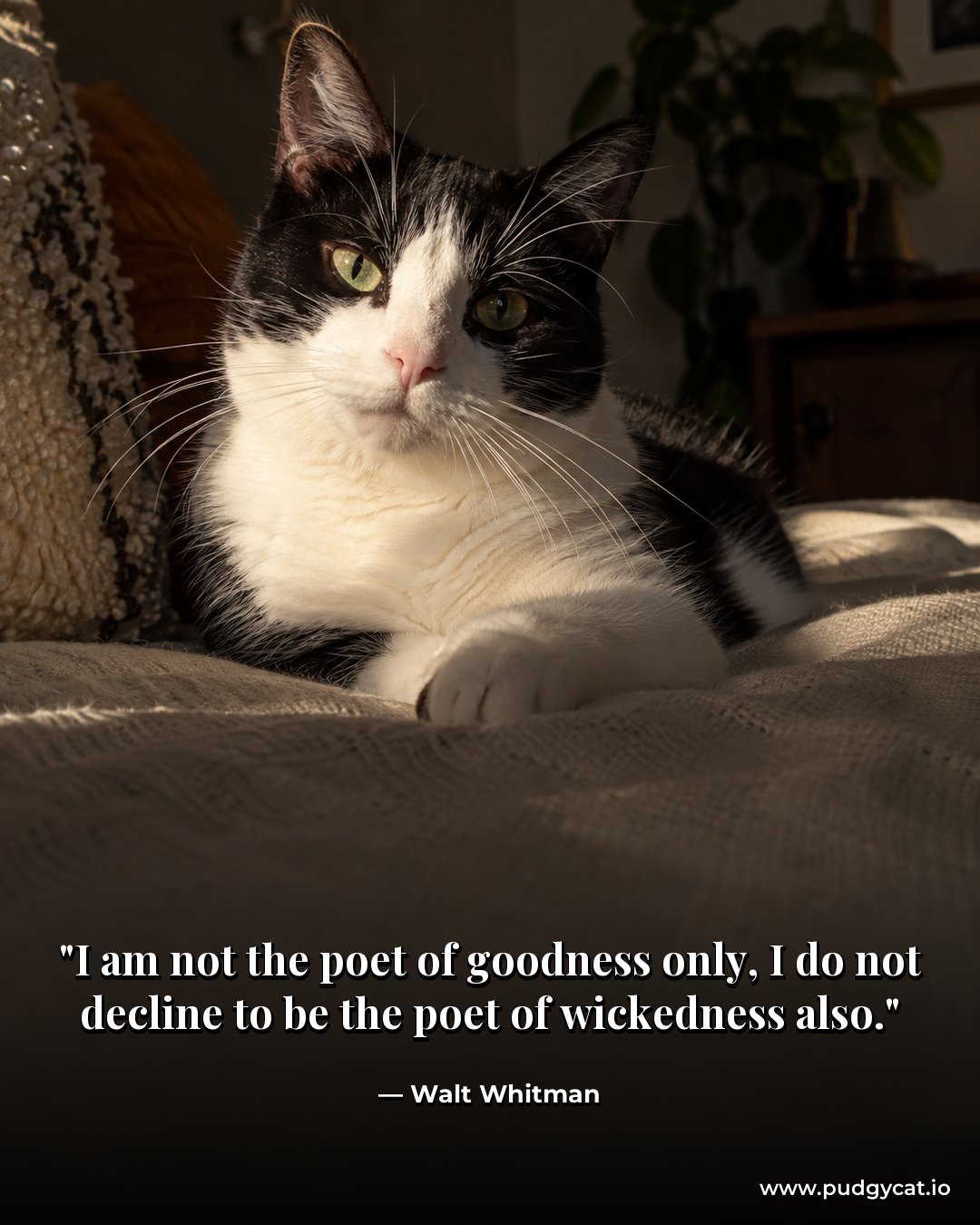
I am not the poet of goodness only, I do not decline to be the poet of wickedness also.
Walt Whitman
Source, Leaves of Grass, Song of Myself, 21
Why This Quote Matters
Walt Whitman's speaker makes this claim in section 21 of Song of Myself, within Leaves of Grass. The poetic voice refuses to represent goodness alone and exclude the troubling parts of human experience. The following lines continue that expansive posture. The statement concerns what the poet is willing to encounter and contain in the poem, rather than an instruction to admire or imitate harmful conduct.
That distinction gives the quotation its useful complexity. An account of life limited to respectable motives can become reassuring but incomplete. Literature often asks readers to notice contradiction, failure, and impulses they would prefer to assign entirely to someone else. Recognizing those elements is different from endorsing them. Whitman's declaration makes room for a voice broad enough to consider what a tidier moral portrait would leave outside the frame. Understanding may require looking at more than the qualities we already know how to praise comfortably.
The half-lit black-and-white cat supplies a visual contrast without turning color or shadow into a moral diagnosis. Its expression can seem gentle and mischievous at once, which is enough for the connection. A familiar creature need not be reduced to one perfectly consistent impression. For human readers, the photograph offers a small reminder that complexity is something to examine, and that noticing a darker part need not mean allowing it to define the whole.
More Cat Wisdom