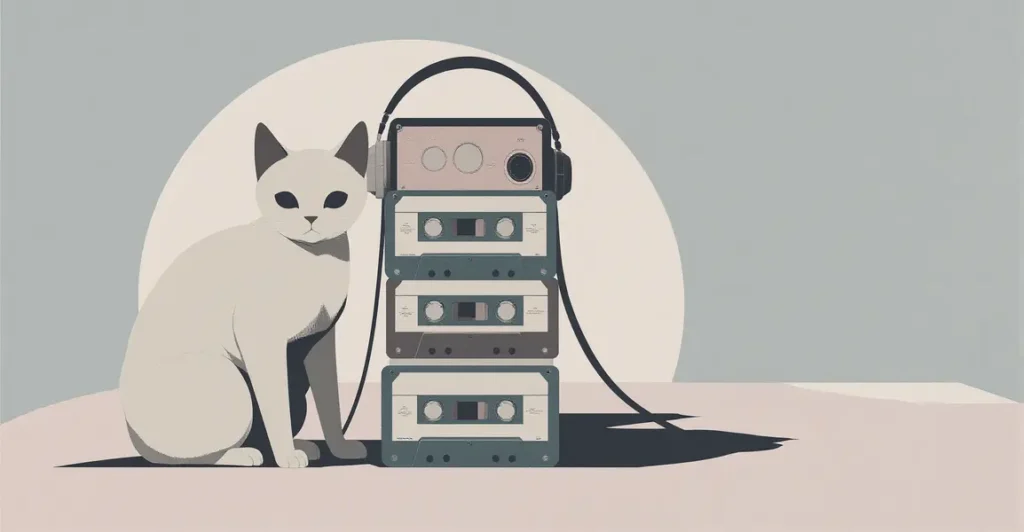
The cassette tape comeback sounds like a contradiction. We can summon an album in seconds, yet some listeners are buying a little plastic rectangle that makes them wait while it rewinds. Apparently, the progress bar needed to become a physical object.
There is a real sales story here, alongside the retro styling. But a growing niche is not a mass retreat from streaming, and sales totals cannot tell us what every member of Gen Z thinks. Here is what the numbers support, why the format can be appealing, and how to try it without turning a bargain tape into an expensive repair project.
A Small Format With a Real Sales Uptick
Forbes’ February analysis of Luminate’s 2025 report puts U.S. cassette album sales at 446,500, up 17.5% on 2024. That still represents about 0.5% of physical album sales. The rewind button is enjoying itself; it has not taken over the music business.
In the UK, Official Charts reports 164,000 cassette sales in 2025, up 53% after a dip the previous year. Robbie Williams’ Better Man soundtrack led the cassette album list, followed by Dave and Central Cee. Taylor Swift’s The Life of a Showgirl also appears in the top 20.
Those are different national markets, not figures to combine into one growth rate. They also show why it is worth looking beyond a single pop star or generation. A release can sell well on tape without proving that most buyers use it as their main way of listening.
From Pocket Recorder to Mixtape
Philips introduced its compact cassette and recorder in Berlin in 1963. Sony’s first Walkman followed on July 1, 1979, helping turn headphone listening into a portable habit.
The cassette also made the home-made compilation wonderfully tangible. A mixtape had a running order, a handwritten label and the occasional radio presenter who refused to stop talking before the song began. Sharing music could involve handing over an object you had spent an evening assembling.
That history gives older listeners something to revisit. For someone who grew up with streaming, the same object can feel unfamiliar and interesting. Nostalgia is one route into a format; curiosity is another.
Why the Inconvenience Can Be Appealing
A cassette has artwork you can unfold, a case you can lend and a place on a shelf. It can be a souvenir of a gig, a small piece of an artist’s visual world or simply an album you want to own. None of that requires declaring war on your streaming subscription.
Playing one also changes the routine. Skipping is possible, but finding a particular track takes more effort than tapping a screen. You may decide to leave the next song alone and hear what happens. The machine has accidentally become a very small patience instructor.
These are reasons the format may appeal, not a survey of an entire generation. The broader attraction of physical music also runs through our look at the vinyl revival.
Buying directly from an artist can be a deliberate way to support their work, but the full sticker price is not their profit: production, selling fees and fulfilment still matter. Nor does streaming pay a universal fixed amount per play. Spotify describes payments to rights holders based on streamshare; what an artist receives also depends on their agreements.
Does Tape Sound Better?
There is no need to pretend that hiss is an engineering triumph to enjoy a cassette. Playback depends on the recording, tape condition and machine. A worn portable player and a serviced deck are not interchangeable reference points, and one frequency-response number cannot describe every cassette setup.
For a concrete modern example, FIIO’s CP13 documentation acknowledges more audible background noise than digital audio players. Its USB-C connection charges the battery; it is not a promise of digital music playback. The company’s cassette guidance recommends Type I tapes for that model, despite its ability to play Types I through IV. “Buy chrome for everything” is not a useful universal rule.
Choose tape because you enjoy the experience and the music. If your goal is convenient, repeatable playback without mechanical upkeep, digital listening has rather compelling arguments. It also rarely eats the chorus.
Starting a Collection Without Buying a Problem
- Start with the player. Read its manual and check the outputs and tape support. Do not assume that a charging port provides audio, that every machine records, or that wireless headphones will connect.
- Ask what “tested” means for used equipment. A photograph of a glowing power light does not demonstrate steady playback, working rewind or sound in both channels. Look for a clear return policy and a description of any servicing.
- Buy a few albums you actually like. A small, playable collection is more rewarding than a tower of sealed purchases you feel obliged to call an investment.
- Compare completed sales, not ambitious asking prices. One expensive listing does not establish what a cassette normally sells for or what yours will fetch later.
- Treat condition as part of the purchase. Inspect the shell and visible tape where possible. If playback begins to squeal or the machine pulls tape loose, stop and investigate rather than repeatedly feeding it back in.
- Follow the manufacturer’s care instructions. Avoid improvised cleaning or demagnetizing routines on equipment you do not know. Maintenance should improve the listening session, not become its dramatic climax.
The best first cassette is not necessarily the rarest release or the colour variant commanding the loudest resale price. It is an album you want to hear, in a format you are curious enough to live with. Press play, let the side run, and give the rewind button its little moment of glory.