The Hermitage’s cats belong to the museum’s less visible life: basements, service spaces and the people who care for animals beneath a famous collection. The appealing phrase “cats on the payroll” is a joke, not a description of salaried employees.
Their story combines a history of pest control with a modern animal-care programme. Keeping those strands separate makes the institution more interesting than a simple claim that the same feline workforce has been clocking in for centuries.
A palace tradition, not a current headcount
The Google Arts & Culture account of the Hermitage cats traces the palace tradition to the eighteenth century and Elizabeth’s recruitment of cats in 1745. It also describes later efforts to organise care for the animals living in the museum’s basement.
That is a historical starting point, not evidence of uninterrupted ancestry. A tradition can survive through replacement animals, changed buildings and changed responsibilities. Calling today’s cats direct descendants of a particular wartime shipment would require evidence beyond the persistence of the story.
The paintings are upstairs
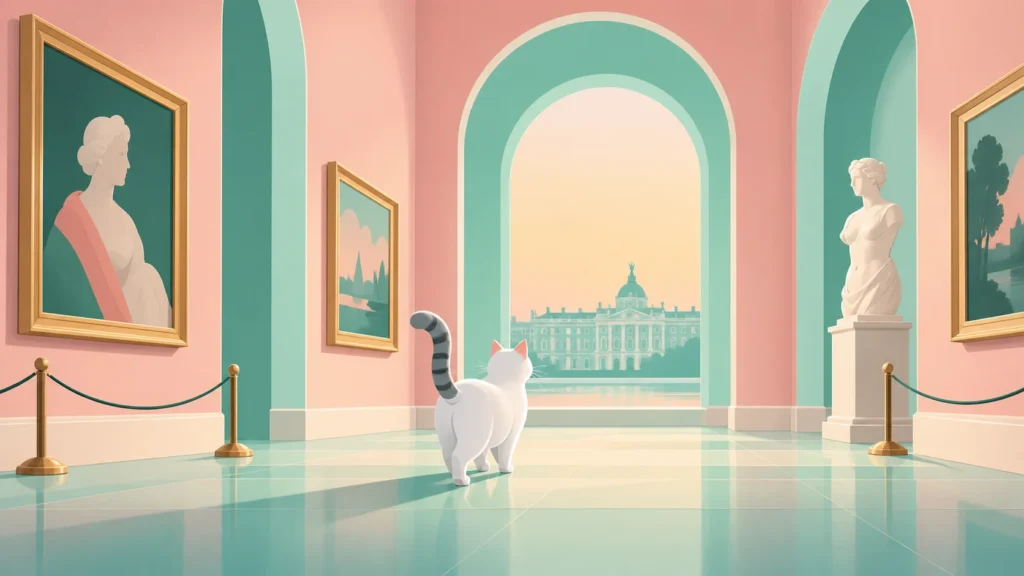
In ABC’s 2010 reporting from the museum, staff described the galleries as off limits to the cats. The report also discussed the development of organised care and quoted a population of roughly 60 at that time.
The date is essential. A count from 2010 is not a live census, and a visitor should not expect to meet a cat beside every painting. The contrast between the public museum and its service areas is part of the story: the animals have a place within the institution without sharing every room with the collection.
Care is more substantial than a cute job title
The Arts & Culture account describes volunteers, support from donors and an annual celebration. These arrangements point to work performed by people as much as to work attributed to cats. Food, veterinary attention and appropriate housing do not happen because an animal has become a mascot.
It is easy to tell an institutional cat story entirely through personality: an imperious expression, a favourite staircase, a ceremonial title. The more useful question is what keeps the animal well when nobody is taking photographs.
A symbol is not a pest-control trial
Museum officials have argued that feline presence can deter rodents, but that statement should not become a measured claim about how many artworks the cats save. Demonstrating effectiveness would require a different kind of evidence from a staff interview or a visitor feature.
The Hermitage cats can matter as a living tradition without being presented as a universal solution for museums. Their appeal lies partly in the contrast: a monumental institution makes room for ordinary animals and for the everyday care they need.
For more unusual relationships between people, animals and institutions, explore our Curiosities archive.