 English
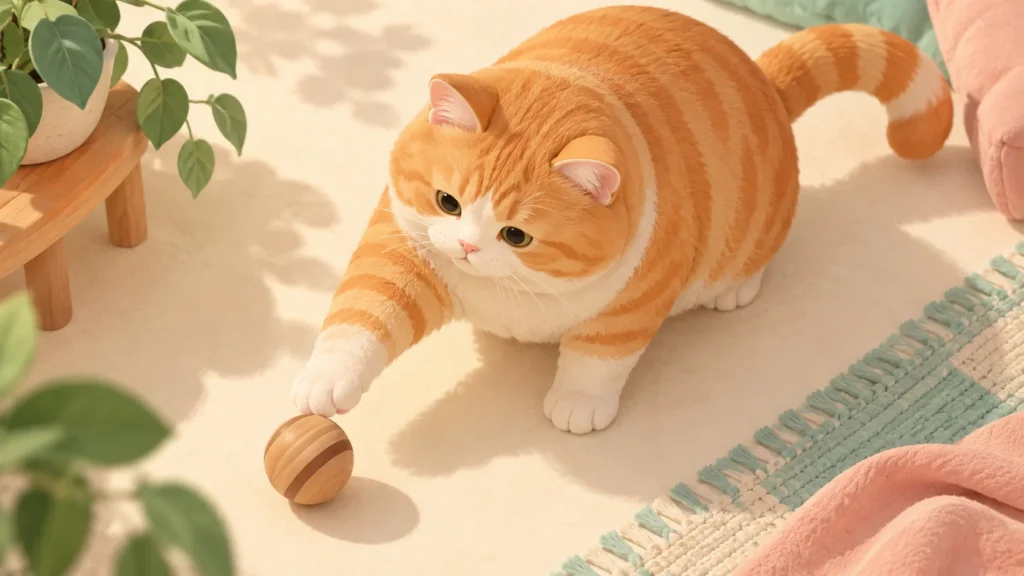
A cat reaches towards a toy, steps off a ledge or crosses the edge of a tray. Usually the interesting part is what happens next. Researchers studying laterality pay attention to the paw that moves first.
Many cats show a preference in particular tasks. That does not mean every animal belongs neatly to a left-pawed or right-pawed category, or that a single reach will reveal its personality.
Looking beyond a laboratory puzzle
A study reported by Queen's University Belfast in 2018 followed 44 neutered cats. Owners recorded spontaneous behaviour at home, while a food-reaching task provided another way to examine paw use.
The researchers found preferences in several kinds of movement, including reaching and stepping. At the group level, females were more likely to favour the right paw and males the left. There was no single overall preference equivalent to the strong right-handed majority in humans.
The home observations are an appealing part of the design. A preference that appears while an animal is going about its day tells a different story from a result produced only by a demanding experimental apparatus.
A preference needs repeated observations
Imagine seeing a cat reach once with its left paw. The position of the object, the cat's balance and what it was already doing may all matter. Calling that animal left-pawed immediately would assign a pattern to one event.
Repeated observations let a pattern emerge, if one is there. They also allow an unexciting result: the animal may use different paws in different situations. That is information rather than a failed test.
For an owner, the easiest approach is simply to notice ordinary movement. There is no reason to make a cat perform difficult reaches, withhold food or arrange awkward jumps. Everyday behaviour offers enough opportunities to become more observant.
A household observation is easiest to interpret when you write down the action before giving it a label. 'Stepped down with the right forepaw' describes something visible. 'Is right-handed' jumps to a broader conclusion.
If you notice several ordinary examples over time, keep the activities separate. A preferred paw for reaching into a space need not tell you which one leads while walking. You can enjoy spotting a tendency without arranging obstacles or withholding food to produce a more convincing result.
Group findings are not individual instructions
The reported sex difference describes the studied animals as groups. It cannot tell you in advance what a particular female or male will do. Nor does it make one side more capable, affectionate or intelligent.
This is a familiar distinction in animal research. Our article on cats recognising their names also separates an experimental pattern from the much broader story people might like to tell about an individual pet.
It is worth asking the same questions whenever a headline gives cats a human trait. What exactly did the animals do? How often did they do it? What were the comparison conditions? A phrase such as handedness can make a finding easy to picture while hiding the details that make it meaningful.
Once you start watching, a routine step from the sofa becomes surprisingly interesting. The cat need not acquire a label. You may simply discover that there is a recurring detail in a movement you have seen a hundred times.