
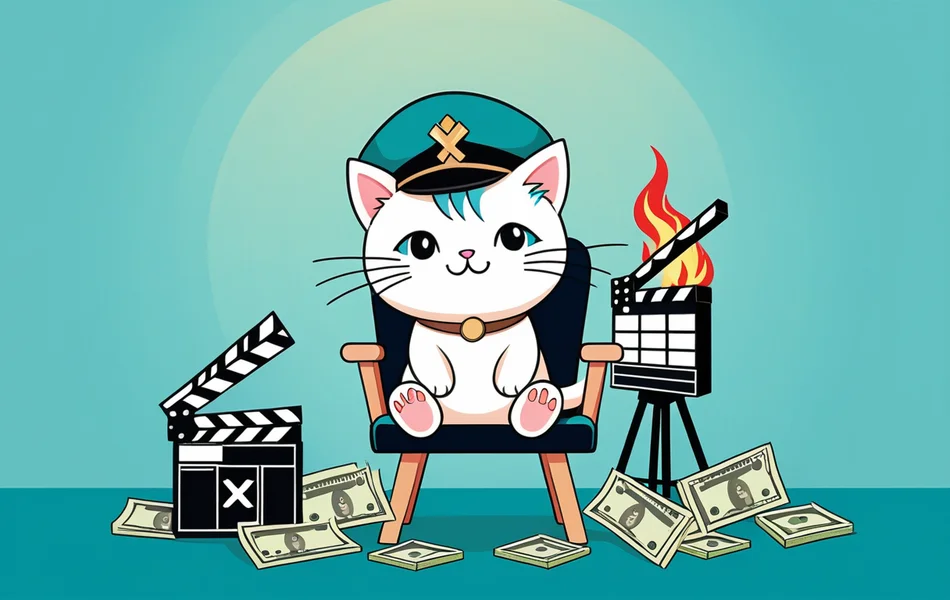
OpenAI’s Sora was supposed to change everything. When it launched in late 2025, it was the AI video tool that would let anyone create Hollywood-quality clips from a text prompt. Filmmakers panicked. Disney signed a billion-dollar deal. The future of video had arrived.
Six months later, Sora is dead. The app shuts down on April 26, 2026, and the API follows in September. What happened between the hype and the obituary is one of the most expensive product failures in tech history, and possibly the best case study in why “cool demo” and “viable product” are very different things.
The Numbers That Read Like Satire
Let’s start with the financials, because they’re genuinely hard to believe. According to Forbes reporting, OpenAI was burning roughly $15 million per day on Sora inference costs at peak usage. Each 10-second video clip cost about $1.30 in compute to generate. The annual inference bill was on track to hit $5.4 billion.
Against that, Sora’s total lifetime revenue was $2.1 million. Not $2.1 billion. Million. With an M.
That’s a ratio so lopsided it stops being a business metric and starts being a punchline. For every dollar Sora earned, OpenAI spent roughly $2,600 keeping it running. You could literally set money on fire and get a better return, because at least fire provides warmth.
From 3.3 Million Downloads to a Ghost Town
The user story is equally grim. Sora peaked at about 3.3 million downloads in November 2025, riding the wave of launch hype. By February 2026, downloads had dropped 66%. Active users collapsed to under 500,000. For a product backed by the most talked-about AI company on the planet, those numbers are brutal.
The problem wasn’t that Sora couldn’t generate impressive videos. It could. The problem was that generating impressive videos wasn’t actually something most people needed to do regularly. You try it once, post the result on social media, and then what? There was no workflow, no daily use case, no reason to come back. It was a technology looking for a purpose, which is the most expensive kind of technology to maintain.
The Disney Disaster
Perhaps the most dramatic casualty was the Disney partnership. In late 2025, Disney signed a three-year licensing agreement that would have let Sora users generate videos featuring over 200 characters from Disney, Marvel, Pixar, and Star Wars. Disney was also planning a $1 billion investment in OpenAI. The deal was supposed to be the proof that AI video had real commercial legs.
Then, on the day OpenAI pulled the plug, something almost comically awkward happened. Teams from Disney and OpenAI had a meeting about the Sora project. Thirty minutes after that meeting ended, the Disney side was informed that OpenAI was killing the app. No money ever changed hands. Sam Altman reportedly felt “terrible” delivering the news to Disney CEO Josh D’Amaro, which is understandable, given that you generally don’t want to blindside the company that owns Star Wars.
Disney’s response was telling. “The future is human,” the company said, pivoting away from the AI partnership entirely. Whether that’s a genuine philosophical stance or just excellent damage control is open to interpretation.
Why OpenAI Pulled the Plug
OpenAI is preparing for a potential IPO later in 2026, which means every line on the balance sheet matters. When you’re trying to convince investors you can build a sustainable business, a product that costs $15 million a day and earns almost nothing is not exactly the story you want to tell.
The strategic pivot is clear. OpenAI is doubling down on enterprise tools, coding assistance, and ChatGPT’s subscription business, which actually makes money. With $25 billion in annualized revenue from those core products, the company can afford to cut the flashy experiments that don’t pay for themselves.
There were also mounting copyright challenges. Training a video generation model on existing footage raises legal questions that no one has fully answered yet, and going into an IPO with unresolved copyright litigation is not ideal.
Google’s Quiet Power Move
While OpenAI was bleeding cash on Sora, Google took the exact opposite approach to AI video. Instead of building a standalone consumer app, Google embedded its Veo model directly into products people already use: Google Photos, Workspace, and Android. No separate subscription. No flashy launch event. Just quiet integration into tools with hundreds of millions of existing users.
Google is also teasing Veo 4 for a likely reveal at Google I/O in May. The timing is not accidental. When your biggest competitor exits a market, you don’t need to rush. You just need to show up.
What This Actually Means
Sora’s death is a reality check for the entire AI industry. Not every impressive capability translates into a viable product. Being first with a demo doesn’t mean you’ll be first with a business. And the cost of running cutting-edge AI models at consumer scale is still staggering enough to kill products that millions of people downloaded.
The broader lesson is about the gap between what AI can do and what people will pay for. Text-based AI tools, like ChatGPT, work because writing is something people do every day. Code assistants work because developers write code every day. But generating AI video? That’s a sometimes thing. A novelty. And novelties don’t justify $5.4 billion in annual compute costs.
OpenAI raised $122 billion last week. They can afford to absorb the Sora loss. But the fact that even the most well-funded company in AI history couldn’t make a consumer video tool work should give everyone pause. The AI revolution is real, but it turns out even revolutions need a business model.
🐾 Visit the Pudgy Cat Shop for prints and cat-approved goodies, or find our illustrated books on Amazon.

Leave a Reply