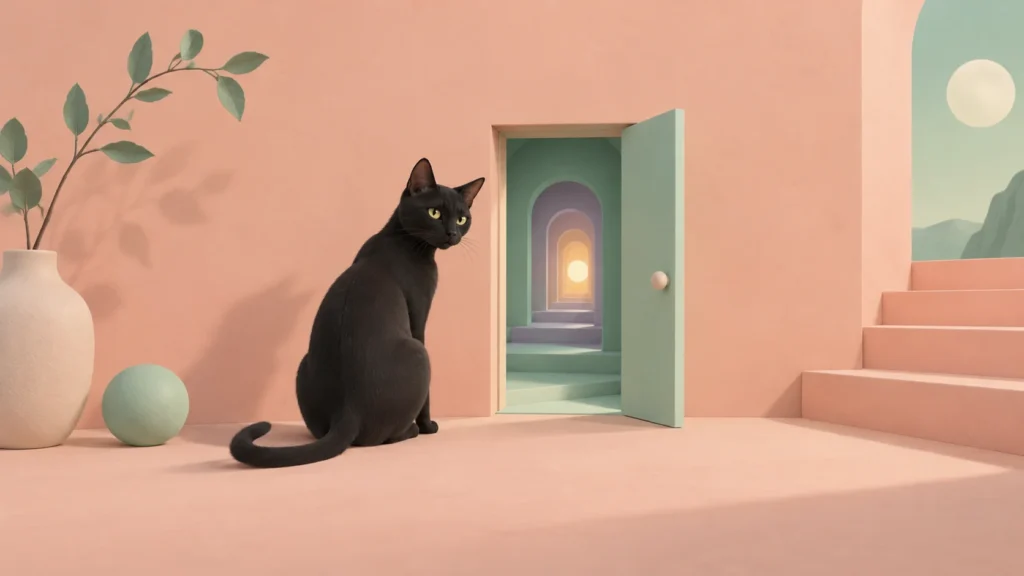
The black cat in Coraline seems perfectly capable of finding something else to do. He watches, approaches on his own terms and declines to behave like a reassuring pet placed in the story for the reader’s comfort.
That makes him excellent company for a Halloween book. In a world where welcome can conceal a threat, a creature that does not try very hard to charm you becomes unusually interesting.
A familiar house made strange
Neil Gaiman’s description of the novel introduces a door leading to another version of Coraline’s home. There is another mother who wants her to stay, at a terrible cost. The attraction of the place and the danger it conceals belong to the same problem.
The cat moves through that story with an independence that is easy to recognise. The English Association’s reading discussion describes him as a guide and confidant, able to speak in the other world. He helps Coraline without becoming an obedient assistant.
This article concerns the book. If your strongest memory is of the film, it is worth returning to the prose and noticing how much a brief exchange can establish without the assistance of a voice performance or a visual effect.
The cat is already there
In the publisher-authorised opening excerpt, the black cat appears among the ordinary discoveries Coraline makes around her new home. He watches from walls and tree stumps, then moves away when approached.
That introduction gives the later fantasy something solid to work with. A reader has already met the distance he keeps and the attention he pays. His strangeness can grow out of those ordinary feline habits instead of arriving as a completely separate personality.
It also makes a useful question for a rereading: at what point does the cat seem extraordinary? Try following only his appearances and marking what you learn at each one. Knowledge can accumulate quietly in a character who never appears eager to explain himself.
Help without complete reassurance
A guide in a frightening story can remove too much uncertainty if every question receives a clear answer. Coraline’s cat leaves room for her own judgement. His presence suggests there is knowledge outside the rules being offered to her, but she still has to act.
That relationship is a large part of the appeal for a reader who likes cats. Assistance does not erase the animal’s priorities. The character remains recognisable while carrying a role much larger than a household companion’s.
Compare that effect with the cat in Poe’s The Black Cat. A black coat alone tells you very little about what an author will do with the animal. Narration, behaviour and the human characters’ choices determine the unease.
A small correction about his inspiration
Gaiman addressed the real-cat question in a 2005 journal entry. He said the cat in Coraline came from his imagination during a period when he could not keep cats. His later cat Fred arrived after the book was written.
There is no need to locate a single real animal behind the character to recognise him. Anyone who has been carefully observed by a cat that refuses to come closer already knows something about the atmosphere he brings to the page.