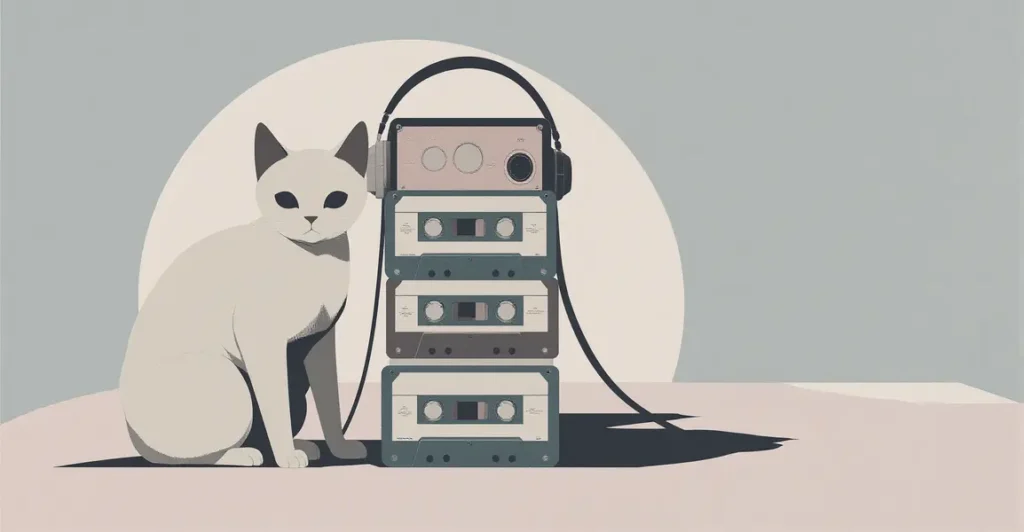
The cassette tape comeback sounds like a contradiction. Spotify has 700 million users, AirPods cost more than a decent record player, and yet U.S. cassette sales hit 446,500 units in 2025, up 17.5 percent year over year. Gen Z is buying Walkmans on eBay, hoarding limited tape runs from Charli XCX and Taylor Swift, and pushing resale prices on modern cassettes up by as much as 1,000 percent. This guide breaks down why the cassette tape comeback is real, who is actually buying tapes in 2026, and what the hiss, the rewind, and the chunky plastic shell offer that streaming cannot.
Table of Contents
- The Numbers Behind the Cassette Tape Comeback
- A Short History of the Cassette, From 1963 to the Bargain Bin
- Why Gen Z Picked Up a Format They Never Used
- The Artists Who Brought Tapes Back
- Cassette Players in 2026, From Walkmans to New Decks
- Cassette vs Vinyl, the Honest Comparison
- How to Start a Cassette Collection Without Wasting Money
- FAQ
The Numbers Behind the Cassette Tape Comeback
The cassette tape comeback is not a vibe. It is a measurable trend with sales data attached. U.S. cassette album sales went from 173,000 in 2020, to 343,000 in 2021, to roughly 440,000 in 2022, and to 446,500 in 2025. That is a five-fold increase in less than a decade. Five times the volume from a format most people had stopped buying in 1998.
Search behavior tells the same story. In a recent 90-day window, UK searches for “walkman” rose 40 percent. Searches for “ebay cassette tapes” rose 190 percent. Worldwide, queries for “best portable cassette player” rose 50 percent. People are not just buying tapes, they are actively shopping for the hardware to play them.
For context, vinyl is still the bigger physical format by an order of magnitude (vinyl outsold CDs in 2022 for the first time since 1987, and we covered that vinyl revival in detail here). But cassettes have something vinyl does not, growth from a base small enough that any Taylor Swift drop can spike the chart by 30 percent overnight.
Who Is Actually Buying Cassettes
Gen Z and Gen X are the two big demographics. Gen X is repurchasing the format they grew up with, often the original albums. Gen Z is doing something different. They are buying new cassettes from current artists, treating them as collectibles, and pushing resale prices on modern releases up to 1,000 percent over retail. A sealed Sublime tape from a recent reissue can hit $400.
A Short History of the Cassette, From 1963 to the Bargain Bin
The compact cassette was introduced by Philips in 1963 at the Berlin Radio Show. It was originally pitched as a dictation format, not a music carrier. The audio quality was rough, the tape was narrow at one-eighth of an inch, and the speed was slow at 1.875 inches per second. None of that mattered in 1963 because the goal was portability, not fidelity.
By the late 1970s the cassette had become the dominant portable music format. The Sony Walkman launched in 1979 and sold over 200 million units across its lifetime. Mixtapes became a cultural artifact, a way to court a partner, a way to share music before file sharing existed. The cassette was the only format that let listeners record their own playlists from radio or LPs, and that single feature reshaped how music was consumed.
The Death Spiral, 1992 to 2010
CD sales overtook cassettes in 1992. By 2002 most major labels had stopped pressing cassette singles. By 2010 the format was officially dead in the consumer market. Major retailers stopped stocking blank tapes. Walkmans disappeared from electronics stores. The cassette became the definition of obsolete consumer technology, alongside floppy disks and pagers.
The Underground Years, 2010 to 2018
The cassette never fully died because metal, noise, punk, and DIY hip-hop scenes kept pressing tapes. Independent labels could press 100 cassettes for under $200, far cheaper than vinyl. Cassette Store Day launched in 2013. Bandcamp added cassette listings as a default option. The format stayed alive in the niches, ready for a wider revival.
Why Gen Z Picked Up a Format They Never Used
Older listeners assume the cassette tape comeback is about sound quality. It is not. Cassettes objectively sound worse than Spotify, worse than CDs, and worse than vinyl in almost every measurable way. Frequency response tops out around 16 kHz on chrome tape (humans hear up to 20 kHz), the noise floor is high, and tape hiss is audible on any quiet passage. Gen Z knows this. They do not care.
It Is About Materiality, Not Audio
Streaming made music feel disposable. A Spotify playlist is a URL, the album art is a thumbnail, and the artist gets fractions of a cent per stream. A cassette is the opposite. It is a physical object you hold, label, store on a shelf, and trade with friends. The plastic shell weighs about 0.7 ounces. The J-card folds out into liner notes. There is friction in playing it, and that friction is the point.
This is the same instinct driving the Gen Z dumb phone paradox: a deliberate choice to add friction back into media consumption. Cassettes force you to listen to an album in order, side A then side B, with a manual flip in between. That linear listening pattern is alien to a generation raised on infinite scroll and skip buttons.
It Is About Aesthetic Identity
52 percent of U.S. Gen Z and 43 percent of UK Gen Z say they would buy from a brand specifically because it was deemed aesthetic. Cassettes hit that aesthetic mark hard. The chunky plastic shell, the pastel-colored tape variants, the hand-labeled mixtape look, all of it photographs well on TikTok and Instagram. A vinyl record is too big to fit cleanly in a frame on a small bookshelf. A cassette is wallet-sized and stackable.
It Is About Streaming Fatigue
Streaming platforms pay artists between $0.003 and $0.005 per stream. Spotify also stuffs algorithmic playlists with what some musicians call ghost artists, AI-generated background music designed to lower royalty payouts (we explored this in our piece on how Spotify’s algorithm shapes taste). Buying a cassette directly from an artist on Bandcamp puts $8 to $12 into their pocket per unit. The economic argument is simple, and Gen Z has done the math.
The Artists Who Brought Tapes Back
Mainstream pop pushed the cassette format from niche curiosity to mass-market collectible. Three releases in particular drove the volume.
- Taylor Swift, “The Life of a Showgirl”: limited cassette pressings sold out within hours of announcement. Swift has released cassette variants for every major album since “Midnights”.
- Charli XCX, “Brat”: the lime green cassette became a meme object before fans heard a single track. Resale prices crossed $100 within a week of the release.
- Olivia Rodrigo, Billie Eilish, The 1975: all three artists released exclusive tape variants with deluxe tracks unavailable on streaming, creating a built-in scarcity loop.
The pattern is clear. Major artists treat the cassette as a merch item, not a primary delivery format. Fans buy it as a collectible, not a daily listening medium. The label does not care, because at $12 per unit with manufacturing costs around $1.50, the margin is excellent.
Cassette Players in 2026, From Walkmans to New Decks
The hardware side of the cassette tape comeback is messier than the music side. Sony stopped making the Walkman in 2010. Most surviving units are 30 years old, with belts that have rotted, capstans that have seized, and pinch rollers that have hardened. Buying a vintage Walkman in 2026 is a gamble.
New Hardware on the Market
Several brands are filling the gap with new cassette players designed for the revival market. We Are Rewind launched a portable cassette player with Bluetooth output, USB-C charging, and a price point around $159. Fiio released a portable model targeting audiophiles. Even Walmart and Urban Outfitters stock house-brand cassette players in the $30 to $80 range, though build quality varies wildly.
The Vintage Market
For listeners who want the original experience, refurbished Walkmans from the 1980s and early 1990s sell for $100 to $300 on eBay, Reverb, and specialist sites. Models like the Sony WM-D6C (a professional unit released in 1985) command premium prices of $500 or more. Repair shops dedicated to cassette gear have reopened in cities including London, Tokyo, and Brooklyn.
Cassette vs Vinyl, the Honest Comparison
The two retro formats are often lumped together but they are different animals. Vinyl is the prestige format, cassette is the lifestyle format. Here is the breakdown.
- Sound quality: vinyl wins clearly. A well-pressed LP outperforms a chrome cassette in every frequency band.
- Price per album: cassettes are $8 to $15 new, vinyl is $25 to $45 new. Cassettes are roughly one-third the cost.
- Storage footprint: cassettes are 4 by 2.5 inches, LPs are 12 by 12 inches. A 200-tape collection fits in a single shoebox.
- Portability: cassettes win. The Walkman exists, the portable LP player essentially does not.
- Manufacturing: a cassette pressing run can be done in a week for under $200. A vinyl pressing takes 3 to 6 months and costs $1,500 minimum.
- Resale value: limited cassettes from current artists appreciate fast. Most vinyl pressings hold value but rarely spike.
The takeaway is that vinyl and cassette serve different psychological needs. Vinyl is the format you save for, set up a turntable for, and listen to seriously. Cassette is the format you buy on impulse, throw in a bag, and play in the kitchen on a $40 deck.
How to Start a Cassette Collection Without Wasting Money
The cassette market is full of overpriced reissues and broken vintage hardware. A first-time buyer can lose $300 fast on bad gear and tapes that will not play. Here is the practical sequence.
- Start with the player, not the tapes: a cassette is useless without working hardware. Budget $80 to $150 for a new portable, or $150 to $250 for a refurbished vintage Walkman from a reputable seller with a return policy.
- Buy chrome (Type II) tapes when possible: chrome tape has lower noise and better high-frequency response than ferric (Type I). Most modern releases use chrome.
- Hit thrift stores before eBay: a thrift store cassette is $1 to $3. The same tape on eBay can be $15 with shipping. The catch is condition, you cannot inspect a sealed shell.
- Avoid stretched or warped tapes: a tape that visibly bulges out of its shell, or that squeals during playback, is unrecoverable. The magnetic coating shed years ago.
- Get a head cleaner and demagnetizer: dirty heads kill audio quality and can damage tapes. A cleaner kit costs under $20 and pays for itself in three uses.
- Skip rare audiophile reissues unless you know what you are paying for: a $60 limited cassette of an album you can stream for free is a collector decision, not a listener decision. Be honest about which you are.
For a wider view of niche music formats and instruments worth exploring, our piece on weird musical instruments hits a similar curiosity nerve. And if you are doing the deep dive into physical media in general, Record Store Day 2026 covers the parallel vinyl event.
FAQ
Are cassette tapes actually making a comeback in 2026?
Yes. U.S. cassette album sales hit 446,500 units in 2025, up 17.5 percent year over year, and roughly five times the volume sold a decade earlier. Major artists including Taylor Swift, Charli XCX, Olivia Rodrigo, and Billie Eilish all release cassette variants of new albums, and Gen Z drives most of the growth.
Why are Gen Z buying cassette tapes?
The motivation is cultural identity, not sound quality. Cassettes offer materiality (a physical object to hold and collect), aesthetic appeal for social media, direct artist support that streaming does not provide, and forced linear listening that contrasts with infinite-scroll streaming behavior. Gen Z explicitly rejects the disposable feel of digital music in favor of formats that demand attention.
Do cassette tapes sound better than streaming?
No. Cassettes have a higher noise floor, narrower frequency response (typically capping around 16 kHz on chrome tape versus 20 kHz human hearing), and audible tape hiss on quiet passages. Spotify at 320 kbps and CD-quality audio both outperform a cassette objectively. The appeal is tactile and aesthetic, not sonic.
What is the best cassette player to buy in 2026?
For new gear, We Are Rewind makes a portable model around $159 with Bluetooth output, and Fiio has an audiophile-leaning option. For vintage, the Sony WM-D6C is the gold standard but costs $500 or more refurbished. Mid-range vintage Walkmans run $100 to $300 on eBay and Reverb. Avoid sub-$40 house-brand units, the build quality is rough and the playback speed is often inconsistent.
How much does a cassette album cost in 2026?
New cassette releases from major artists run $8 to $15 retail. Limited variants and color-pressed tapes can hit $20 to $30 at release. Resale prices for sold-out runs frequently spike to $50 to $400 within weeks, with sealed Sublime reissues reaching $400 in recent listings. Vintage tapes from the 1980s and 1990s usually sit in the $1 to $10 range at thrift stores and online.
The Bottom Line
The cassette tape comeback is not nostalgia, at least not for the people driving it. Gen Z never used cassettes the first time around. They picked the format because it solves problems streaming created, namely the disposability of music, the disconnect from artists, and the lack of tactile collecting. The hiss and the rewind and the J-card are features, not bugs. If you are starting out, buy the player first, hit thrift stores for stock, and skip the $60 reissues until you know what your ear actually wants.
🐾 Visit the Pudgy Cat Shop for prints and cat-approved goodies, or find our illustrated books on Amazon.


Leave a Reply