Atari has acquired rights to the first five Wizardry games, opening a possible new chapter for some very old dungeons. The exciting part is the prospect of making those games easier to find and play. The less straightforward part is the ownership chart, which appears to have brought its own maze.
This is a substantial retro-gaming announcement. It is not confirmation that the entire Wizardry franchise has one new owner, or that a television adaptation is about to arrive.
Which Games Are Included?
Atari’s announcement identifies these five titles:
- Wizardry: Proving Grounds of the Mad Overlord (1981)
- Wizardry II: The Knight of Diamonds (1982)
- Wizardry III: Legacy of Llylgamyn (1983)
- Wizardry IV: The Return of Werdna (1987)
- Wizardry V: Heart of the Maelstrom (1988)
The company describes acquiring the games and their underlying intellectual property. Its plans include wider digital and physical distribution, remasters, collections and new releases. It also outlines longer-term ambitions for merchandise, tabletop products, books, comics, television and film.
That last group makes a tempting headline. A plan to explore screen projects, however, is not an announced broadcaster, cast, production schedule or completed deal. Werdna does not yet have a confirmed streaming-service password.
Drecom Still Holds the Trademark
On May 7, Drecom issued a clarification: it had not sold its Wizardry rights to Atari. It said Atari had informed it of acquiring the first five games from their previous rights holder, while Drecom would retain the domestic and international trademarks and continue managing the brand.
In a further statement to Gematsu on May 7, Atari distinguished the early games’ Llylgamyn setting, characters and other expressive elements from the trademark and later-series rights held by Drecom.
The practical reading is narrower than “Atari bought all of Wizardry.” Different rights cover different parts of this long-running series. Both companies’ statements matter when describing the acquisition; neither should be replaced with an imaginary clean sweep.
An Early RPG Worth Keeping Accessible
Created by Andrew Greenberg and Robert Woodhead, the original Wizardry arrived on the Apple II in 1981. It belongs among the formative computer RPGs, with a party of adventurers facing a dungeon through a first-person view.
Its importance does not require the claim that it single-handedly invented every role-playing convention. Games develop through overlapping influences, experiments and borrowed ideas. A family tree with one ancestor and several thousand descendants makes a tidy poster, but a poor explanation.
What makes revisiting an early game valuable is being able to experience its choices directly: how it presents danger, what information it gives you, and how much responsibility it leaves with the player.
The old corridor can still be interesting even after decades of prettier corridors. Sometimes the anxiety is not in the texture resolution. It is in wondering whether the party can afford another mistake.
Digital Eclipse Already Has a Working Example
Digital Eclipse’s remake of Proving Grounds of the Mad Overlord reached full release in 2024. The studio’s original project explanation describes retaining the Apple II code at its heart while adding a modern presentation and interface. It even allows the old interface to be displayed as an overlay.
And yes, the Grammy connection is real: composer Winifred Phillips won the 2025 award for Best Score Soundtrack for Video Games and Other Interactive Media for Wizardry, according to the Recording Academy.
That is a lovely outcome for music written for the return of a 1981 dungeon crawler. It is also a reminder to credit the composer, rather than imagining a floppy disk accepting the trophy by itself.
Preservation Does Not Mean Keeping Every Inconvenience
The remake did not simply refuse all concessions. Digital Eclipse’s December 2023 development notes describe an expanded Old School menu, save-slot copying and options affecting familiar systems. They also detail combat changes intended to avoid wasting attacks or spells on enemies already defeated.
Those changes suggest a more useful preservation question than “should old games stay difficult?” Which parts create the intended challenge, and which parts make it needlessly awkward to interact with that challenge?
Options can let players explore different answers. Clear documentation can explain what has changed. Neither requires pretending that the original was perfect or that modern players are incapable of patience.
The Next Thing to Watch Is a Release Plan
The acquisition creates possibilities; it does not supply a dated remake of each remaining game. Platforms, versions, pricing, documentation and the treatment of the originals will be useful details to look for when specific releases are announced.
For now, the hopeful part is access. An influential game becomes easier to discuss when people can play it rather than merely hear that it mattered.
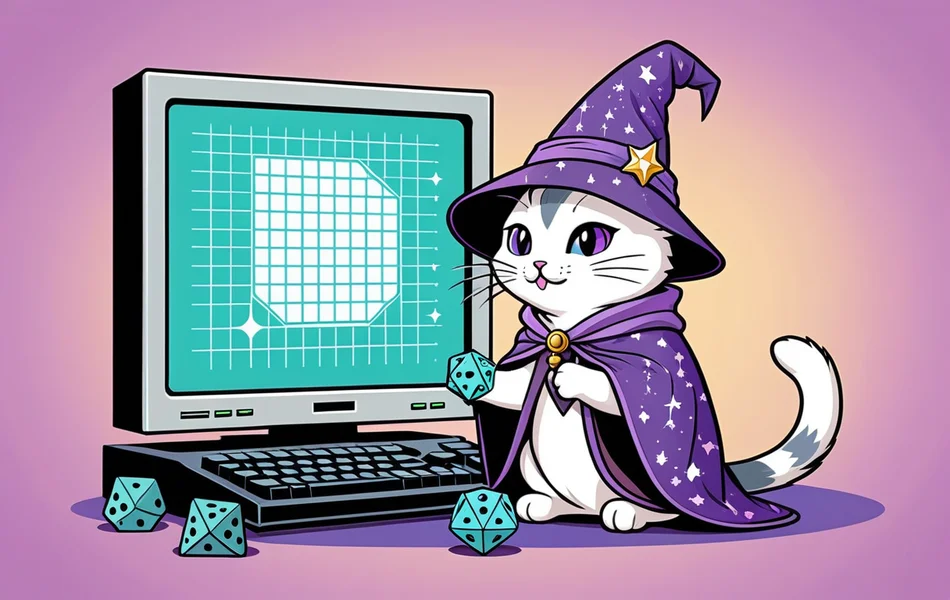
If the promised work gives those early dungeons another life, that will be worth celebrating. The cat is ready to supervise from the graph paper, preferably on the square where we wrote the exit.