
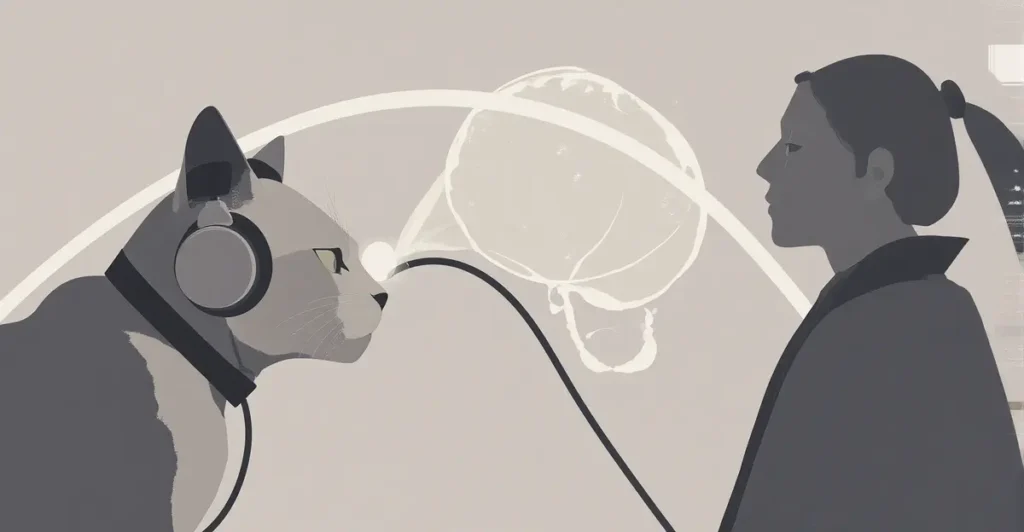
Press play on a favourite song and a perfectly ordinary room can acquire a different atmosphere. Your foot starts tapping. A memory turns up without an appointment. The chorus arrives and suddenly you are emotionally invested in three minutes of organised air vibrations. The cat considers this an inefficient way to spend an afternoon.
Music reaches into systems involved in hearing, movement, memory and reward. That makes it a fascinating way to explore the brain—and an easy subject to oversell. We can explain quite a lot about a song giving you chills without pretending a playlist is a universal brain upgrade.
From sound waves to something you recognise
The journey begins with the ear. Vibrations pass through the eardrum and middle-ear bones into the fluid-filled cochlea. Sensory hair cells help convert that movement into electrical signals, which the auditory nerve carries towards the brain. The NIDCD’s hearing guide walks through the process.
Recognising a melody, anticipating a beat and remembering who first played you a record involve more than a single “music centre.” Nor does each brain region have just one musical job, like an orchestra with a dedicated first violin and a small department for regrettable teenage crushes.
Why the build-up can feel as good as the chorus
A 2011 McGill study used PET imaging to find dopamine release during intense musical pleasure. The researchers also used functional MRI to distinguish activity associated with anticipation from activity around the emotional peak: the caudate was more involved in the former, the nucleus accumbens in the latter.
That gives anticipation a real place in the story. Waiting for a beloved musical moment can be part of its appeal. It does not mean every chorus produces the same chemical response in everyone, or that goosebumps are a convenient home dopamine meter.
You do not need a completely new song to enjoy the feeling of something approaching. Think of the pause before a familiar entrance, or the moment a full arrangement returns after a quiet passage. You know what is coming and lean into it anyway. Our sidechain compression explainer looks at one production technique that can give a track its characteristic pumping movement.
How a song becomes a shortcut to the past
Music can act as a cue for autobiographical memories: a school journey, a kitchen, a person you have not thought about for years. In Petr Janata’s 2009 research, activity in parts of the medial prefrontal cortex tracked how personally meaningful musical excerpts were to listeners.
The useful picture is a network linking familiar music with personal experience. It is more complicated than a song being stored beside a memory in one handy drawer. Also, a vivid recollection is not necessarily a perfectly accurate recording. The brain is an enthusiastic storyteller with a questionable filing system.
Songs from youth can be especially meaningful, but musical taste does not seal shut at the end of adolescence. Cambridge research on preferences across age groups describes differences extending into adulthood. Your old favourites can keep their place while new ones arrive. There is no neurological bouncer refusing entry to everything released after your eighteenth birthday.
Why minor does not mean sad everywhere
For many Western listeners, minor harmony suggests melancholy and major harmony suggests brightness. But musical experience helps shape those associations. A 2022 study in Papua New Guinea and Australia found that happier responses to major rather than minor cadences were strongly associated with exposure to Western-influenced music.
The findings challenge a simple universal rule without settling every question about musical emotion. Tempo, timbre, lyrics and context also give a performance its character. A minor-key song can be exhilarating, and a cheerful arrangement can make miserable lyrics particularly delicious.
Recognising an emotion in music is also different from being forced to feel it yourself. Otherwise every film composer would possess a remote control for the audience, and every sad playlist would require a licence.
The beat gets the movement system involved
In a 2007 rhythm study, patterns that supported a regular beat produced greater activity in the basal ganglia and supplementary motor area. Regions involved in movement can therefore participate in perceiving rhythm, even when the question is about listening.
Synchronising a tap or a step to music is one visible result of this close relationship. It does not require every neuron, heartbeat and breath to match the song’s tempo. Your body has other business to attend to, even during an excellent bass line.
Headphones can make listening feel private and immersive, but they still deliver sound through the hearing system. They are not direct electrical stimulation of the brain. For the engineering behind shutting out some of the surroundings, see how noise-cancelling headphones work.
Where music can help in care
The NCCIH’s review of music and health describes promising applications for pain, anxiety and depressive symptoms, while noting that much of the evidence remains preliminary. Results depend on the condition, the intervention and the quality of the studies.
Rhythmic cues are being used to support walking in Parkinson’s disease. Familiar music and musical activities may help well-being and connection in dementia care, although benefits for cognition are less certain. A person joining in with a remembered song can be a meaningful moment without showing that the disease has reversed.
Music therapy refers to work within a therapeutic relationship with a trained professional. Enjoying a playlist at home is valuable in its own right, but it is a different activity. Neither requires claiming that music reliably lowers everyone’s cortisol or instantly repairs a disrupted movement system.
Does music make studying easier?
Sometimes the soundtrack feels more productive than the work. A 2023 experiment found that music with lyrics interfered with several memory and reading tasks. Instrumental lo-fi music did not clearly improve or impair performance in that study, even though participants sometimes thought it helped.
Try judging the result rather than the atmosphere: can you explain what you just read? Instrumental music or silence may suit demanding reading better than singing along. The winning soundtrack for washing dishes need not be the winning soundtrack for learning a new language.
And the famous Mozart effect? A 2010 meta-analysis found little support for a special Mozart-specific advantage. Small differences on spatial tasks were also seen with other music. That is a long way from putting on a sonata and permanently increasing intelligence.
Music does not need those promises to be remarkable. A few sounds can offer pleasure, organise movement and reopen a remembered scene. You can appreciate the science and still spend the chorus singing terribly. The cat was going to judge you either way.